Wellness Origin Hub
The best pull-up bars for home: doorway, wall and free-standing
The best pull-up bars for home, from a doorway bar that needs no screws to a wall-mounted bar and a free-standing power tower, with what to check before you buy.
We may earn a commission if you buy through links in this article. How we make money.
Our picks at a glance
A pull-up bar is the cheapest way to train the back and arms at home, and it adds the pulling work most home routines miss. The right type depends on your walls and door frames more than on your fitness. A doorway bar suits most flats and needs no drilling; a wall-mounted bar is steadier for people who train often; a free-standing tower works where you cannot fix anything to the house at all.
Doorway, wall-mounted or free-standing?
| Type | How it fits | Good for | Watch out for |
|---|---|---|---|
| Doorway (leverage) | Hooks over the door frame, held by your weight | Renters, small spaces, beginners | Needs a solid frame with a moulding; can mark paint |
| Wall-mounted | Bolted into studs, masonry or a beam | Frequent training, kipping-free strict work | Needs drilling and a strong wall |
| Free-standing tower | Stands on the floor; often adds dip handles | Homes where you cannot fix anything | Takes floor space; must be on level ground |
What to look for
- Your door frame. Leverage bars rest on the trim of the frame. Measure the width and check the frame is wood and solid, not a thin metal or plastic trim.
- Weight limit. Check the maker's stated maximum and leave a good margin, especially for wall fixings, which depend on what you screw into.
- Grip options. Neutral handles, where the palms face each other, are often kinder to the shoulders and elbows than a straight bar.
- Padding. Foam grips are comfortable but wear over time; replaceable grip tape is a fair alternative.
- Headroom. You need enough space to hang with straight arms and lift your chin over the bar without hitting the ceiling.
The picks
Best doorway bar: Iron Gym Total Upper Body Workout Bar
Around $35
The classic doorway bar, and the easiest way to find out whether you will actually use one. It hooks over the frame and is held in place by leverage, so it comes down in seconds. Check your frame width and trim before ordering.
What we like
- No screws or drilling
- Several grip positions including neutral
- Can sit on the floor for push-ups and dips
Keep in mind
- Only fits standard frames with trim
- Can mark the door frame
- Less steady than a fixed bar
Best wall-mounted: Ultimate Body Press XL Wall Mounted Pull Up Bar
Around $100
For people who know they will train often, a bolted bar feels far more solid than a doorway bar and leaves the doors free. Fit it into wall studs or masonry with suitable fixings, and get help if you are unsure what your wall is made of.
What we like
- Very steady once fitted
- Room above the bar for full range
- Wide and neutral grips
Keep in mind
- Needs drilling into studs or masonry
- Permanent fixture
- Fitting takes time
Best free-standing: Sportsroyals Power Tower Dip Station
Around $150
A good answer for rented homes with weak door frames, or garages and spare rooms. Use strict, controlled pull-ups rather than swinging ones, keep it on level ground and check the bolts now and then.
What we like
- No fixing to walls or doors
- Adds dip handles and a push-up station
- Adjustable height
Keep in mind
- Takes up floor space
- Can rock if you swing
- Assembly needed
At a glance
| Bar | Type | Fitting | Best for |
|---|---|---|---|
| Iron Gym Total Upper Body | Doorway | None | Trying pull-ups, small spaces |
| Ultimate Body Press XL | Wall-mounted | Drilling | Regular training |
| Sportsroyals Power Tower | Free-standing | Assembly | No-drill homes with floor space |
How to work up to your first pull-up
Many beginners cannot do a pull-up at first, and that is normal. These steps build up to it. Do them two or three times a week.
- Dead hang: 3 × 10–30 seconds. Hang with straight arms and shoulders gently pulled down. Easier: keep your toes on a step. Harder: hang for longer, or with one hand at a time for a few seconds.
- Scapular pull: 3 × 6–8. From a hang, pull the shoulder blades down without bending the elbows, then relax. Easier: toes on a step. Harder: pause at the top.
- Negative pull-up: 3 × 3–5. Step up so your chin is over the bar, then lower yourself as slowly as you can, aiming for three to five seconds. Easier: a shorter lowering. Harder: aim for eight seconds.
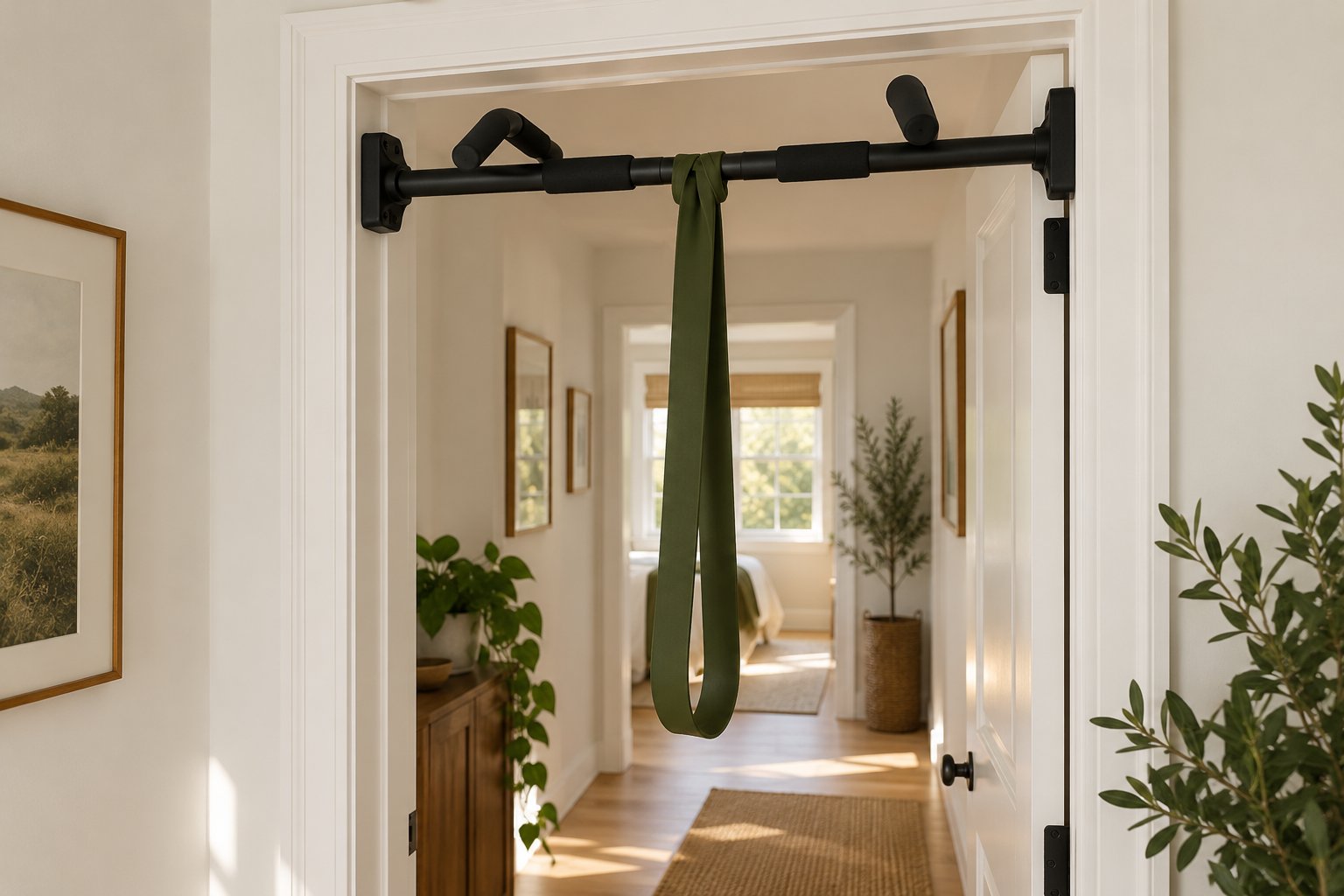
- Band-assisted pull-up: 3 × 5–8. Loop a band over the bar and stand in it for help. Easier: a thicker band. Harder: a thinner band. See our resistance band guide.
Keep rows in your routine too; the table row in our bodyweight workout and the dumbbell row in our strength training plan train the same muscles.
Questions people ask
Will a doorway bar damage my door frame?
It can leave marks, and it can damage weak trim. Foam pads help with marks. If your frame is thin or cracked, choose a free-standing tower instead.
How often should I train pull-ups?
Two or three times a week, with a day of rest between, is plenty for most beginners. See our guide to workout recovery.
Photograph: AI-generated image