Wellness Origin Hub
The best resistance bands for home strength training
The best resistance bands for home strength training, from mini loop bands to tube bands with handles and flat therapy bands, plus what each type is good for.
We may earn a commission if you buy through links in this article. How we make money.
Our picks at a glance
Resistance bands are the cheapest way to add real resistance to a home workout, and they fit in a drawer. For most people, one set of tube bands with handles covers rows, presses and curls, while a pack of mini loop bands is handy for hip and glute work. Flat therapy bands suit gentle rehab and warm-ups.
Below are three sets we looked at, one of each type, and how to choose between them.
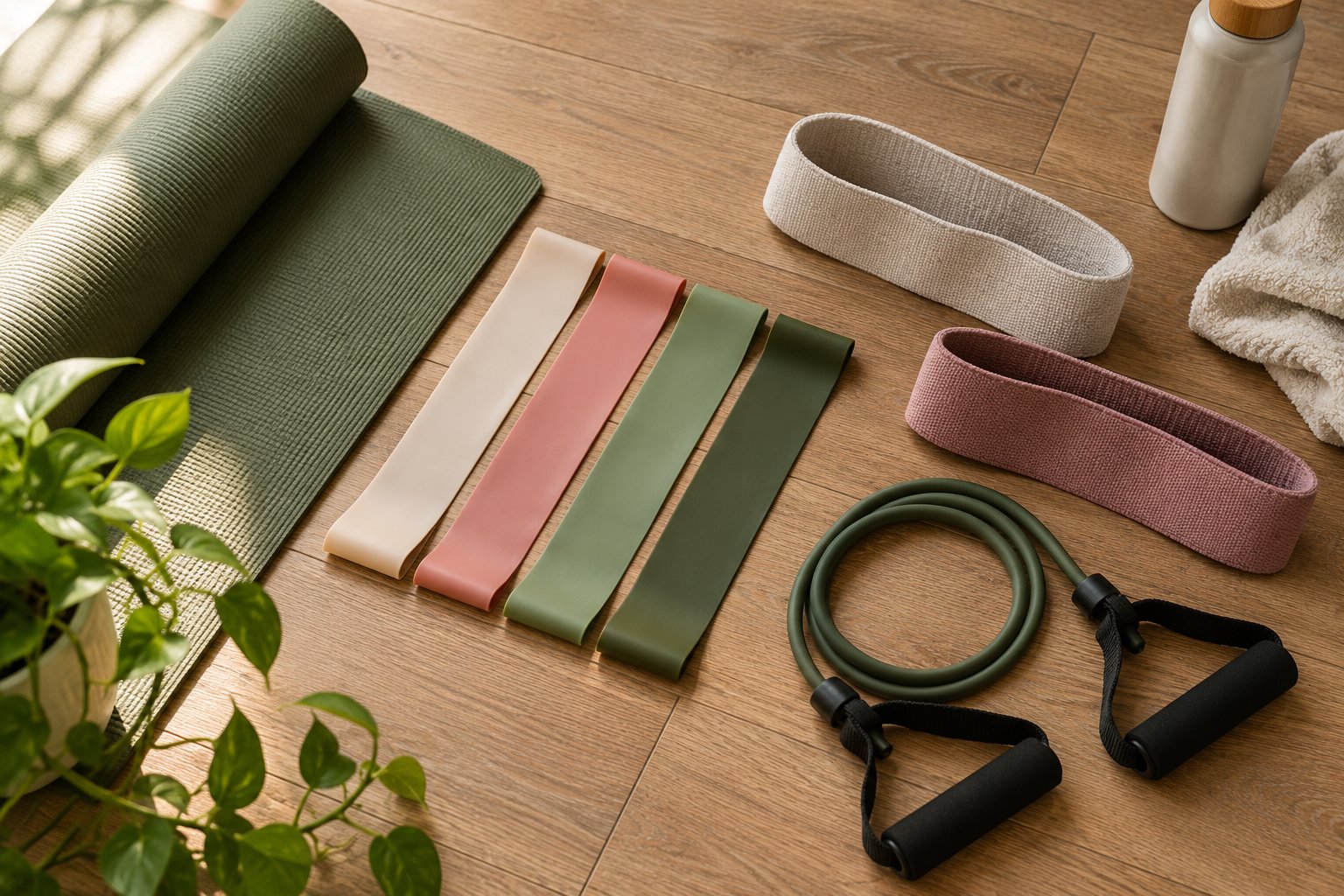
The three types of band
| Type | Looks like | Best for |
|---|---|---|
| Mini loop bands | Short flat loops, around the thighs or ankles | Glute bridges, side steps, warm-ups |
| Tube bands with handles | Rubber tubes with handles and a door anchor | Rows, presses, curls: a gym-cable substitute |
| Flat therapy bands | Long flat strips, no handles | Physio exercises, shoulder work, gentle strength |
Large "power" loop bands are a fourth type, mainly used for assisted pull-ups and heavier leg work. They are worth adding later if you have a pull-up bar.
What to look for
We looked at the range of resistance in each set, how easy the bands are to hold and anchor, the material and how each set is labelled. Prices change often, so check before you buy.
- A range of resistance. You will need lighter bands for shoulders and arms and heavier ones for legs and back. A set with several levels lets you progress.
- Stackable tubes. Tube sets that let you clip several bands to one handle give much finer control over the resistance.
- A door anchor. This turns any solid door into a cable station for rows and presses.
- Material. Most bands are latex. If you have a latex allergy, look for bands clearly labelled latex-free.
- Honest labelling. Resistance figures on packaging are approximate, because a band gets harder the further you stretch it. Treat the numbers as a guide to order, not exact weights.
Best overall: Bodylastics Stackable Tube Resistance Bands
Around $40
The closest thing to a home cable machine. Clipping tubes together lets you match the resistance to each exercise, which matters when your legs are much stronger than your shoulders. A good first set for full-body training.
What we like
- Several tubes clip together on one handle
- Comes with handles, ankle straps and a door anchor
- Covers upper and lower body
Keep in mind
- Clips take a moment to change
- Door anchor needs a solid, closed door
- More kit to store than loop bands
Best mini loops: Fit Simplify Resistance Loop Exercise Bands
Around $12
A cheap pack of mini loops that makes bridges, squats and side steps noticeably harder. The light bands are useful for warm-ups, the heavier ones for glute work.
What we like
- Several resistance levels in one pack
- Tiny and light, easy to travel with
- Very low cost
Keep in mind
- Can roll up on bare thighs
- Latex, so not for latex allergies
- Too short for most upper-body moves
Best for rehab and gentle strength: TheraBand Professional Latex Resistance Bands
Around $20
The flat band many physiotherapists hand out, which makes it easy to follow exercises you have been given. Good for shoulder work, warm-ups and anyone starting gently.
What we like
- Colour-coded levels used widely by physiotherapists
- Flat bands are easy to wrap or tie
- Can be cut to length
Keep in mind
- No handles, so grip can tire
- Flat bands can snap if nicked or overstretched
- Light levels are too easy for strong leg work
At a glance
| Band | Type | Best for | Anchor included |
|---|---|---|---|
| Bodylastics stackable tubes | Tube with handles | Full-body strength | Yes, door anchor |
| Fit Simplify loops | Mini loops | Hips and glutes, warm-ups | Not needed |
| TheraBand Professional | Flat therapy band | Rehab, shoulders, gentle strength | No |
Five moves to start with
Do 2–3 sets of 10–15 reps of each, two or three times a week.
- Band row: anchor the band at chest height, pull the handles to your ribs, squeeze your shoulder blades, return slowly.
- Chest press: anchor behind you, press the handles forward until your arms are straight.
- Banded squat: stand on the tube with handles at your shoulders, or wear a mini loop above the knees, and squat.
- Glute bridge with loop: loop above the knees, push the knees gently apart as you lift your hips.
- Pull-apart: hold a flat band at shoulder height with straight arms and pull it apart towards your chest.
Easier option: use a lighter band, or stand closer to the anchor to reduce tension. Harder option: step further away, slow the return to 3 seconds, or stack another tube.
Bands also fit neatly into our bodyweight workout at home: use the band row in place of the table row. Keep them on or beside your yoga mat so they are easy to grab.
Questions people ask
Can resistance bands build muscle like weights?
They can for most home goals. Muscles respond to effort, and bands can provide plenty of it, especially stacked tubes. Very strong lifters may find the heaviest moves easier to load with weights.
How long do bands last?
It depends on use and storage. Keep them out of direct sunlight and away from sharp edges, and replace any band that shows wear.
Photograph: AI-generated image