Wellness Origin Hub
A five-minute warm-up before any workout
A five-minute dynamic warm-up that raises your heart rate, loosens your hips and shoulders and gets you ready to run, lift or play, with no equipment.

A good warm-up takes five minutes and makes the workout after it feel better. It should do three things: raise your heart rate and body temperature, move your joints through the ranges you are about to use, and finish with a few lighter versions of the main exercise. Dynamic movements, where you keep moving, work better before exercise than long, held stretches.
Why warm up?
Warm muscles are more pliable and contract more quickly, and a gradual rise in heart rate is easier on the heart than going from rest to hard effort. Studies on warm-up programmes in sport, such as the FIFA 11+ for football, have found fewer injuries in teams that use them. Just as important, most people simply perform better and feel less stiff in the first ten minutes.
Static or dynamic stretching?
Long static stretches (holding for a minute or more) just before lifting or sprinting can slightly reduce power for a short time. Short holds are unlikely to matter much, but dynamic moves do the job better and save time. Keep longer static stretches for after the workout or a separate session, like our stretches for desk workers.
The five-minute routine
Do each move for about 30 to 45 seconds, without rest between them.
- March or jog on the spot. Start easy, then lift your knees higher for the last 15 seconds.
- Arm circles. Small circles forward, growing larger, then backwards.
- Leg swings. Hold a wall and swing one leg forward and back, then side to side. Switch legs halfway.
- Hip circles. Hands on hips, draw big slow circles in each direction. Our hip mobility routine goes further.
- Bodyweight squats. Slow and controlled, as deep as is comfortable, 8 to 10 reps.
- Walking lunges with a reach. Step into a lunge and reach both arms overhead. Four or five per leg.
- Inchworms. Bend down, walk your hands out to a plank, then walk them back and stand. Three or four slowly.
- Jumping jacks or skips. 20 to 30 seconds to bring your heart rate up at the end.
Adjusting it for your workout
| Before | Add or stress |
|---|---|
| Running | Leg swings, skips and a few short, relaxed strides |
| Strength training | Light warm-up sets of your first lift |
| Upper-body work | Arm circles, band pull-aparts, push-ups on a bench |
| Yoga | Cat–cow and sun salutations; see yoga for beginners |
On cold mornings, take an extra minute or two; you will feel the difference. If you are just starting out, this routine also slots before our bodyweight workout at home or how to start running.
Questions people ask
How long should a warm-up be?
Five to ten minutes is enough for most workouts. You should feel warm and slightly out of breath, not tired.
Do I need to cool down too?
A few minutes of easy movement and some gentle stretches help you feel more comfortable afterwards, even if the evidence that they prevent soreness is weak. More in our guide to workout recovery.
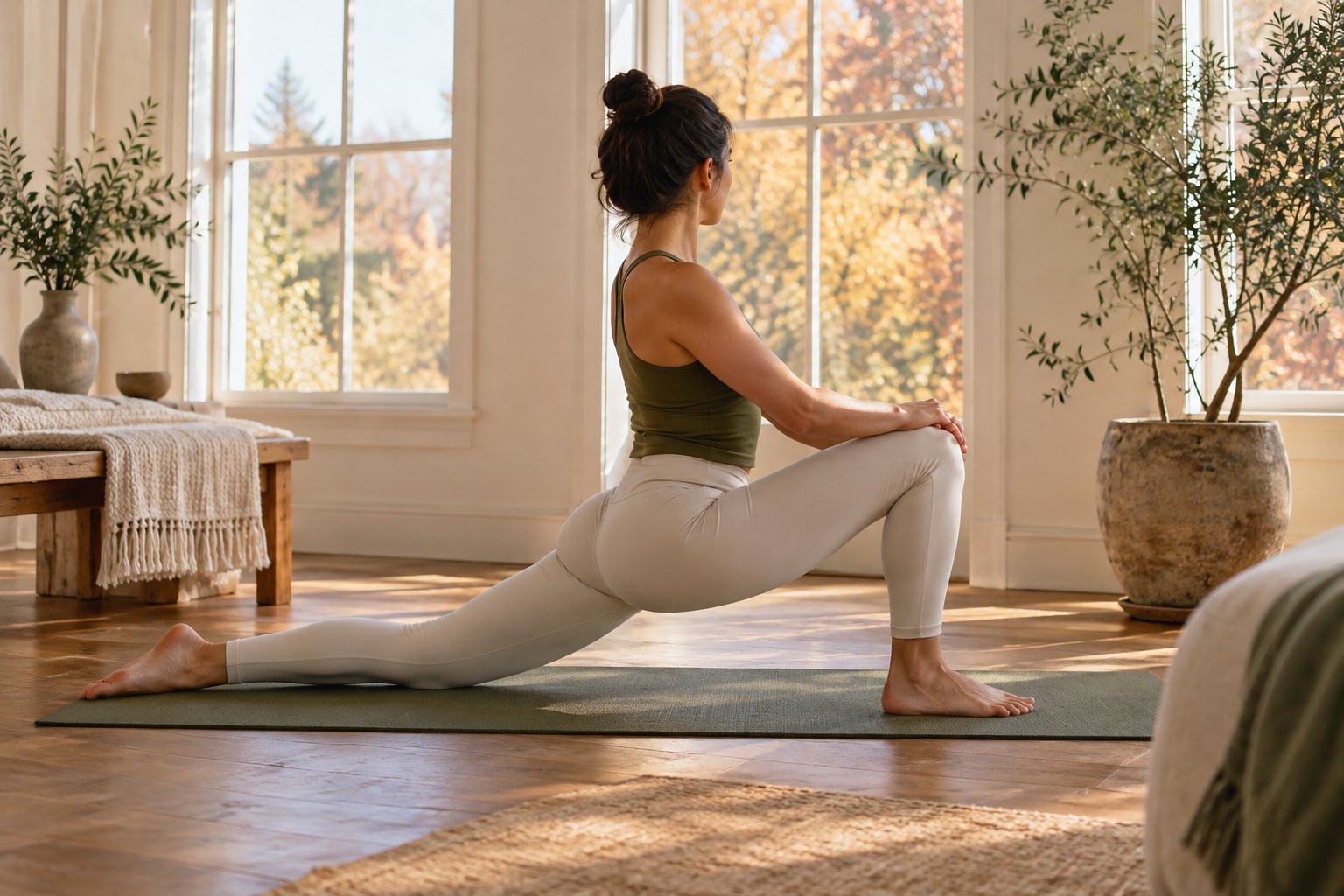
Photograph: AI-generated image