Wellness Origin Hub
Simple breathing exercises for stress
Three simple breathing exercises for stress: box breathing, a longer exhale and the physiological sigh, with step-by-step instructions and when to use each.
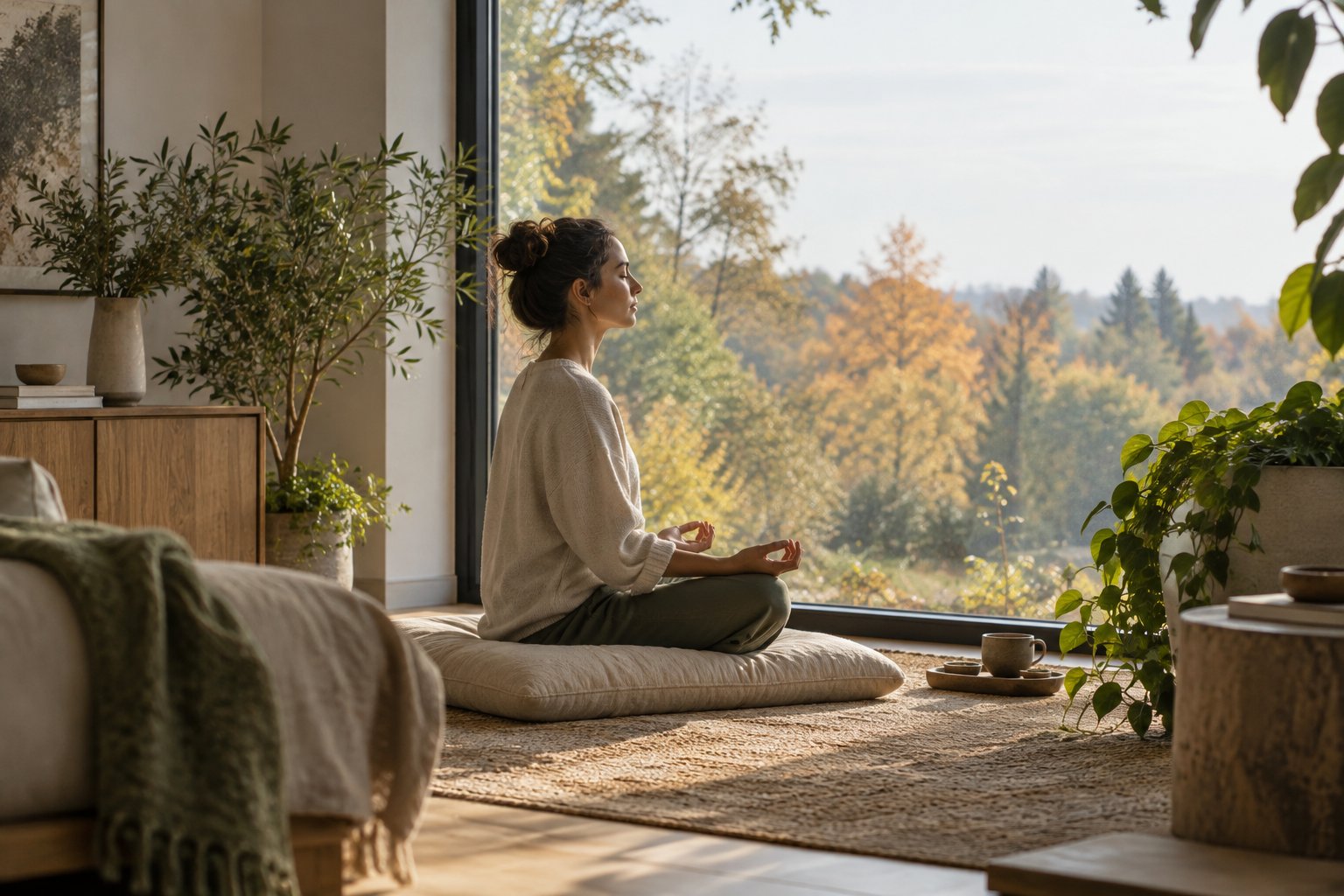
Slow, deliberate breathing is one of the quickest ways to take the edge off stress, and you can do it anywhere. The three simple breathing exercises below each take one to five minutes: box breathing for steadying yourself, a longer exhale for winding down, and the physiological sigh for a quick reset. The common thread is slowing down and making the out-breath at least as long as the in-breath.
None of them is a cure for anxiety, but research suggests slow breathing may help calm the body's stress response for many people.
The three exercises at a glance
| Exercise | Pattern | Time | Good for |
|---|---|---|---|
| Box breathing | In 4, hold 4, out 4, hold 4 | 2–5 minutes | Steadying yourself before a meeting or task |
| Longer exhale | In 4, out 6–8 | 3–5 minutes | Winding down, falling asleep |
| Physiological sigh | Two breaths in, one long breath out | 1–5 minutes | A quick reset in a stressful moment |
Why slow breathing may help
When you are stressed, breathing tends to become fast and shallow. Slowing it down, especially lengthening the out-breath, is thought to engage the part of the nervous system linked with rest. Many people find their heart rate settles and their thoughts feel less rushed after a few minutes.
You do not need to count perfectly. Breathe gently, through your nose if you can, and never force the breath.
1. Box breathing
Box breathing has four equal sides, like a square. It is simple to remember and gives your mind something to focus on.
- Sit upright with your feet on the floor, or lie down.
- Breathe out fully through your mouth.
- Breathe in through your nose for a count of 4.
- Hold gently for 4.
- Breathe out through your mouth for 4.
- Hold for 4.
- Repeat for 2–5 minutes.
- Easier: use a count of 3, or skip the holds if they feel uncomfortable.
- Harder: build up to a count of 5 or 6 on each side.
Some people find holding the breath raises anxiety. If so, use the longer exhale instead.
2. Longer exhale
Making the out-breath longer than the in-breath is a gentle way to slow down, and many people find it the most relaxing of the three.
- Get comfortable, sitting or lying down.
- Breathe in through your nose for a count of 4.
- Breathe out slowly through your nose or pursed lips for a count of 6 to 8.
- Let there be a short natural pause before the next breath.
- Continue for 3–5 minutes.
- Easier: in for 3, out for 5.
- Harder: in for 4, out for 8, and continue for 10 minutes.
This works well in bed as part of an evening wind-down routine, or to settle before a short nap.
3. The physiological sigh
You probably already do this without noticing: a big sigh after crying, or a deep breath before you fall asleep. Done deliberately, it is a fast way to reset.
- Breathe in through your nose until your lungs feel nearly full.
- Take a second, shorter sip of air through the nose on top of the first.
- Breathe out slowly and fully through your mouth, longer than both in-breaths together.
- Repeat 1–3 times for a quick reset, or keep going for up to 5 minutes.
A small 2023 study from Stanford University found that five minutes a day of this pattern, called cyclic sighing, improved mood and reduced anxiety slightly more than a similar amount of mindfulness meditation. It was a small study, so it is a promising sign rather than firm proof.
- Easier: one sigh at a time, whenever you notice tension.
- Harder: five continuous minutes, once a day.
When to use them
- Before a stressful event: a presentation, a hard conversation, an exam.
- In the middle of the working day, combined with a few desk stretches.
- At night, if your thoughts are racing. A longer exhale can make it easier to drift off.
- After a difficult moment, to stop stress spilling into the rest of the day.
Breathing pairs well with writing things down. If your mind is busy, a few minutes of journaling first can help.
Questions people ask
How often should I practise?
A few minutes once or twice a day builds familiarity, so the technique is easier to use when you really need it.
What if I feel dizzy?
Stop and breathe normally. Dizziness usually means you are breathing too deeply or too fast. Try smaller, gentler breaths and shorter counts.
Should I breathe through my nose or mouth?
Through the nose for the in-breath is usually more comfortable and slower. The out-breath can go either way.
Photograph: AI-generated image