Wellness Origin Hub
When the clocks go back, how to protect your sleep
The clocks go back in Europe today and in the US on 1 November. How the change affects sleep, and a simple plan to adjust in a few days.
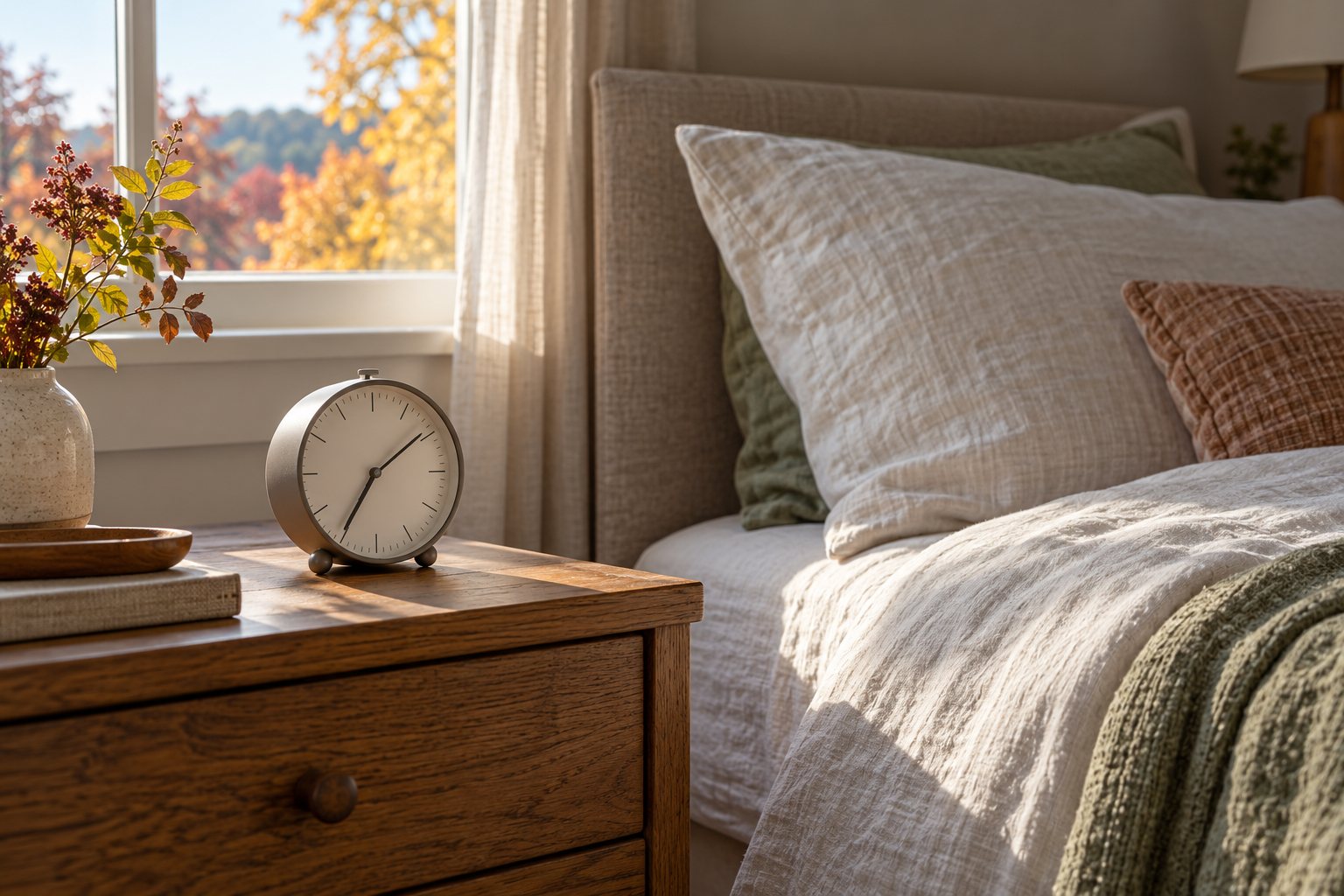
The clocks went back an hour in the UK and the EU early this morning, Sunday 25 October 2026, and in most of the US and Canada they go back next Sunday, 1 November. Gaining an hour is easier on the body than losing one in spring, but it still nudges your body clock, and many people wake too early or feel sleepy at dinner for a few days. The quickest way to adjust is to keep your wake time steady and get daylight early in the morning.
What the change does to your body clock
Your internal clock runs on light. After the clocks go back, sunrise and sunset arrive an hour earlier by the clock on the wall, while your body is still on summer time. So 6 am feels like 7 am, and 9 pm feels like 10 pm. Early risers and children often feel it most: they wake at their usual body time, which is now an hour "early".
Most people adjust within a few days to a week. Darker evenings can also lower mood and energy for some people as winter comes on.
A simple plan for the week
- Keep your wake time. Get up at your usual clock time, even on the first morning. A steady wake time sets the body clock faster than anything else.
- Get light early. Go outside within an hour of waking, even on a cloudy day. Outdoor light is far brighter than indoor lighting. A short walk counts as time in nature too.
- Shift bedtime gently. If you feel sleepy too early, push bedtime later by 15 to 20 minutes a night until you are back to normal.
- Avoid bright light late at night. Dim lights and screens in the last hour before bed. Our evening wind-down routine has ideas.
- Watch the late caffeine. Feeling sleepy at 4 pm is tempting coffee territory, but caffeine late in the day can keep you awake hours later. See how much caffeine and try a short nap instead.
- Keep meals on clock time. Eating at normal times helps your body follow the new schedule.
Coping with darker evenings
The shorter afternoons are often harder than the hour itself. Get outside at lunch when you can, keep moving through winter, and make the bedroom cool, dark and quiet; our guide to a bedroom for better sleep covers the details. With less sunshine, it is also worth reading about vitamin D in winter and our cold-weather habits.
Questions people ask
When exactly do the clocks go back?
In the UK and EU, at 1 am GMT on the last Sunday of October, which in 2026 is 25 October. In most of the US and Canada, at 2 am local time on the first Sunday of November, which in 2026 is 1 November. Some places, including most of Arizona and Hawaii, do not change.
Is it worse when the clocks go forward?
Yes. Losing an hour in spring is harder for most people, and studies have linked the days after the spring change to a small rise in heart attacks and road accidents. The autumn change is usually milder.
What if I keep waking an hour early?
Stay in bed in the dark, resting, until close to your normal time, and keep evening light dim. If early waking or low mood lasts beyond a couple of weeks, talk to your doctor.
Photograph: AI-generated image