Wellness Origin Hub
An evening wind-down routine for better sleep
A simple evening wind-down routine for better sleep: dim the lights, put the phone away, have a warm caffeine-free drink and read a few pages.
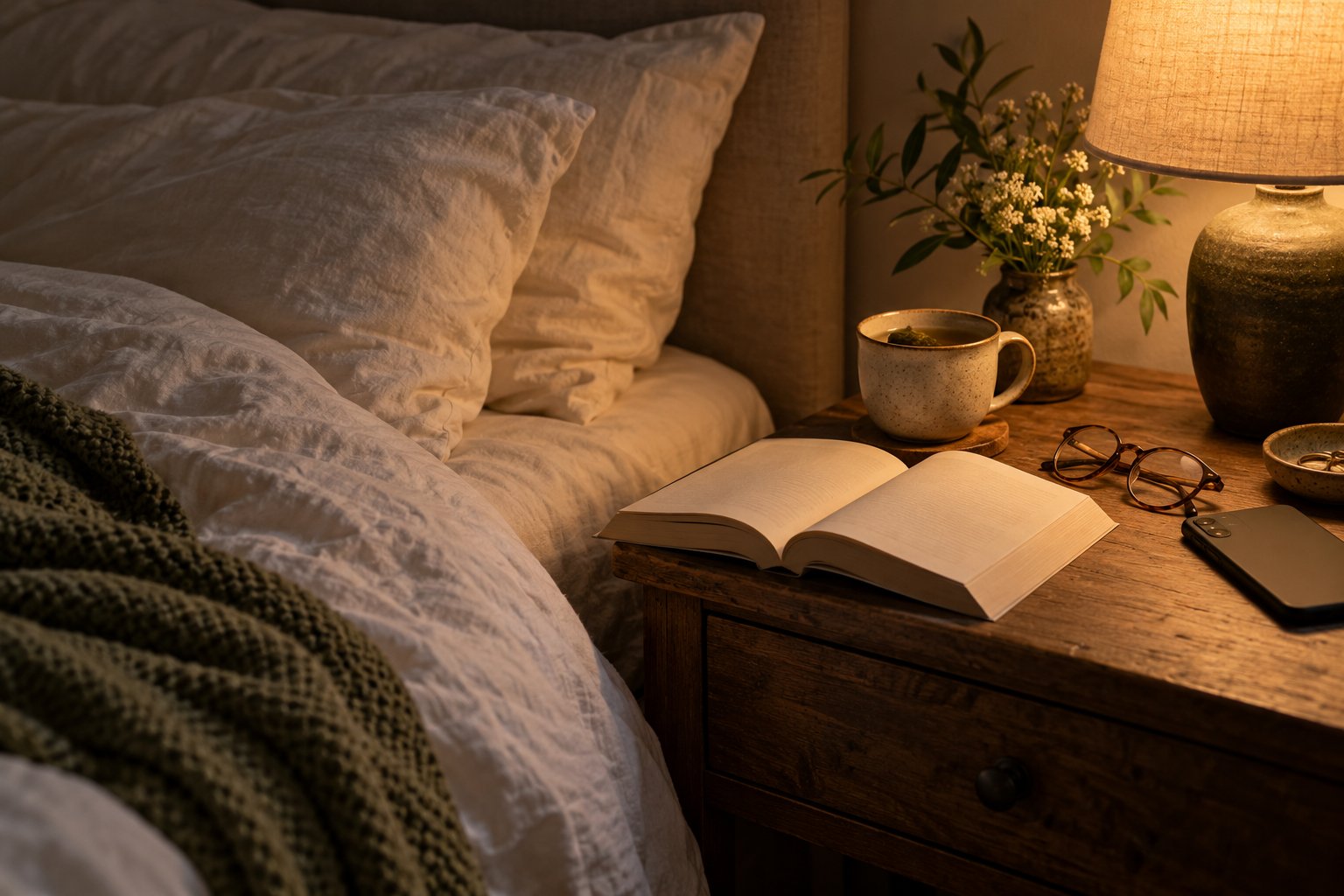
A good evening wind-down routine is a short, repeatable signal that the day is over. Dim the lights about an hour before bed, put your phone away, have a warm drink without caffeine and read something on paper for ten minutes. It takes no special kit, and done most nights it tends to make falling asleep feel less like a struggle.
The routine has four steps and fits into the last hour of the evening.
| Time before bed | Step | What to do |
|---|---|---|
| 60 minutes | Dim the lights | Lamps on, big lights off |
| 45 minutes | Phone away | Charge it outside the bedroom or across the room |
| 30 minutes | Warm drink | Herbal tea, warm milk or golden milk |
| 15 minutes | Read | A paper book, in bed or in a chair |
1. Dim the lights an hour before bed
Light is one of the strongest signals your body clock responds to. Bright light late in the evening may delay the natural rise in sleepiness, while dim, warm light lets it happen.
- Switch off overhead lights and use lamps.
- Choose warm-toned bulbs for the rooms you use at night.
- If you need to get up in the night, use a small night light rather than the main light.
This step works best paired with bright light in the morning, which our simple morning routine starts with.
2. Put the phone away
Phones keep the brain busy: messages, news, one more video. The content often matters more than the screen light, because it keeps you alert and pushes bedtime later.
- Charge it outside the bedroom if you can, and use a basic alarm clock.
- If it must stay in the room, put it face down out of reach and switch on do-not-disturb.
- Write tomorrow's to-do list first. Many people reach for the phone to "just check" something. Writing down what is on your mind before you put it away can help it stay away.
For a longer break from screens, see our digital detox weekend.
3. Have a warm drink without caffeine
A warm drink is less about any ingredient and more about the ritual: something to hold, sip slowly and associate with the end of the day.
- Good options: chamomile or other herbal teas, warm milk, or a mug of golden milk.
- Avoid caffeine in the afternoon and evening. Caffeine can stay in the body for hours, so many sleep experts suggest a cut-off in the early afternoon. Remember it is in tea, cola, chocolate and some pain relievers, not just coffee.
- Go easy on alcohol. It may make you sleepy at first but tends to disturb sleep later in the night.
- Keep it small so you are not up in the night to use the bathroom.
4. Read for ten minutes
Reading a paper book is a calm, absorbing activity that does not keep pulling you back for more the way a feed does. Choose something enjoyable rather than demanding: a novel, essays, a gentle non-fiction book. Work documents do not count.
If you prefer, swap reading for a few minutes of slow breathing, gentle stretching or a short journal entry. Our simple breathing exercises work well in bed.
Other things that help
- Keep the bedroom cool, dark and quiet. Thick curtains, an eye mask or earplugs can help.
- Finish big meals two to three hours before bed.
- Exercise earlier in the day if late workouts leave you wired.
- If you cannot sleep after about 20 minutes, get up, go somewhere dim, do something calm and return when you feel sleepy. Lying awake and frustrated tends to make the next night harder.
Questions people ask
How long should a wind-down routine be?
Thirty to sixty minutes suits most people, but even fifteen minutes of dim light and no phone is a useful start.
How much sleep do adults need?
Most adults need around seven to nine hours a night, according to sleep bodies such as the US National Sleep Foundation, though needs vary from person to person.
Do sleep supplements help?
Evidence for many sleep supplements is mixed. Ask a doctor or pharmacist before taking any, especially if you take other medicines.
Photograph: AI-generated image