Wellness Origin Hub
Yuja-cha, Korean citron honey tea with a homemade base
How to make yuja-cha, Korean citron honey tea: thin strips of yuzu peel and fruit kept in honey and sugar, then stirred into hot water for a bright winter drink.
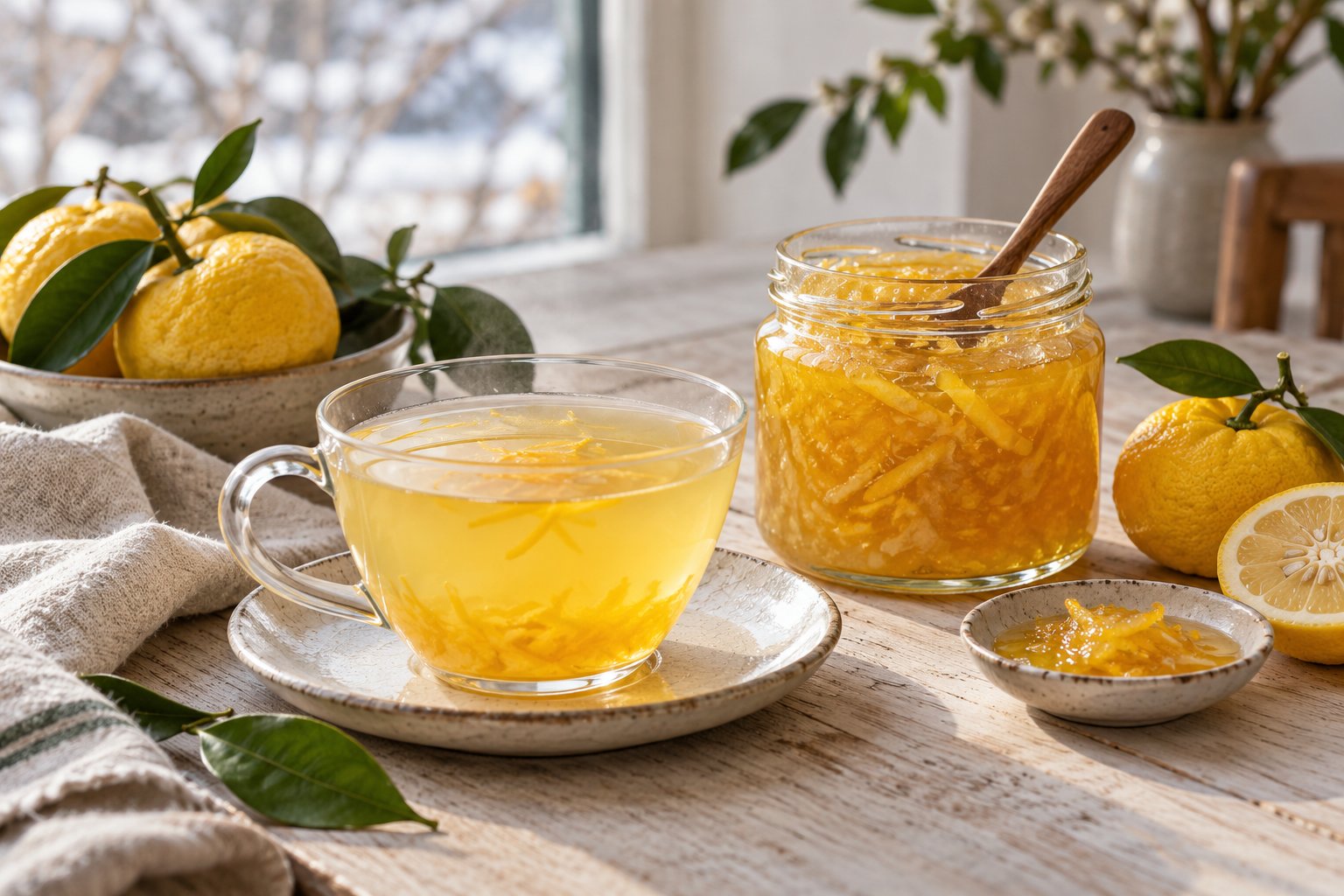
Yuja-cha is Korean citron tea: a spoonful of yuja-cheong, a thick, marmalade-like preserve of yuzu peel and fruit in honey and sugar, stirred into a cup of hot water. The drink is golden, sweet and fragrant, with the floral sourness of yuzu and soft strips of peel to chew at the bottom of the cup. One jar of the base makes about ten cups.
Yuja, known in Japan and most of the world as yuzu, is a small, knobbly citrus with thick, intensely scented skin and little juice. In Korea it grows mainly along the warm southern coast, and the town of Goheung and the island of Geoje are both known for it. The fruit is harvested in late autumn, and many families make a jar of yuja-cheong at that time to drink through the winter, often when someone has a cold or simply needs warming up.
How to make it
- Scrub the yuzu well under warm water with the salt or bicarbonate of soda to remove any wax and dust, then rinse and dry completely.
- Cut each fruit into quarters and pull the flesh away from the peel. Remove and discard the seeds, or keep them in a small muslin bag for extra body.
- Slice the peel into very thin strips, as fine as you can manage. Chop the flesh roughly.
- Weigh the peel and flesh together. In a bowl, mix them with an equal weight of honey and sugar combined, half and half, until the sugar starts to dissolve.
- Spoon into a clean, dry glass jar, pressing down so there are no gaps, and pour any remaining syrup over the top.
- Close the jar and leave it at cool room temperature for one day, then move it to the fridge. It is ready after two days and better after a week.
- To serve, stir 2 heaped tablespoons of the base into a cup of hot water, around 80°C, and drink with the peel.
If you cannot find yuzu
Fresh yuzu is hard to find outside East Asia and is sold briefly in winter at Korean and Japanese grocers. When it is not available, these work well:
| Swap | How to use it | How close it tastes |
|---|---|---|
| Lemon and mandarin | Two parts lemon peel and flesh to one part mandarin | Close; brighter and less floral |
| Unwaxed lemon only | Use the thinnest peel strips, as lemon pith is bitter | Good, sharper |
| Meyer lemon | Use as you would yuzu | Very close, sweet and fragrant |
| Bought yuja-cheong | A jar labelled "honey citron tea" | The easiest route; often sweeter |
Tips for the best flavour
- Slice the peel thinly. Thick strips stay tough and taste bitter. Thin strips soften in the syrup and become pleasant to eat.
- Dry the fruit and the jar. Water encourages mould. Dry everything well and use a clean spoon each time.
- Do not use boiling water. Very hot water flattens the floral aroma of yuzu. Let the kettle cool for a minute or two first.
- Mix honey and sugar. All honey gives a strong honey taste and a runny base; all sugar can crystallise. Half and half is a common balance in Korean homes.
- Taste before adding more. Start with one spoonful per cup, then add more if you want it sweeter and stronger.
Variations
- With ginger: add a few thin slices of fresh ginger to the jar for a spicier, warming tea.
- Iced: stir the base into cold sparkling water over ice for a citron soda in summer.
- On toast or yoghurt: yuja-cheong is very good on buttered toast or stirred into plain yoghurt.
- Black tea: add a spoonful to a cup of light black tea for a citrus tea, a little like an Earl Grey.
Make ahead and storage
The base keeps in the fridge for about three months if you always use a clean, dry spoon. If you see mould on the surface, throw the whole jar away. Use the buttons beside the ingredients to make a larger jar, keeping the fruit and the honey and sugar in equal weights.
Questions people ask
Is yuja-cha good for a cold?
In Korea it is a traditional comfort drink when someone has a cold. Yuzu peel contains vitamin C, and a warm, sweet drink can soothe a sore throat, but yuja-cha is a pleasant drink rather than a treatment. Each cup also carries a fair amount of sugar, so it is one to enjoy, not to drink all day.
Does yuja-cha contain caffeine?
No. It is fruit, honey and sugar, so it is caffeine-free and works well in the evening. For more caffeine-free cups, see our herbal teas guide or the Korean barley tea kept in many Korean fridges.
Why is my yuja-cha bitter?
Usually because the peel was cut too thick or left with lots of white pith, or because the base was used before it rested. Give it a few more days in the fridge, and slice the next batch finer.
For another winter cup from Korea, try the cold cinnamon and ginger punch sujeonggwa.
Photograph: AI-generated image