Wellness Origin Hub
Herbal teas guide: peppermint, chamomile, rooibos and more
A herbal teas guide to peppermint, chamomile, rooibos, ginger, hibiscus and lemongrass: what each one tastes like, how to brew it, and who should take care with certain herbs.
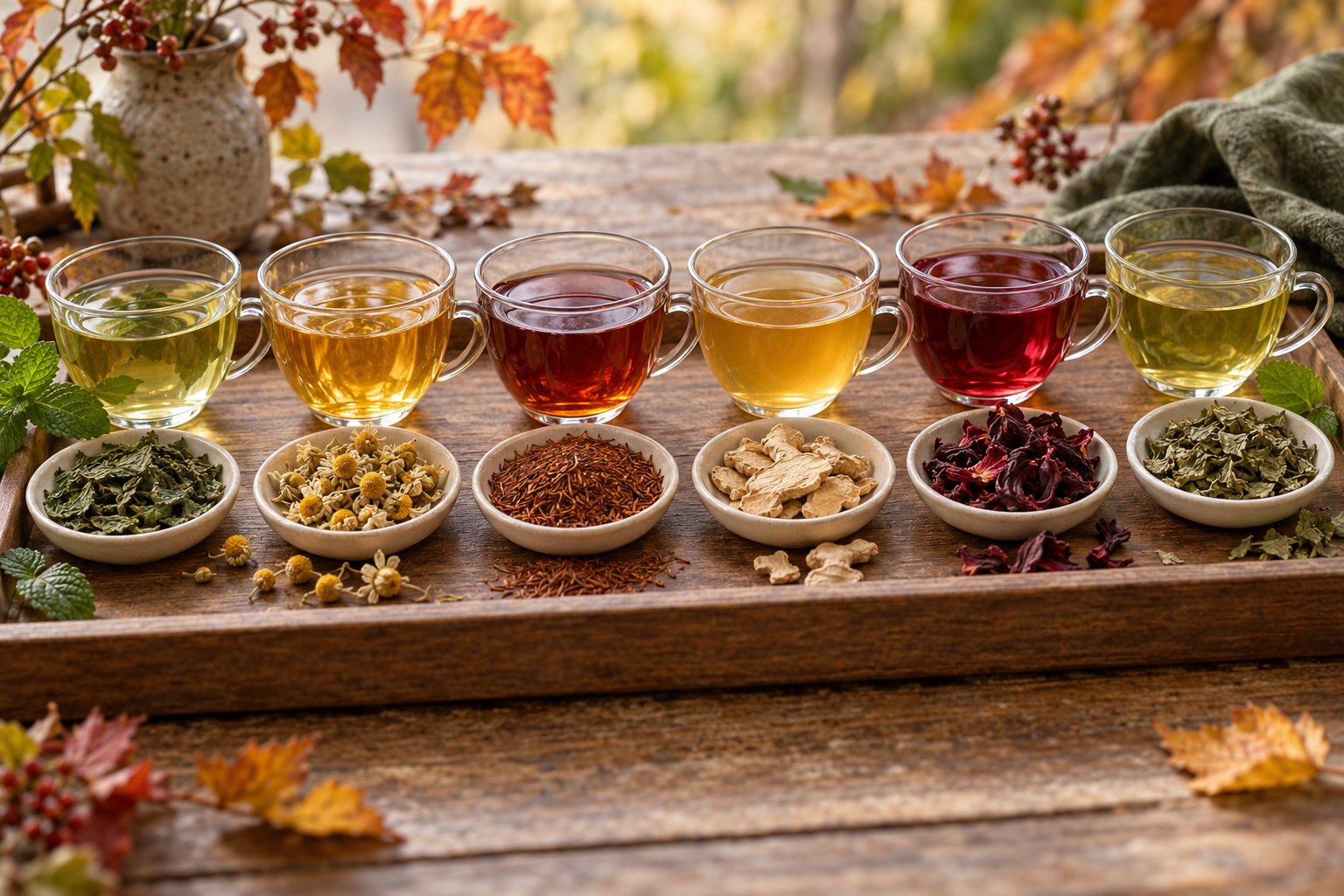
Herbal teas are infusions of flowers, leaves, roots, bark or fruit from plants other than the tea plant, so most are naturally caffeine-free. Peppermint is cool and fresh, chamomile is soft and apple-like, rooibos is sweet and woody, ginger is warming and spicy, hibiscus is sharp and fruity, and lemongrass is bright and citrusy. Most brew with just-boiled water for five minutes or so, and all of them can be drunk hot or iced.
What counts as herbal tea
Black, green, white and oolong tea all come from one plant, Camellia sinensis, and all contain caffeine. Anything else steeped in hot water is technically a tisane or infusion, though most people call it herbal tea. Some blends mix the two, such as Moroccan mint tea, which is green tea with fresh mint, so check the ingredients if you want to avoid caffeine. Our guide to caffeine limits covers how much is in regular tea.
Six herbal teas at a glance
| Tea | Made from | Taste | Colour | Steep time |
|---|---|---|---|---|
| Peppermint | Leaves | Cool, clean, sweet finish | Pale green-gold | 5 minutes |
| Chamomile | Dried flowers | Soft, honeyed, like apples | Pale gold | 5 minutes |
| Rooibos | Needle-like leaves and stems | Sweet, woody, slightly vanilla | Amber to red | 5–7 minutes |
| Ginger | Root | Hot, spicy, warming | Pale straw | 10 minutes |
| Hibiscus | Dried calyces (the part around the flower) | Tart, fruity, like cranberry | Deep red | 5–10 minutes |
| Lemongrass | Stalks and leaves | Bright, lemony, grassy | Pale yellow | 5–10 minutes |
All six brew well with water just off the boil. Unlike black or green tea, most herbal teas do not turn bitter if you leave them a little longer, so steeping times are a guide.
Peppermint
Peppermint tea is made from the leaves of the peppermint plant, a natural cross between watermint and spearmint. It tastes cool and clean, and many people drink it after a meal. Research suggests peppermint may ease some digestive discomfort, mostly from studies of peppermint oil rather than tea. It can make heartburn and acid reflux worse in some people, because it may relax the valve at the top of the stomach.
Fresh mint works too: a handful of leaves in a mug of hot water for five minutes.
Chamomile
Chamomile is made from small, daisy-like dried flowers. It tastes soft and slightly sweet, a little like apples, and is a popular evening drink. Some small studies suggest it may help with relaxation and sleep, but the evidence is limited; much of its value is probably the calm ritual of a warm drink. Our chamomile and lavender tea is a gentle evening blend.
Chamomile belongs to the daisy family, so people allergic to ragweed, daisies or chrysanthemums may react to it.
Rooibos
Rooibos, or red bush, comes from a shrub grown in the Cederberg region of South Africa's Western Cape. The leaves are usually fermented, which turns them red and gives a sweet, woody, slightly vanilla flavour. It is naturally caffeine-free and low in tannins, so it rarely tastes bitter and takes milk well. It is the base of our rooibos latte.
Green (unfermented) rooibos is also sold, with a lighter, grassier taste.
Ginger
Ginger tea can be made from tea bags, but fresh root gives a much stronger flavour. Slice a thumb-sized piece thinly, pour on just-boiled water and steep for ten minutes, or simmer for a more fiery cup. Ginger has long been used for nausea, and some research supports a modest effect, including for pregnancy sickness, though pregnant women should check with a midwife or doctor first.
Hibiscus
Hibiscus tea is made from the deep red calyces of the roselle plant. It is tart and fruity, rather like cranberry, and is drunk across West Africa as bissap, in Mexico as agua de jamaica and in Egypt as karkadé. It makes an excellent iced drink; our hibiscus iced tea covers the traditions.
Some studies suggest hibiscus may lower blood pressure slightly. That sounds welcome, but it means people on blood pressure medicine should ask a doctor before drinking a lot. It is commonly advised to avoid it in pregnancy.
Lemongrass
Lemongrass is a tall tropical grass used widely in Southeast Asian cooking. As a tea it tastes bright and lemony without any sourness. Bruise fresh stalks with the back of a knife before steeping to release the flavour. It pairs well with ginger.
Who should take care
Most herbal teas are safe for most adults in normal amounts, but they are not without effects.
- Pregnancy and breastfeeding. There is little safety information on many herbs. The NHS advises drinking herbal teas in moderation in pregnancy and asking a midwife or GP if you are unsure about a particular one.
- Medicines. Some herbs can interact with medicines, including blood thinners and blood pressure medicine. Ask a pharmacist if you take regular medication and drink a lot of one herbal tea.
- Liquorice tea. Large amounts of liquorice can raise blood pressure and lower potassium levels.
- Allergies. Chamomile and other daisy-family herbs can trigger reactions in sensitive people.
Questions people ask
Do herbal teas count towards my daily fluids?
Yes. Herbal teas without added sugar are a good way to drink more water, especially if you find plain water dull.
Are herbal teas good for detox?
No. Your liver and kidneys clear waste from the body, and no tea makes them work better. Be wary of "detox" teas, some of which contain laxatives.
How should I store loose herbal tea?
In an airtight container away from light, heat and strong smells. Dried herbs keep their flavour for around six months to a year.
Photograph: AI-generated image