Wellness Origin Hub
Korean barley tea, the nutty iced drink kept in every fridge
How to make Korean barley tea (boricha) at home: roasted barley simmered in water, cooled and kept in a jug for a nutty, caffeine-free drink all summer.

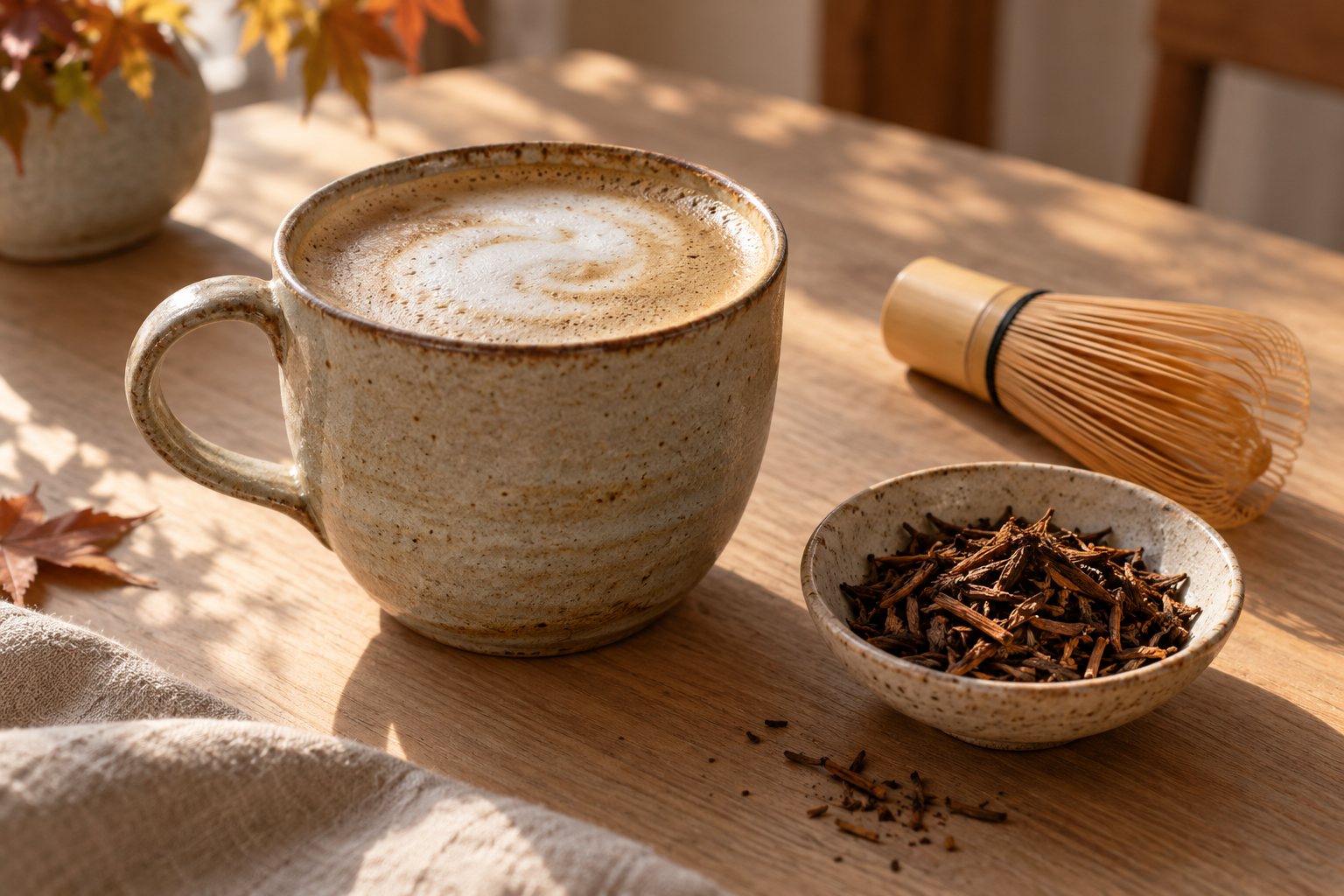
Korean barley tea, or boricha, is roasted barley simmered in water for about 15 minutes, strained and chilled. It tastes toasty and nutty, a little like the crust of good bread, with no bitterness and no caffeine. You make a litre at a time, keep it in the fridge and drink it like water.
That is exactly how it is used in Korea. Many homes keep a jug of boricha in the fridge all year, and plenty of restaurants put a jug of it on the table instead of plain water. In winter it is drunk warm, in summer straight from the fridge. Japan has a near relative, mugicha, which is the classic cold summer drink there.
How to make it
- Put the roasted barley in a dry saucepan over a medium heat and toast it for 2 to 3 minutes, shaking the pan, until it smells fragrant. Skip this if your barley is freshly roasted.
- Add the water and bring it to the boil.
- Turn the heat down and simmer for 10 to 15 minutes, until the water is a clear amber colour.
- Take the pan off the heat and leave the barley in for another 5 minutes for a stronger tea.
- Strain into a heatproof jug, let it cool, then chill it in the fridge.
- Serve in tall glasses over ice.
Choosing the barley
Look for bags labelled "roasted barley" or "barley tea" in Korean, Japanese or general Asian grocers. The grains are dark golden to brown and already roasted, so they are ready to brew. Two forms are common:
| Form | How to use it | Good for |
|---|---|---|
| Loose roasted grains | Simmer 10 to 15 minutes, strain | The fullest, toastiest flavour |
| Barley tea bags | Simmer 5 minutes, or steep in cold water overnight | Speed and no straining |
Plain pearl barley from the supermarket will not taste the same unless you roast it yourself. You can: toast it in a dry pan on a low to medium heat, stirring often, for 15 to 20 minutes until it is deep brown all the way through. It takes patience, and uneven grains taste burnt, so bought roasted barley is easier.
Tips for the best flavour
- Go by colour, not time. Pale tea tastes thin; dark brown tea starts to taste bitter. Clear amber is right.
- Do not boil it hard. A gentle simmer gives a cleaner taste than a rolling boil.
- Cool it quickly. Pour it into a wide jug or stand the pan in a sink of cold water. Tea that sits warm for hours loses its fresh, toasty smell.
- Keep it plain. Boricha is meant to be unsweetened. That is part of why people drink it all day, and it is one of the easiest swaps we suggest in our guide to sugar in drinks.
Variations
- Cold brew: put two barley tea bags in a litre of cold water and leave it in the fridge overnight. Softer and very smooth.
- Corn tea (oksusu-cha): use half roasted barley and half roasted corn kernels for a sweeter, rounder flavour. It is another common Korean house tea.
- With a little colour: add a few slices of fresh ginger to the simmer, or pour the cold tea over ice with a strip of lemon peel.
- Hot: drink it warm straight from the pan in winter, the way it is often served after a meal.
- Half and half: for a fruity pitcher, mix it with our hibiscus iced tea. It is not traditional, but the toast and the tart flavours work well together.
Make ahead and storage
Keep the strained tea in a covered jug in the fridge and drink it within two to three days. After that it starts to taste stale and can turn sour. Always strain out the grains before storing; tea left sitting on the barley turns bitter and spoils faster.
The used grains are not reusable for a second litre, as most of the flavour goes into the first one. Unopened bags of roasted barley keep for months in a sealed container in a cool, dry cupboard.
Questions people ask
Does barley tea have caffeine?
No. Barley is a grain, not a tea leaf, so boricha is naturally caffeine-free. That makes it a common choice in Korean homes for children, for the evening and for anyone cutting back on coffee. If you are weighing up your caffeine sources, our matcha vs coffee comparison covers the other end of the scale.
Is barley tea gluten-free?
No. Barley contains gluten, and some of it can pass into the tea. People with coeliac disease or a gluten allergy should avoid it. Roasted corn tea is the usual gluten-free alternative.
Can I drink it instead of water?
Many people in Korea do, and unsweetened barley tea counts towards your daily fluid in the same way water does. Our guide to how much water you need explains why there is no fixed number of glasses for everyone.
Photograph: AI-generated image