Wellness Origin Hub
How much water do you really need a day?
How much water you need a day depends on your size, activity and the weather. Here is what the NHS and EFSA actually recommend, where the 8-glasses rule came from and how to tell if you are drinking enough.
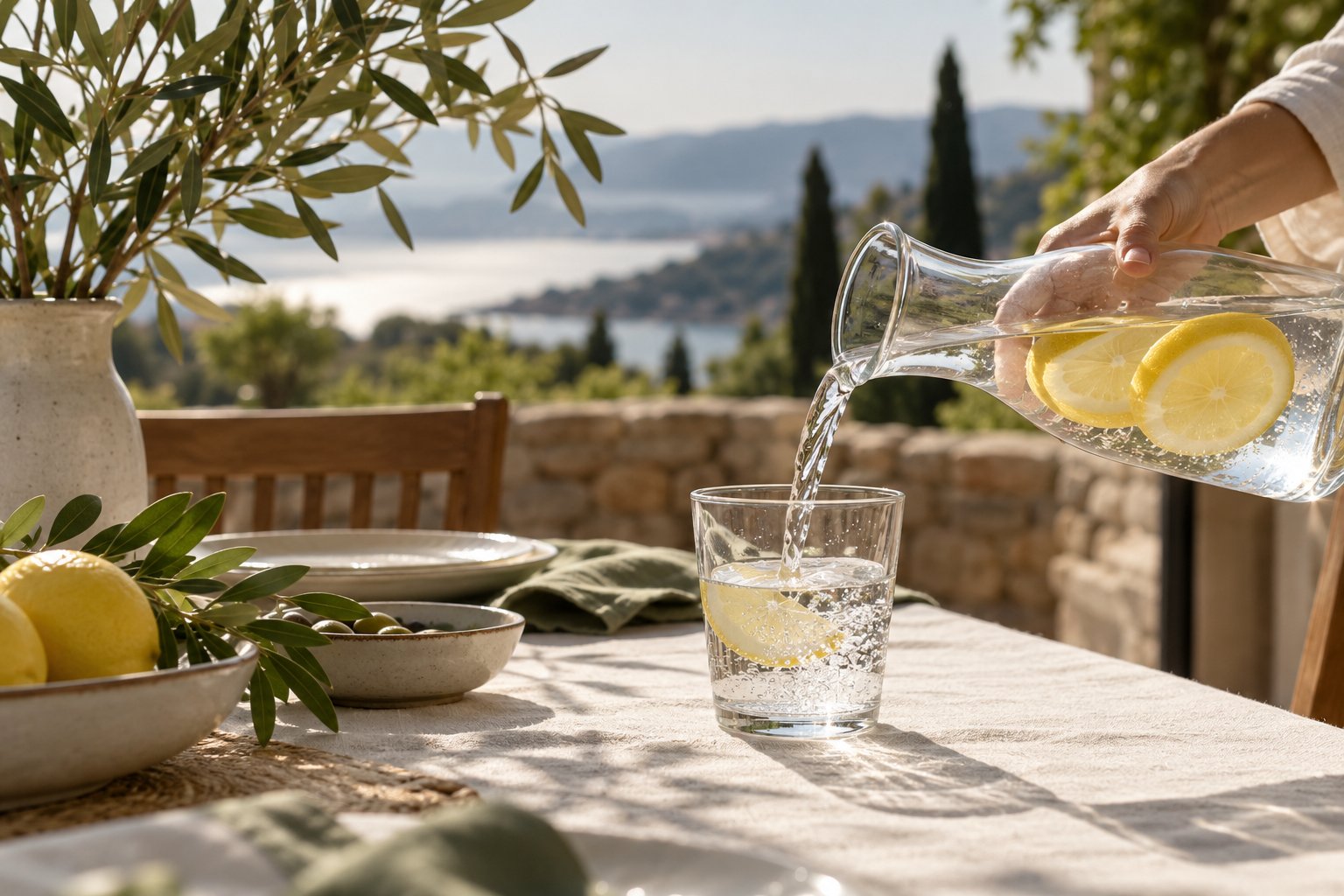
Most healthy adults need around 2 to 2.5 litres of water a day from all sources, food included. EFSA sets an adequate total water intake of 2.0 litres a day for women and 2.5 litres for men, and estimates that about a fifth of that usually comes from food. In practice the NHS suggests 6 to 8 cups or glasses of fluid a day, and tea, coffee and milk all count. On hot days or when you exercise, you need more.
Where the 8-glasses rule came from
"Drink eight glasses of water a day" is easy to remember, which is probably why it lasted. Its exact origin is unclear, and it was never a precise scientific rule. Old recommendations about total water needs were often quoted without the part that said much of it comes from food.
The rule is not far off for many people, but it is a rough guide, not a target you must hit with plain water.
What the recommendations say
| Source | Recommendation | Includes |
|---|---|---|
| EFSA | 2.0 litres a day for women, 2.5 litres for men | All water: drinks and food |
| NHS (Eatwell Guide) | 6–8 cups or glasses of fluid a day | Drinks only, including tea and coffee |
These are amounts for adults in a moderate climate doing moderate activity. Larger bodies, physical work, exercise, heat, illness with fever or vomiting, pregnancy and breastfeeding all raise the amount you need.
Water from food counts
Fruit, vegetables, soups, yoghurt and even cooked grains contain a lot of water. Cucumber, watermelon, lettuce, tomatoes and oranges are mostly water. A diet with plenty of fruit and vegetables does a fair share of the work without you noticing.
Do tea and coffee count?
Yes. The NHS counts tea, coffee, milk and sugar-free drinks towards your daily fluid. Caffeine has a mild diuretic effect, but in the amounts most people drink, coffee and tea still leave you with a net gain of fluid. Water remains the best everyday choice because it has no sugar or calories.
Juices and sugary drinks also count as fluid, but they add sugar, so they are better kept small and occasional.
Is thirst a good guide?
For most healthy adults, yes. Thirst is a sensitive signal, and drinking when you are thirsty and with meals keeps most people well hydrated.
There are exceptions. Older adults often feel less thirst, children may not notice it while playing, and people exercising hard in the heat can fall behind. In these cases it helps to drink at regular times rather than waiting.
Urine colour is a simple check. The NHS suggests aiming for pale straw-coloured urine. Dark yellow, strong-smelling urine is a sign you need to drink more.
Signs you need more water
- Feeling thirsty
- Dark yellow urine, or passing urine less often
- A dry mouth, lips or eyes
- Feeling tired, dizzy or light-headed
- Headache
Hot days and exercise
On hot days and during exercise you lose more water through sweat, and you lose salt with it.
- Drink before you set off, and carry a reusable water bottle so it is always within reach.
- Sip regularly rather than drinking a lot at once.
- Eat water-rich food: fruit, salads and cold soups.
- For long, sweaty sessions, you may need to replace salt as well as water. Our guide to electrolytes explains when water is enough and when it is not.
Can you drink too much water?
It is possible but rare. Drinking a very large amount in a short time, often during endurance events, can dilute the sodium in your blood, a condition called hyponatraemia. Symptoms include headache, confusion and nausea, and it can be serious. For everyday life, drinking to thirst avoids it.
Questions people ask
Should I drink water first thing in the morning?
It is a good habit, since you have gone several hours without drinking, but there is no special benefit beyond hydration. A glass while the kettle boils is part of our simple morning routine.
Does sparkling water hydrate as well as still?
Yes. Plain sparkling water hydrates just as well. Flavoured versions can contain sugar or acids, so check the label.
How much water should children drink?
It depends on age and size. Water and milk are the best drinks for children, and they should be offered drinks regularly, especially in hot weather or when active.
Photograph: AI-generated image