Wellness Origin Hub
How much sugar is in common drinks, and simple swaps
How much sugar is in drinks like cola, fruit juice, flavoured coffee and bubble tea, how it compares with the NHS daily limit, and simple swaps that still taste good.
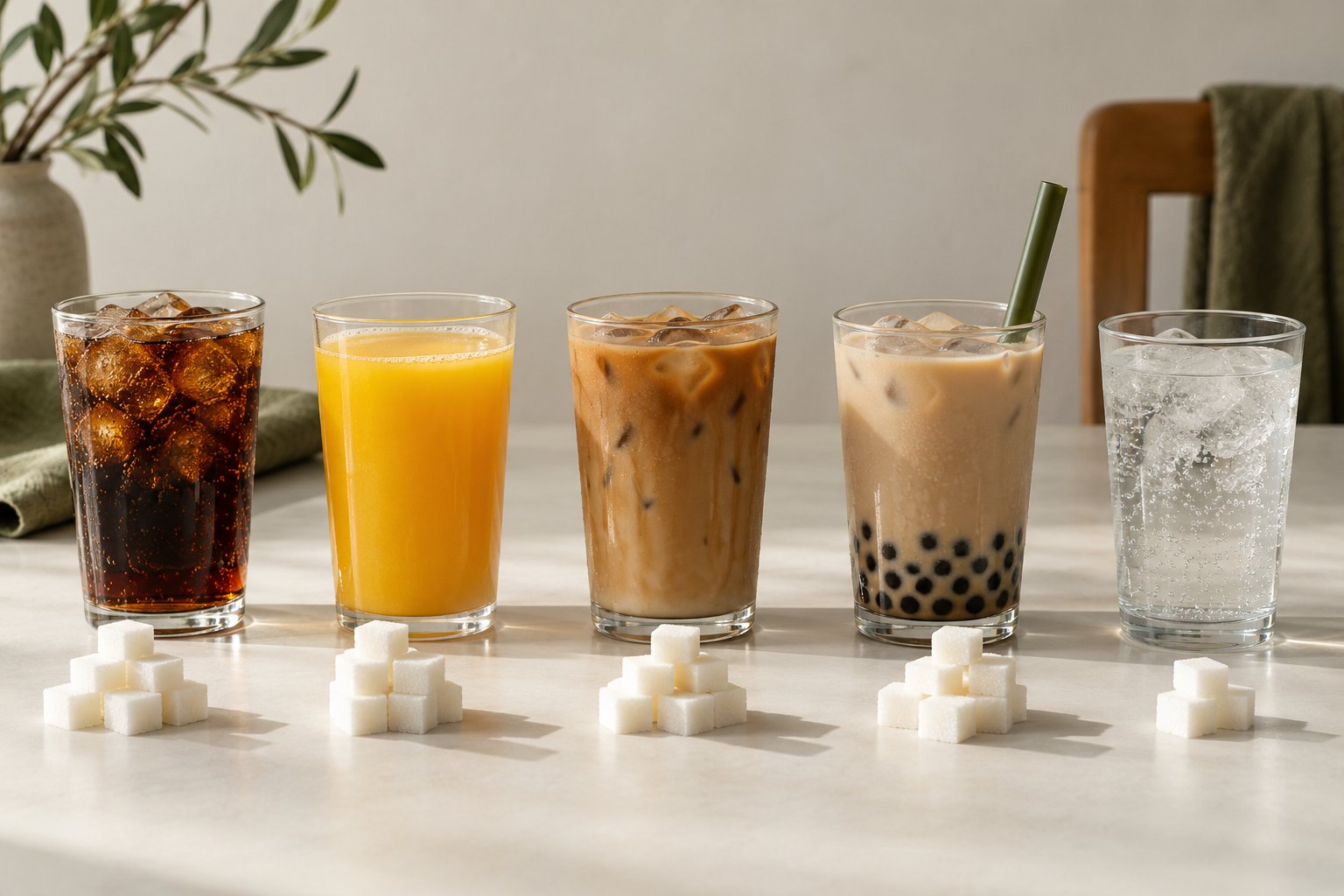
Drinks are one of the easiest places for sugar to hide. The NHS says adults should have no more than 30 g of free sugars a day, roughly 7 sugar cubes, and a single can of regular cola can contain more than that on its own. Fruit juice, sweetened coffee drinks and bubble tea can add up just as quickly. The good news is that drinks are also one of the easiest places to cut back, because the swaps are simple.
What counts as "free sugars"
Free sugars are sugars added to food and drink, plus the sugars naturally found in honey, syrups, fruit juices and smoothies. They are the ones health bodies advise limiting.
The sugar naturally present in whole fruit and in plain milk does not count, because it comes packaged with fibre or other nutrients and tends to be eaten more slowly.
How much is too much
| Who | Daily limit for free sugars | Source |
|---|---|---|
| Adults and children 11+ | No more than 30 g (about 7 cubes) | NHS |
| Children 7–10 | No more than 24 g (about 6 cubes) | NHS |
| Children 4–6 | No more than 19 g (about 5 cubes) | NHS |
| Everyone | Less than 10% of daily energy, ideally under 5% | WHO |
Sugar in common drinks
Amounts vary widely between brands, cafés and sizes, so read the label or ask for the nutrition information where you can. The guide below is a rough picture.
| Drink | Sugar | Notes |
|---|---|---|
| Regular cola, 330 ml can | Around 35 g, about 9 cubes | The NHS uses this as a standard example |
| Orange juice, 150 ml glass | Around 12 g | Based on USDA food data; counts as free sugar |
| Bubble tea, large cup | Often very high | Syrup, sweetened milk and pearls all add sugar |
| Flavoured iced coffee or latte | Often high | Each pump of syrup adds more |
| Sports drink | Moderate to high | Designed for long exercise, not everyday drinking |
| Plain milk | Natural milk sugar only | Not free sugar |
| Sparkling or still water | 0 g | |
| Unsweetened tea or coffee | 0 g |
As a guide when reading UK labels, the NHS treats more than 11.25 g of sugar per 100 ml as high and 2.5 g or less per 100 ml as low for drinks.
Why sugar in drinks matters
Sugar in drinks does not fill you up the way food does, so it is easy to take in a lot without noticing. Regularly having too much free sugar is linked to weight gain and tooth decay, and sugary drinks in particular are linked to a higher risk of type 2 diabetes in research studies. Acidic drinks, sugary or not, can also wear tooth enamel.
Fruit juice and smoothies
Fruit juice has vitamins, but juicing releases the sugar and removes most of the fibre. The NHS advises keeping fruit juice and smoothies to a combined total of 150 ml a day, and says they count as a maximum of one of your 5 a day, however much you drink. Whole fruit is the better choice.
Simple swaps
The aim is not to give up every sweet drink, just to make the everyday ones lower in sugar.
- Cola or lemonade → sparkling water with a squeeze of lime, or a diet version as a step down.
- Fruit juice → whole fruit with water, or juice diluted half and half with sparkling water.
- Flavoured latte → ask for one pump of syrup instead of three, or add cinnamon instead.
- Bubble tea → order 25% or 50% sweetness, which most shops offer.
- Sweet iced tea → unsweetened hibiscus iced tea or chilled Korean barley tea, both full of flavour with no sugar needed.
- Squash or cordial → no-added-sugar versions, or water with cucumber and mint.
- Energy drinks → for a lift, a cup of tea or coffee contains caffeine without the sugar.
What about sweeteners?
Diet drinks with low- or no-calorie sweeteners can help people move away from sugary drinks. Sweeteners approved for use in the UK, EU and US have been assessed for safety by regulators such as EFSA and the FDA. Some people find they keep a taste for very sweet drinks, so many aim to move on to water or unsweetened drinks over time.
Questions people ask
Is honey or agave syrup healthier than sugar?
Not in any meaningful way. Honey, agave, maple and other syrups all count as free sugars, so they fall under the same daily limit.
Are fruit smoothies healthy?
Smoothies keep more fibre than juice and can be part of a healthy diet, but their sugar still counts as free sugar. Including vegetables, oats or yoghurt and keeping the portion to around 150 ml helps.
What is the best drink for children?
Water and plain milk. The NHS advises against sugary drinks for children, and suggests fruit juice, if given, is diluted and served with meals.
Photograph: AI-generated image