Wellness Origin Hub
How to declutter your kitchen in an afternoon
Declutter your kitchen in one afternoon with a zone-by-zone plan, so healthy food is easy to see, reach and cook, and the counter is clear enough to use.
To declutter a kitchen in an afternoon, work in a fixed order: counters first, then the fridge, the cupboards and the drawers, and keep only what you use, can see and can reach. A clear counter and visible staple foods make cooking at home easier, and that tends to matter more for healthy eating than any single recipe.
Set aside three to four hours, put on some music, and have three boxes or bags ready: keep elsewhere, give away, and recycle or bin.
The plan at a glance
| Zone | What to do | Time |
|---|---|---|
| 1. Counters | Clear everything, put back only daily-use items | 30 minutes |
| 2. Fridge and freezer | Empty, check dates, wipe, refill by zones | 45 minutes |
| 3. Food cupboards | Group, check dates, decant staples | 60 minutes |
| 4. Pots, pans and gadgets | Keep the ones you used this year | 45 minutes |
| 5. Drawers and containers | Match lids, cut duplicates | 30 minutes |
1. Counters: start with a clear surface
Take everything off the counters. Wipe them down. Then put back only what you use every day, such as the kettle, a chopping board, a knife block, and perhaps oil and salt by the hob.
Everything else needs a home in a cupboard. A clear counter is the single biggest difference between a kitchen that invites cooking and one that does not, because you can start chopping without first moving a pile of post.
2. Fridge and freezer
- Take everything out, a shelf at a time.
- Bin anything past its use-by date or that has gone off. "Best before" dates are about quality rather than safety, so use your judgement for dry goods, but follow use-by dates strictly.
- Wipe the shelves with warm soapy water.
- Refill in zones: ready-to-eat food and leftovers at the top, raw meat and fish on the bottom shelf in a container, vegetables in the drawer.
- Put cut vegetables, washed fruit and yoghurt at eye level.
In the freezer, label anything unmarked with what it is and roughly when it went in. Eat the oldest first.
3. Food cupboards
This is where most kitchens hide duplicates and forgotten packets.
- Empty one cupboard at a time onto the table.
- Group like with like: grains, tins, baking, spices, snacks.
- Check dates and use up anything open and nearly finished this week.
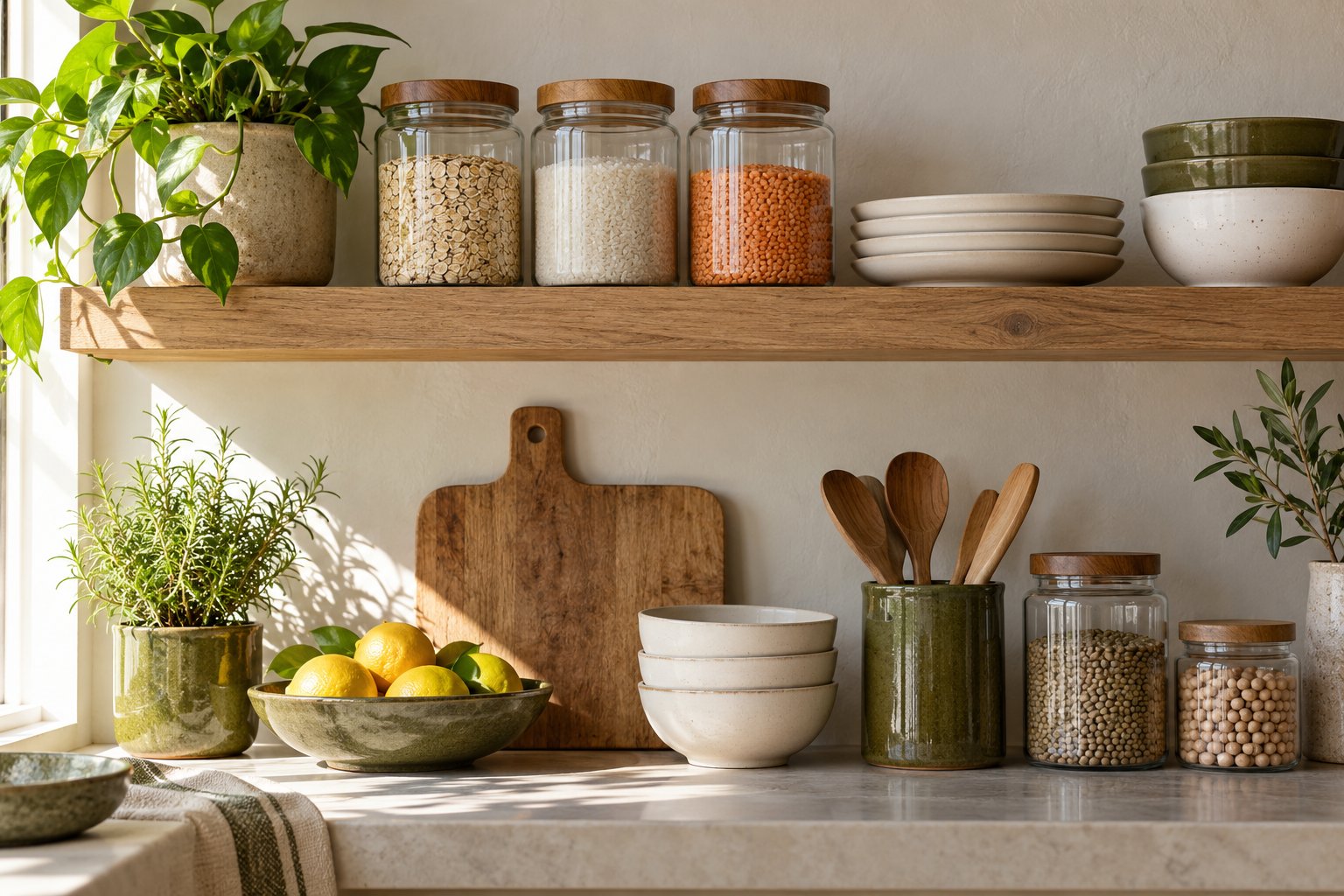
- Decant staples you use often, such as oats, rice, lentils and pasta, into clear jars so you can see when they are running low.
- Put the healthy basics at the front: tinned beans and tomatoes, whole grains, nuts and seeds. Move snacks higher up.
Ground spices lose flavour over time; if one smells of very little, replace it with a small jar. Keep a short list on the inside of the cupboard door of what to rebuy.
If one cupboard is all you have energy for today, our gentle spring reset works on that scale.
4. Pots, pans and gadgets
Ask one question about each item: did I use this in the last year?
- Keep one good large pan, one small pan, a frying pan and a baking tray as a core set.
- Give away duplicate pans, unused gadgets and single-purpose tools you have forgotten you own.
- Store heavy items low and everyday items at waist height.
Be honest about appliances. If the bread maker has not moved in two years, someone else could use it.
5. Drawers and containers
- Containers: match every box with a lid. Recycle any without a partner. Glass boxes that stack neatly make storage much easier; see our guide to glass meal prep containers.
- Utensils: keep one of each tool you use. Most kitchens have three spatulas and one that everyone actually reaches for.
- The junk drawer: empty it, bin dead batteries and old takeaway menus, and keep it to things that genuinely belong in the kitchen.
Keep it clear
- One in, one out. A new gadget means an old one leaves.
- Clear the counter every evening. Five minutes before bed makes the morning easier.
- Shop from a list. It stops duplicates arriving in the first place.
- Do a ten-minute fridge check before each weekly shop.
A tidy kitchen makes the next step easier: a short weekly cook-up, as in our meal prep for people who hate meal prep, or a cheap store-cupboard routine like our guide to cooking on a budget.
Questions people ask
Where should I start if I only have an hour?
Clear the counters and the fridge. Those two make the most difference to cooking day to day.
What should I do with food I will not eat?
Unopened, in-date food can usually go to a local food bank or a community fridge. Check what they accept first.
How often should I declutter the kitchen?
A full session once or twice a year, with the small daily and weekly habits above, is enough for most homes.
Photograph: AI-generated image