Wellness Origin Hub
The best glass meal prep containers with leak-proof lids
The best glass meal prep containers go from fridge to oven to table and keep sauces in the bag. What to check, from lids to glass type, and three sets worth buying.
We may earn a commission if you buy through links in this article. How we make money.
Our picks at a glance
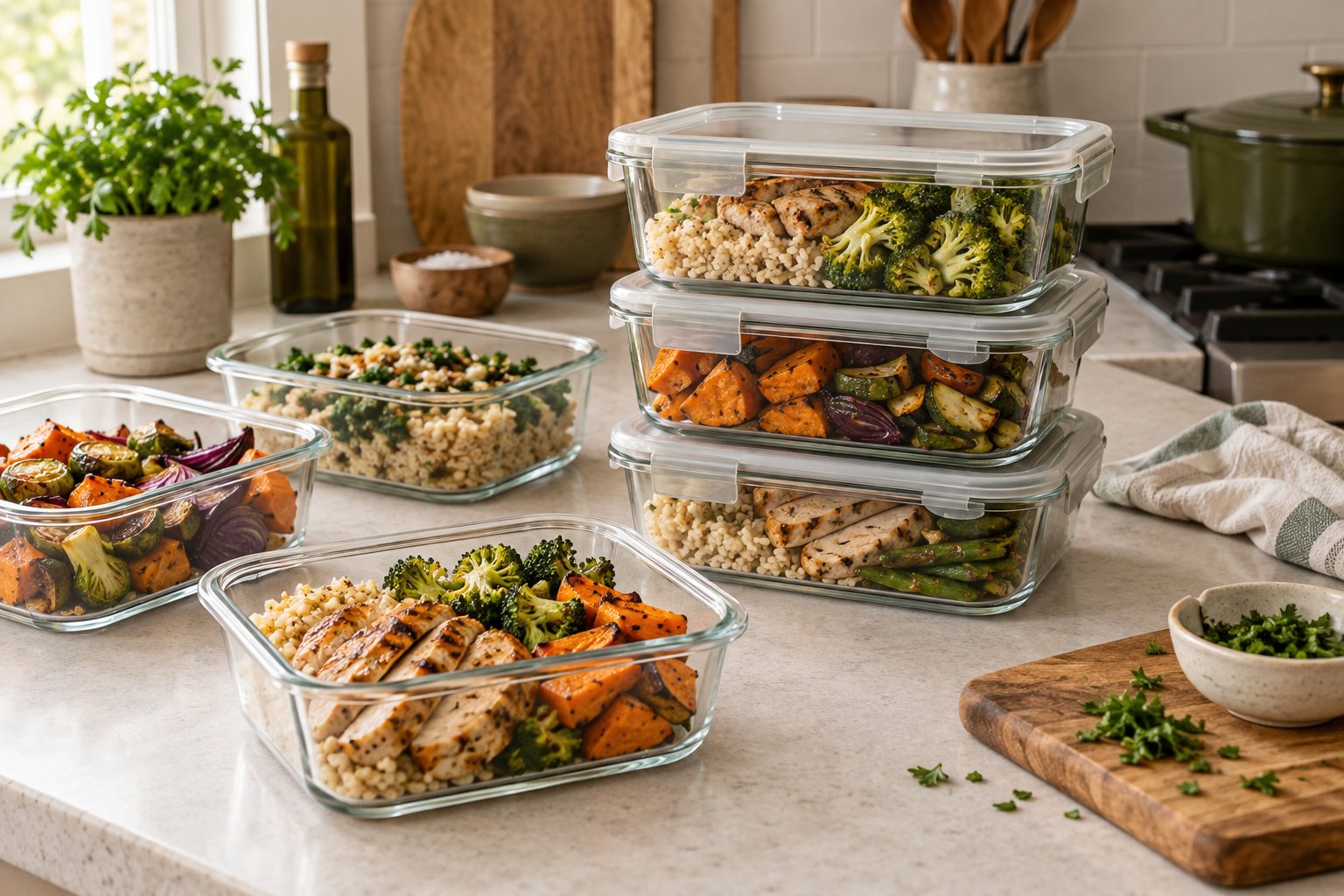
The best glass meal prep containers have oven-safe glass bases, lids that genuinely seal, and shapes that stack in the fridge. Glass does not stain or hold smells the way plastic can, and you can reheat food in the same dish you stored it in. The trade-off is weight, and the fact that almost every lid is plastic and should stay out of the oven.
Glass or plastic?
| Glass | Plastic | |
|---|---|---|
| Stains and smells | Resists both | Tomato and curry can stain |
| Reheating | Oven and microwave safe (base) | Microwave only, check the label |
| Weight | Heavy | Light |
| Breakage | Can chip or break if dropped | Hard to break |
| Lifespan | Many years if looked after | Scratches and warps over time |
Glass suits people who prep at home and reheat at home or at work with a microwave. If you carry lunch a long way every day, the weight is worth thinking about.
What to look for
- Oven-safe glass. Look for tempered or borosilicate glass that the maker says is oven safe. Check the maximum temperature in the instructions.
- Leak-proof lids. Four locking clips or a firm silicone seal keep soups and dressings in. Press-on lids are fine for dry food but can leak when tipped.
- Lid material. Nearly all lids are plastic. Take them off before the oven and leave them loose or vented in the microwave.
- Shapes and sizes. Rectangular containers use fridge space better than round ones. A mix of one-portion and two-portion sizes is useful.
- Nesting. Containers that nest inside each other save cupboard space.
- Divided compartments. Handy if you dislike rice soaking up sauce, but harder to clean.
How we chose
We looked at glass type, lid design and sealing, oven and dishwasher guidance from the makers, set sizes and how long each range has been sold. We have not run our own drop or leak tests. Prices vary with set size, so check before you buy.
Best leak-proof: Rubbermaid Brilliance Glass Food Storage Containers
Around $45
A strong choice if leaks are your main worry. The latching lid closes firmly onto a seal, so stews and dressings travel well. Take the lid off for the oven, and vent it in the microwave.
What we like
- Latching lids with a seal for soups and sauces
- Clear lids let you see what is inside
- Glass base is oven safe without the lid
- Stack neatly
Keep in mind
- Lids are bulky
- Latches need care to avoid snapping over time
Best value: Pyrex Simply Store Glass Food Storage Set
Around $35
A large set of basic glass dishes for not much money. The push-on lids are fine for food that stays upright in the fridge or freezer, less so for soup in a work bag. Good for home cooks who mostly prep and eat at home.
What we like
- Many pieces for the price
- Glass dishes are oven safe
- Familiar, long-running range
- Easy to replace lids
Keep in mind
- Push-on lids are not fully leak-proof
- Round dishes use more fridge space
Best for carrying lunch: Glasslock Oven Safe Food Storage Containers
Around $40
Locking lids on all four sides make these a good choice for lunches that travel. The rectangular boxes fit a bag and a fridge shelf well. Pull the silicone seal out now and then to wash and dry it.
What we like
- Four-sided locking lids with a silicone seal
- Tempered glass made for oven use
- Rectangular shapes fit lunch bags
Keep in mind
- Heavy
- Lids can hold smells in the seal if not dried well
At a glance
| Set | Best for | Lid type | Oven-safe base |
|---|---|---|---|
| Rubbermaid Brilliance Glass | Soups and sauces | Latching, sealed | Yes |
| Pyrex Simply Store | Value, home storage | Push-on | Yes |
| Glasslock | Lunches on the move | Four-clip locking | Yes |
How to look after glass containers
- Avoid sudden temperature changes. Do not move a dish straight from the freezer into a hot oven, or pour cold water into a hot dish.
- Let frozen food thaw in the fridge, or start it in a cold oven so the glass warms gradually.
- Keep plastic lids out of the oven and off the bottom rack of the dishwasher, where it is hottest.
- Throw away any dish with a chip or crack; damaged glass is more likely to break.
- Dry silicone seals fully before closing, so they do not smell.
Making meal prep easier
Containers only help if you actually fill them. Our guide to meal prep for people who hate meal prep suggests cooking components such as grains, roasted vegetables and a protein, then mixing them through the week. If you portion by weight, a kitchen scale makes it quick. Breakfasts work well in glass too, especially overnight oats.
Questions people ask
Can glass containers go in the freezer?
Yes, most can, but leave room at the top for food to expand and let hot food cool before freezing. Check the maker's guidance for your set.
How long does meal prep keep in the fridge?
Food safety agencies generally suggest eating cooked leftovers within about three to four days, kept in the fridge. Cool food quickly, within a couple of hours of cooking, and freeze anything you will not eat in time.
Can I microwave with the lid on?
Most makers say to remove the lid or leave it loose with any vent open, so steam can escape. A sealed lid can warp or pop off.
Photograph: AI-generated image