Wellness Origin Hub
Iced matcha latte at home, sifted, whisked and layered
A smooth iced matcha latte at home with no lumps: sift the powder, whisk it with a little water, then pour it over cold milk and ice for the green layer.
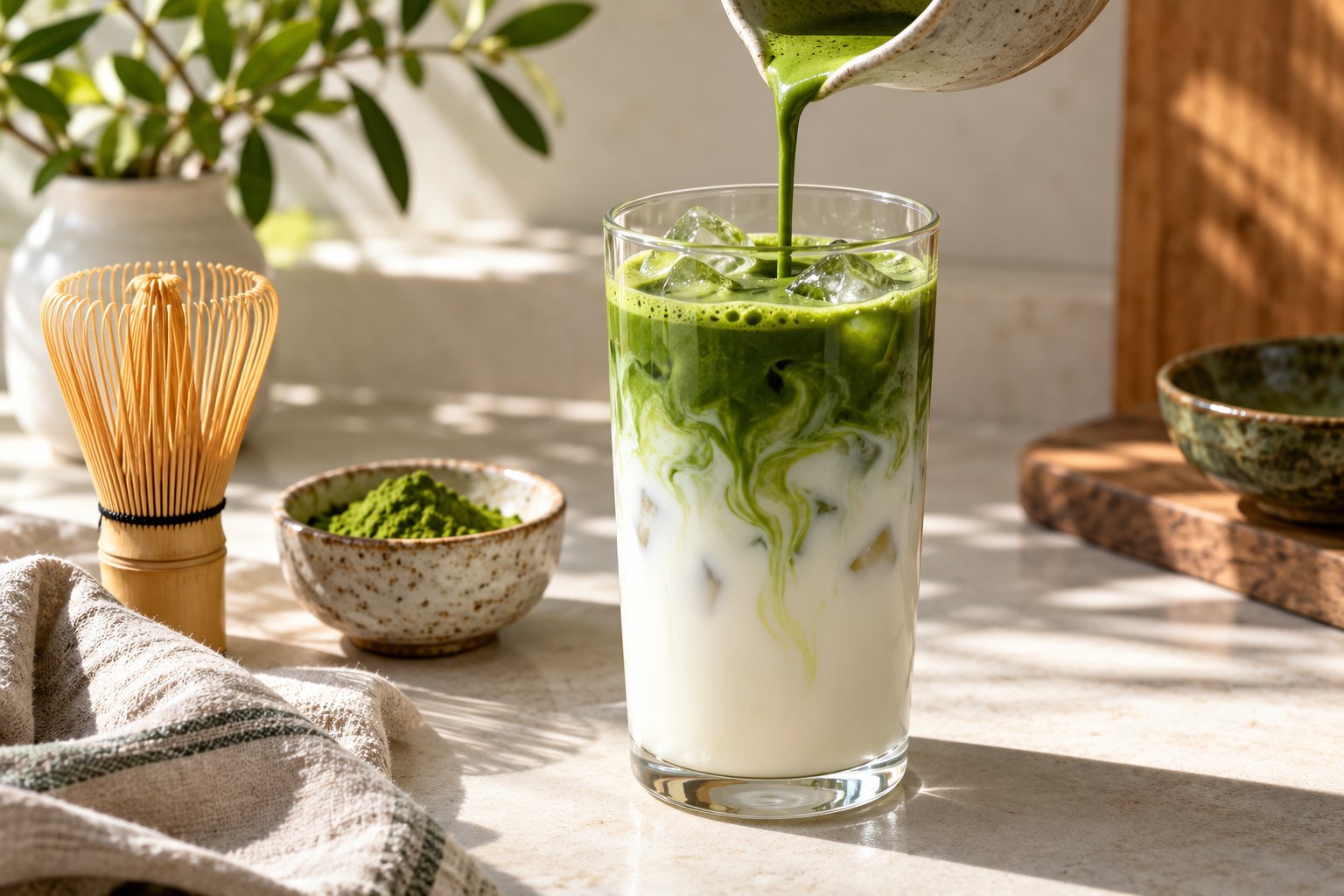
An iced matcha latte is a small amount of matcha whisked smooth with water, poured over a glass of cold milk and ice. The two steps that make it work are sifting the powder, so there are no lumps, and whisking it with water before any milk goes near it. Pour slowly and you get the green layer floating on white that cafés charge for.
Matcha is finely ground Japanese green tea, made from shade-grown leaves with the stems and veins removed. In Japan it is whisked with hot water in a bowl as part of the tea ceremony and in everyday tea drinking. The milky, sweetened latte is a much newer café habit, popular in Japan and abroad, and the iced version is its summer form. It is not traditional, but it is a gentle way to drink matcha if the plain tea tastes too grassy to you.
How to make it
- Sift the matcha through a small tea strainer into a bowl or a wide mug, pressing it through with the back of a spoon.
- Add the water, warm for a rounder flavour or cold if you are in a hurry, plus the sweetener if you use it.
- Whisk in a quick zigzag (M or W shape, not circles) with a bamboo whisk or a small milk frother for 15 to 20 seconds, until smooth and lightly foamy.
- Fill a tall glass with ice and pour in the cold milk, leaving about 3 cm at the top.
- Pour the matcha slowly over the back of a spoon onto the milk so it sits as a green layer, then stir before drinking.
Tips for the best flavour
- Sift every time. Matcha clumps from static and humidity, and lumps do not whisk out once wet. Sifting takes ten seconds.
- Keep the water below boiling. Very hot water brings out bitterness. Around 75°C, or boiled water left for a few minutes, is plenty. Cold water also works and gives a slightly milder, sweeter taste.
- Whisk in a zigzag. Circles just spin the powder around. A fast back-and-forth movement breaks it up and makes fine foam.
- Buy for colour. Good matcha is bright, vivid green and smells fresh and grassy. Dull, yellow-brown powder tastes flat and bitter however well you whisk it. Labels such as "ceremonial" and "culinary" are not regulated, so judge by colour, freshness and a recent packing date.
- Store it cold and closed. Once opened, matcha fades quickly. Keep the tin tightly shut in the fridge and use it within a month or two.
- Use creamy milk. Whole milk, oat milk and soy milk all carry the flavour well. Thin almond milk can taste watery; our plant milks comparison has more on how each one behaves.
If you want to know more about how matcha differs from other green teas, from sencha to genmaicha, see our guide to green tea types.
Getting the layers
The layer comes from density. Cold milk, especially if it is sweetened, is heavier than the thin matcha shot, so the shot floats if you pour it gently. Three things help: fill the glass right up with ice, so the matcha lands on ice rather than plunging into milk; pour over the back of a spoon held just above the milk; and put the sweetener in the milk rather than the matcha if you want a sharper line.
It is only for looks. Stir before you drink, or each sip will be either very strong or plain milk.
Variations
- Strawberry matcha: mash three or four ripe strawberries with a little honey in the bottom of the glass before the ice and milk go in.
- Vanilla: add a drop of vanilla extract to the milk.
- Coconut: use half coconut milk from a carton and half oat milk for a softer, rounder drink.
- Stronger: use 3 g of matcha with the same water if you like a bolder, more bitter tea.
- Hot matcha latte: whisk the matcha the same way and top with 200 ml of hot, frothed milk. A handheld frother does both jobs; our guide to milk frothers covers the options.
Make ahead and storage
Matcha is best whisked just before drinking. It does not dissolve, it is suspended, so it settles and loses its fresh taste within an hour or two. For several drinks, whisk a larger batch of matcha and water in a jar with a tight lid, shake it hard, keep it in the fridge and use it the same day. Shake again before pouring.
Questions people ask
How much caffeine is in an iced matcha latte?
It depends on the powder and how much you use, but a 2 g serving usually gives somewhere around the caffeine of a cup of black tea, less than a typical mug of coffee. We go through the comparison, and the idea that matcha feels calmer, in matcha or coffee.
Why is my matcha bitter?
Usually one of three things: the water was too hot, you used too much powder, or the matcha is old or low grade. Try cooler water and a fresh tin before you give up on it.
Can I make it without a whisk?
Yes. Shake the sifted matcha and water hard in a small jar with a tight lid for 20 seconds, or use a battery milk frother. Both give a smooth result. A spoon alone will leave lumps.
Photograph: AI-generated image