Wellness Origin Hub
Green tea types: sencha, gyokuro, matcha, genmaicha and longjing
A guide to green tea types, from grassy sencha and sweet gyokuro to toasty genmaicha and nutty longjing, with how each one tastes, how much caffeine to expect and how to brew it.
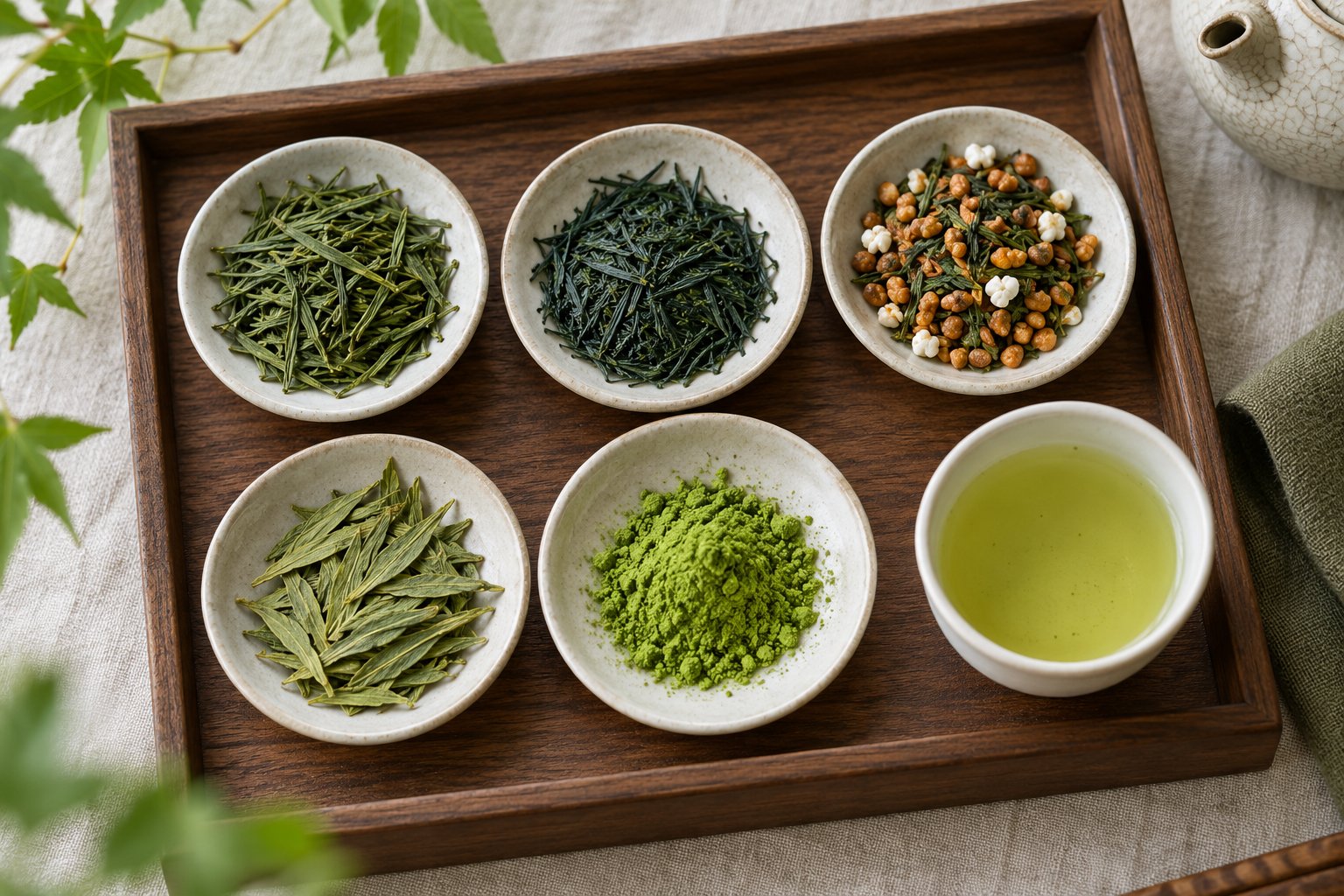
All green tea comes from the same plant, Camellia sinensis, picked and heated soon after harvest so the leaves stay green rather than oxidising like black tea. The differences between types come from how the plant is grown, how the leaves are heated and how they are shaped. In short: sencha is grassy and everyday, gyokuro is sweet and rich, matcha is whole powdered leaf, genmaicha is mellow and toasty, and longjing is nutty and smooth.
Steamed or pan-fired
The biggest split is between Japanese and Chinese green teas.
- Japanese teas such as sencha and gyokuro are usually steamed. Steaming keeps a bright green colour and gives grassy, marine, vegetal flavours.
- Chinese teas such as longjing are usually pan-fired in large woks. Pan-firing gives a softer yellow-green colour and nutty, toasty flavours.
The five types at a glance
| Tea | From | Flavour | Caffeine (relative) | Water temperature |
|---|---|---|---|---|
| Sencha | Japan | Grassy, fresh, slightly bitter | Moderate | 70–80°C |
| Gyokuro | Japan | Sweet, rich, savoury | High | 50–60°C |
| Matcha | Japan | Creamy, vegetal, savoury | High (whole leaf) | 70–80°C |
| Genmaicha | Japan | Toasty, mellow, like popcorn | Low | 80–85°C |
| Longjing | China | Nutty, smooth, chestnut-like | Moderate | About 80°C |
Caffeine varies a great deal with the leaf, the amount you use, the water temperature and the steeping time, so treat these as relative rather than exact.
Sencha
Sencha is the everyday green tea of Japan, made from leaves grown in full sun, steamed, then rolled into thin needles. It tastes fresh and grassy with a pleasant bitter edge, and good sencha has a sweetness behind that.
Brew about one teaspoon of leaf per cup in water around 70–80°C for one minute. Hotter water or longer steeping brings out bitterness.
Gyokuro
Gyokuro is grown in shade for several weeks before harvest. With less sunlight, the leaves build up more of the amino acid L-theanine and more caffeine, and less of the bitter compounds. The result is a sweet, rich, almost brothy tea.
Use more leaf and cooler water: around 50–60°C, for about two minutes. It is expensive, so it is usually drunk in small cups and steeped several times.
Matcha
Matcha is also made from shaded leaves, but they are dried flat, the stems and veins removed, and then stone-ground to a fine powder. Because you whisk the powder into water and drink the whole leaf, a cup of matcha usually contains more caffeine than a cup of steeped green tea. We compare it with coffee in matcha vs coffee.
Sift about one teaspoon of powder, add a little water around 70–80°C and whisk in a quick zigzag until frothy.
Genmaicha
Genmaicha is green tea, usually a simple sencha or bancha, mixed with roasted brown rice. Some grains pop during roasting, which is why it is sometimes called popcorn tea. The rice takes up part of the leaf volume, so it tends to be lower in caffeine and very easy to drink.
Brew it hotter than sencha, around 80–85°C, for about a minute. It is forgiving and good with food. If you like the toasted flavour, try caffeine-free Korean barley tea.
Longjing (Dragon Well)
Longjing comes from the area around Hangzhou in eastern China. The leaves are pressed flat by hand in hot woks, which gives them their smooth, sword-like shape and a nutty, chestnut-like taste with very little bitterness.
Brew in a glass or open cup with water around 80°C. Watching the flat leaves sink and unfold is part of the pleasure.
How much caffeine is in green tea?
Most green teas contain less caffeine than coffee. A typical cup of brewed green tea has roughly 25–45 mg, against roughly 80–100 mg for a cup of brewed coffee, while matcha and gyokuro sit higher than ordinary sencha.
For healthy adults, EFSA and the US FDA both say up to 400 mg of caffeine a day is generally not associated with health concerns. During pregnancy, the NHS and EFSA advise staying under 200 mg a day.
Questions people ask
Why does my green tea taste bitter?
Almost always because the water is too hot or the tea steeped too long. Try cooler water and a shorter time before blaming the tea.
Is green tea good for you?
Unsweetened green tea is a low-calorie drink that contains antioxidant plant compounds called catechins. Some studies link drinking it with health benefits, but the evidence is mixed, and it is best seen as a pleasant drink within a balanced diet rather than a remedy.
How should I store green tea?
In an airtight, opaque container, away from heat, light and strong smells. Green tea loses its freshness faster than black tea, so buy small amounts and drink them within a few months.
Photograph: AI-generated image