Wellness Origin Hub
Oat, almond, soy, coconut and pea milk compared
Plant milks compared on protein, calcium, taste and best uses. Soy and pea milk come closest to dairy for protein, oat milk is the best for coffee, and fortification matters more than the base.
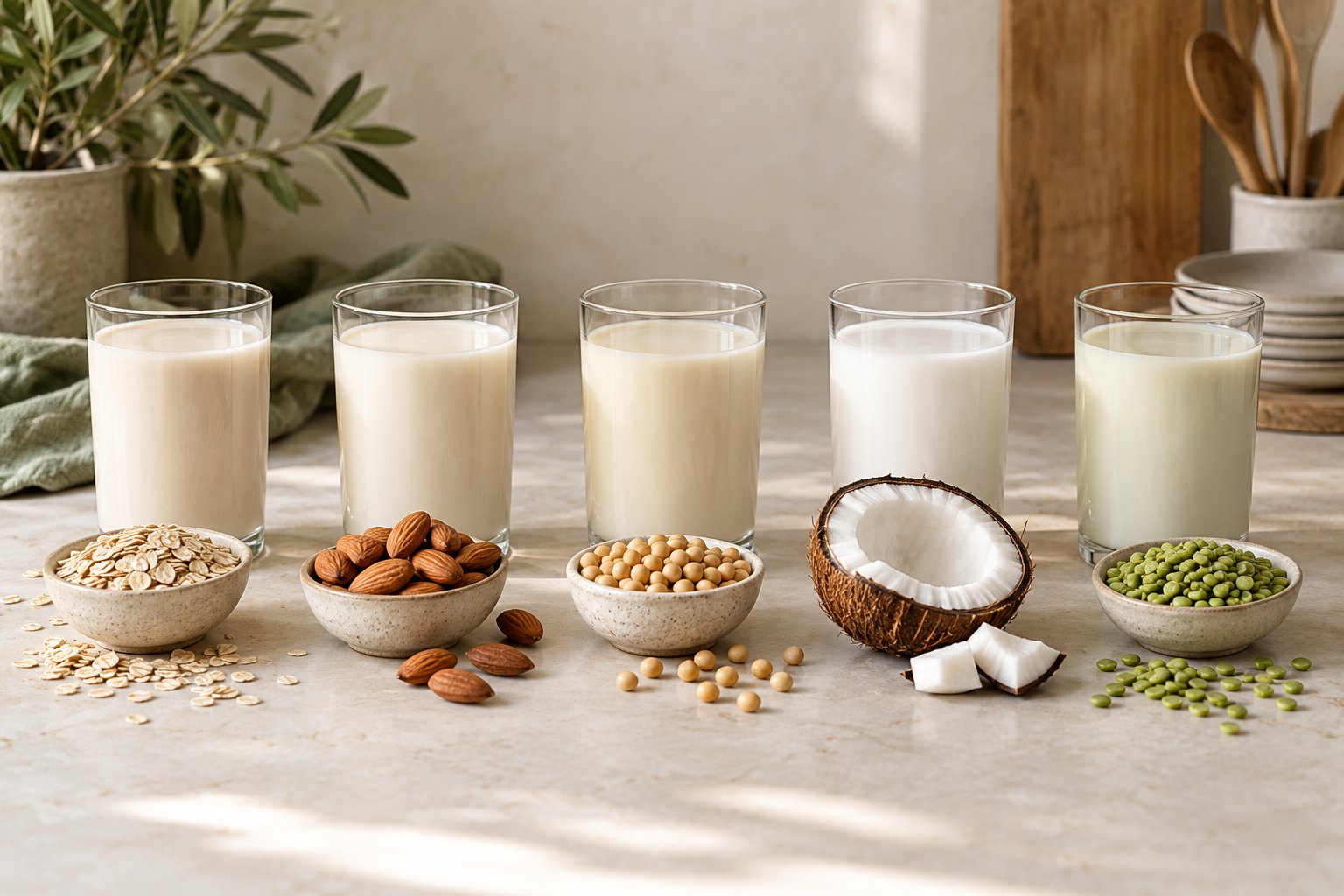
If you want a plant milk that comes closest to cows' milk for protein, choose soy or pea. If you want the best texture in coffee, choose oat. Almond and coconut are light and low in calories but have very little protein. Whatever the base, the most important thing on the label is whether it is fortified with calcium and other nutrients, and whether it is unsweetened.
The quick comparison
Figures below are typical for unsweetened, fortified versions and vary between brands, so check the label on the carton you buy.
| Drink | Protein per 100 ml (roughly) | Taste and texture | Best for |
|---|---|---|---|
| Cows' milk (semi-skimmed) | About 3.5 g | Familiar, creamy | Reference point |
| Soy | About 3 g | Beany, creamy | Tea, cooking, all-round use |
| Pea | About 2–3 g | Neutral, smooth | Cereal, smoothies |
| Oat | About 1 g | Sweet, rich, foams well | Coffee, porridge, baking |
| Almond | Under 1 g | Light, nutty, thin | Cereal, smoothies |
| Coconut (drink, not tinned) | Close to 0 g | Light, coconut flavour | Smoothies, curries, desserts |
Protein: soy and pea lead
Soy milk is the only common plant milk with a protein content close to cows' milk, and soy protein contains all the essential amino acids. Pea milk, made from yellow pea protein, is also relatively high in protein and has a more neutral taste, which suits people who dislike the flavour of soy.
Oat, almond and coconut drinks are mostly water with a small amount of the base ingredient, so their protein is low. If you use them, get your protein from other foods. Our high-protein breakfast ideas include plenty of options that are not dairy.
Calcium, vitamins and iodine
Cows' milk is a major source of calcium, iodine and vitamin B12 in many diets. Plant milks only contain meaningful amounts of these if they are fortified.
- Calcium. Most mainstream plant milks are fortified to a level similar to cows' milk. Shake the carton, as the added calcium can settle at the bottom.
- Vitamins. Many add vitamin D, B12 and B2. These are especially useful if you eat little or no animal food.
- Iodine. Not all plant milks are fortified with iodine. If you have swapped dairy entirely, check the label or talk to a dietitian about other sources.
- Organic versions. In the UK and EU, organic plant milks are often not fortified, because organic rules restrict adding vitamins and minerals. Read the label rather than assuming.
Sugar and additives
Choose unsweetened versions where you can. "Original" often means a little sweetened, and flavoured versions such as chocolate or vanilla can contain much more. Oat milk tastes slightly sweet even when unsweetened, because the oat starch is broken down into sugars during processing; these count as free sugars on some labels.
Most cartons also contain a little oil for creaminess and stabilisers to stop separating. Neither is a concern for most people, but if you prefer fewer ingredients, you can make your own homemade oat milk, accepting that it will not be fortified.
Taste and best uses
- Coffee and lattes: oat, especially "barista" versions with added fat, foams and resists splitting best. Soy also works well.
- Tea: soy and oat hold up in strong black tea. Almond can taste thin.
- Cereal and porridge: any of them. Pea and soy add the most protein.
- Smoothies: almond and coconut keep them light; soy adds protein.
- Warm spiced drinks: oat makes a rich, creamy golden milk.
- Baking and sauces: soy behaves most like dairy milk in custards and white sauces.
Environmental footprint
Life-cycle studies generally find that plant milks use less land and produce lower greenhouse gas emissions than cows' milk. Almond milk needs a lot of water to grow the nuts, while oat and pea tend to score well across measures. If this matters to you, oat and pea are reasonable choices.
Questions people ask
Which plant milk is healthiest?
There is no single answer, but an unsweetened soy or pea milk fortified with calcium, vitamin D, B12 and iodine is the closest nutritional match to cows' milk. The best choice is the one that fits the rest of your diet.
Can children drink plant milk?
The NHS says unsweetened, calcium-fortified plant drinks can be given from age 1 as part of a varied diet, but they are not suitable as a main drink for babies under 1. Rice drinks are not recommended for children under 5, because of their arsenic content. Ask your health visitor or doctor if plant milk will be your child's main drink.
Is oat milk bad for blood sugar?
Oat milk contains more carbohydrate than other plant milks and some of it is sugar, so it raises blood sugar a little more. For most people in normal amounts this is not a concern, but if you have diabetes, unsweetened soy or almond may suit you better.
Photograph: AI-generated image