Wellness Origin Hub
The best teapots for loose-leaf tea
The best teapots for loose-leaf tea give the leaves room to open and a fine filter to keep them out of your cup. Glass, kyusu and infuser pots compared, with three we would buy.
We may earn a commission if you buy through links in this article. How we make money.
Our picks at a glance
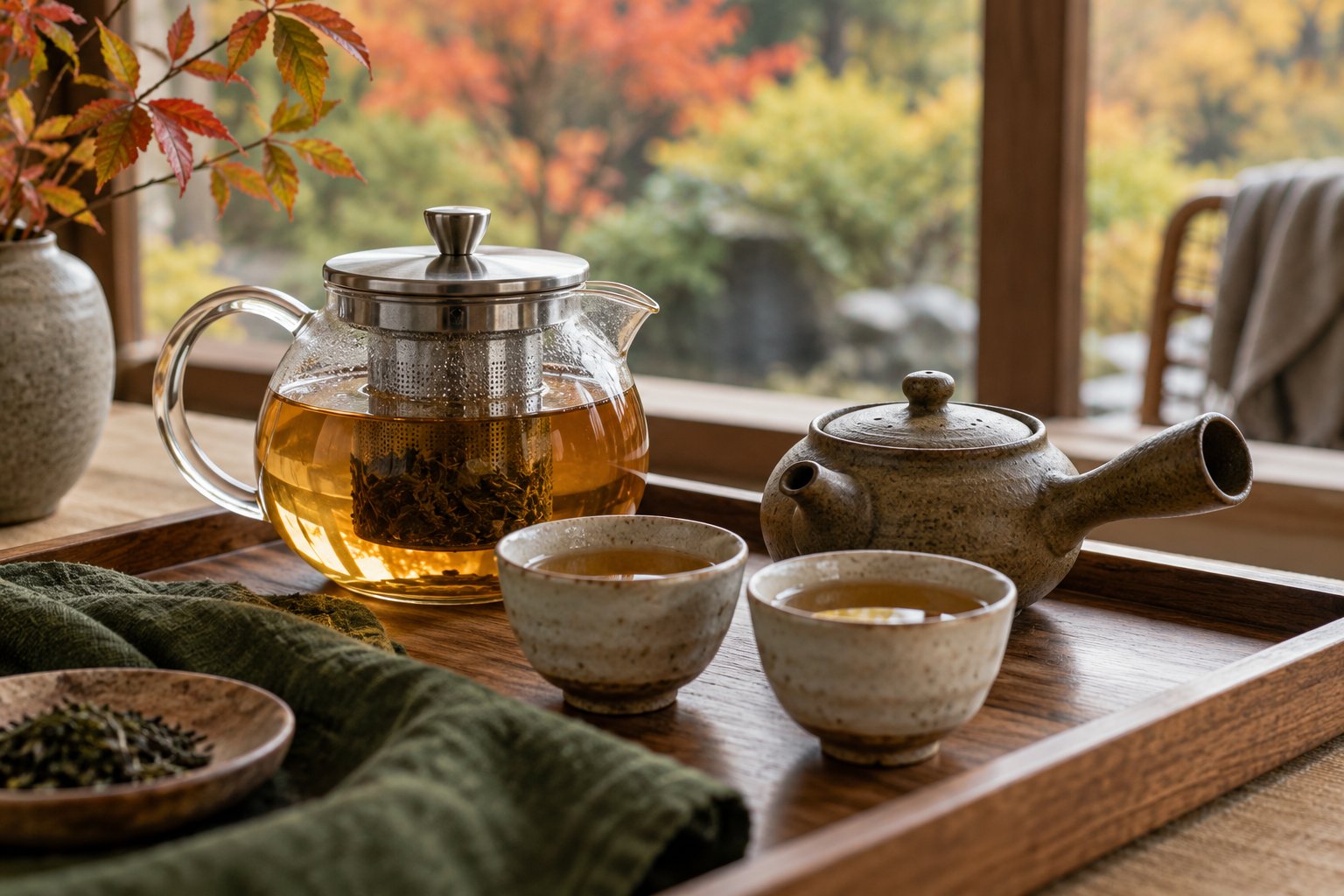
The best teapot for loose-leaf tea gives the leaves space to unfurl and has a fine filter that stops them reaching your cup. For most people that means a pot with a large removable infuser basket, so you can lift the leaves out when the tea is ready. If you drink a lot of Japanese green tea, a small side-handled kyusu with a built-in mesh is worth owning. Glass pots are a pleasure to watch and easy to keep clean.
Three kinds of teapot
| Type | How it filters | Good for | Watch out for |
|---|---|---|---|
| Infuser pot | A removable basket or mesh | Any tea, easy to stop steeping | Small baskets cramp large leaves |
| Glass teapot | Usually a steel or glass filter | Watching the leaves, flowering tea | Loses heat faster than ceramic |
| Kyusu | A built-in mesh or clay filter at the spout | Japanese green tea, small brews | Small capacity, one style of tea |
What to look for
- Room for the leaves. Rolled oolongs and large-leaf black teas swell a lot. A wide basket or an open pot gives better flavour than a narrow tube.
- A way to stop the brew. A removable infuser, or a pot you pour out completely, stops tea going bitter as it sits.
- Filter fineness. Fine Japanese teas like sencha break into small pieces. A fine mesh keeps them out of the cup.
- Size. Small pots of 300 to 500 ml suit one or two people and repeated infusions. A litre pot suits a household drinking black tea.
- Material. Glass is neutral and easy to clean. Glazed ceramic holds heat well. Unglazed clay, like many Japanese kyusu, slowly takes on the character of the tea, so people often keep one pot for one type of tea.
- A drip-free spout. Hard to judge from a photo, so look at a range's reputation.
How we chose
We looked at filter design, capacity, materials, cleaning and the reputation of each pot over several years. We have not run our own tests. Prices vary by size, so check before buying.
Best everyday infuser pot: ForLife Curve Teapot with Infuser
Around $35
A good first teapot for loose leaf. The wide basket lets leaves open properly, and you lift it out when the tea is ready, so the last cup is not stewed. It works for black, green, oolong and herbal tea alike.
What we like
- Large stainless infuser basket gives leaves room
- Glazed ceramic holds heat
- Lid fits over the infuser
- Many sizes and colours
Keep in mind
- Ceramic can chip
- Hand wash recommended
Best glass teapot: Bodum Assam Glass Teapot
Around $35
Works like a cafetière for tea: put the leaves in the filter, add water, then press down to separate the leaves when the tea is ready. Watching the colour change makes it easy to judge strength.
What we like
- Press filter stops the brew at the right moment
- Glass shows the colour of the tea
- Easy to clean
Keep in mind
- Glass loses heat faster
- Plunger mechanism has more parts to wash
Best small pot for green tea: Hario ChaCha Kyusu Maru
Around $25
A simple glass pot from a Japanese maker with a fine filter, made for sencha and other green teas brewed in short, repeated rounds. Pour out every drop each time so the leaves stop steeping.
What we like
- Heat-resistant glass
- Fine built-in filter for Japanese green tea
- Small size for one or two cups
- Inexpensive
Keep in mind
- Small capacity
- Filter is not removable, so leaves stay in until you pour out
A traditional clay kyusu, such as one from Tokoname in Japan, is a lovely next step for green tea drinkers. Quality varies a lot, so buy from a specialist tea shop that can tell you who made it and what clay it uses.
At a glance
| Teapot | Best for | Material | Filter |
|---|---|---|---|
| ForLife Curve | Everyday loose leaf, any tea | Glazed ceramic | Removable steel basket |
| Bodum Assam | Watching the brew, black tea | Glass | Press filter |
| Hario ChaCha Kyusu Maru | Japanese green tea | Heat-resistant glass | Built-in fine mesh |
How to brew loose-leaf tea in a pot
- Warm the pot with a little hot water and pour it away.
- Use about one teaspoon of leaves (2 to 3 g) per cup, a little more for large, open leaves.
- Pour water at the right temperature: near boiling for black tea, cooler for green. A temperature-control kettle makes this easy.
- Steep for the time the tea seller suggests, usually 1 to 5 minutes.
- Lift out the infuser, press the filter or pour out every drop, so the tea does not turn bitter.
- Brew good leaves two or three times. Each round tastes a little different.
Our guide to green tea types gives steeping times for sencha, gyokuro and longjing, and matcha vs coffee covers the caffeine side.
Questions people ask
Is loose-leaf tea better than tea bags?
Not always, but whole leaves usually have more flavour than the small broken pieces in most tea bags, and you can brew them more than once. The cost per cup is often similar.
How do I clean tea stains from a teapot?
Soak with warm water and a spoonful of bicarbonate of soda, then wash. Do not use soap on unglazed clay pots; rinse them with hot water only and let them dry with the lid off.
Can I use one teapot for every kind of tea?
A glass or glazed ceramic pot, yes; rinse it well between teas. An unglazed clay pot is best kept for one family of teas, as it slowly takes on their flavour.
Photograph: AI-generated image