Wellness Origin Hub
The best digital kitchen scales for baking and portioning
The best digital kitchen scales for baking and portioning weigh in single grams, tare in one press and wipe clean. Three reliable picks, from a pull-out display to a budget favourite.
We may earn a commission if you buy through links in this article. How we make money.
Our picks at a glance
A good digital kitchen scale is the cheapest way to make baking more reliable. Cups and spoons vary a lot with how you scoop; grams do not. For most kitchens, a scale that reads in single grams, holds a few kilos, has a tare button and wipes clean is all you need. Spend a little more for a pull-out or easy-to-read display if you often weigh into large bowls.
Why weigh instead of using cups
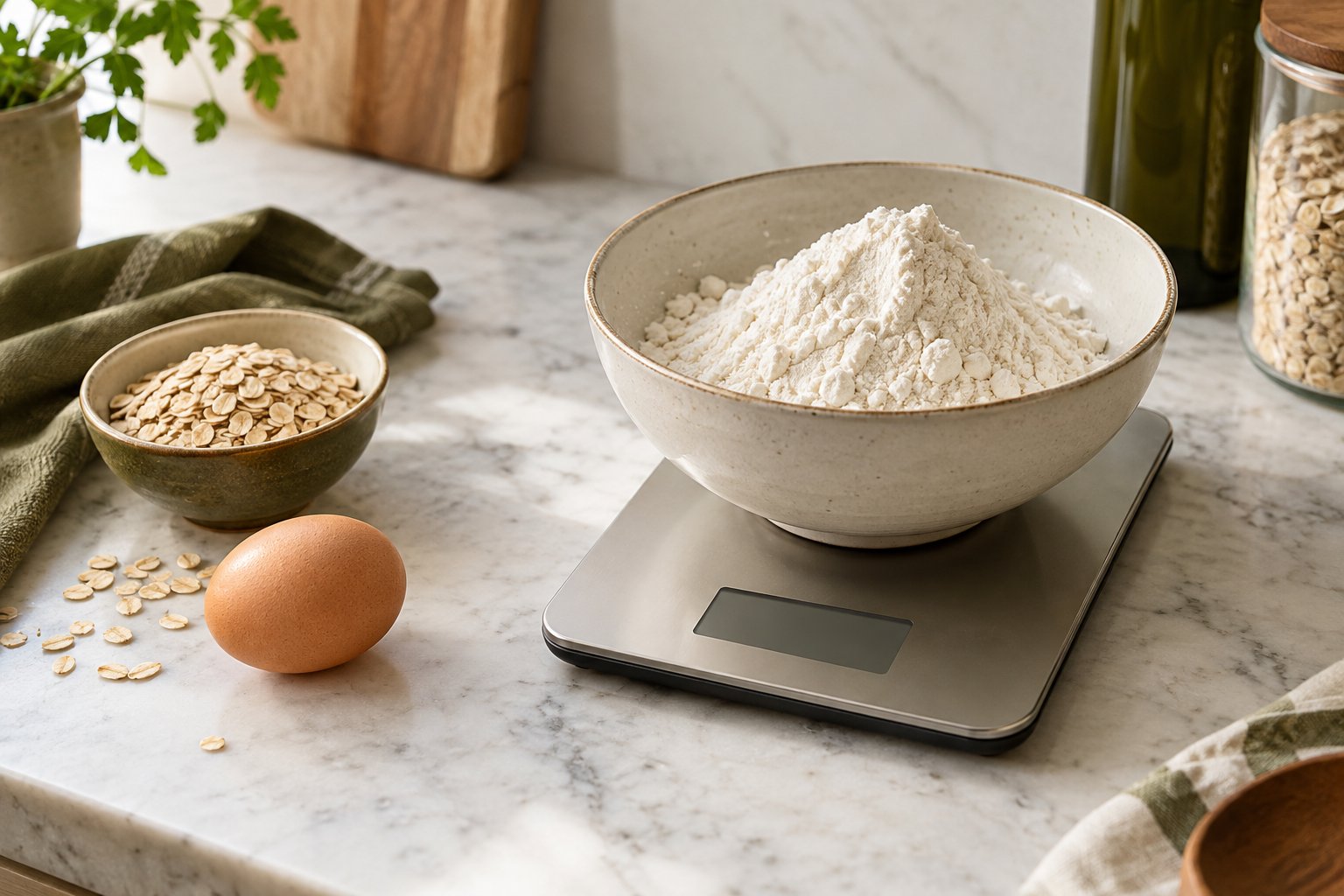
A cup of flour can weigh noticeably more or less depending on whether you spoon it in or scoop it straight from the bag. That difference is enough to turn a soft cake dry. Weighing also means fewer dirty measuring cups: put the bowl on the scale, press tare, add the first ingredient, press tare again, add the next.
Scales help with everyday cooking too. They make ratios easy for things like overnight oats and chia pudding, and they are useful for portioning when you batch cook for the week.
What to look for
- Resolution. Single grams is enough for most cooking and baking. For coffee, yeast or spices in small amounts, a scale that reads in tenths of a gram helps.
- Capacity. Around 5 kg (11 lb) covers big mixing bowls and a stand mixer bowl of dough.
- Tare button. Resets to zero with a bowl on top. Every scale here has one.
- Display. A big bowl can hide the screen. A pull-out display or a screen at the front edge solves this.
- Units. Grams, ounces and millilitres are standard. Some scales also read fluid ounces or pounds and ounces.
- Auto-off. Useful for saving battery, annoying if it switches off mid-recipe. Some models let you turn it off or have a longer delay.
- Cleaning. A flat, sealed surface with no gaps is easiest to wipe.
How we chose
We looked at capacity and resolution as listed by the makers, display design, how easy each scale is to clean, power source and long-term reputation. We have not done our own accuracy testing. Prices change, so check before buying.
Best overall: OXO Good Grips 11 lb Food Scale with Pull-Out Display
Around $55
The pull-out display is the reason to buy it: put a wide mixing bowl or a baking tray on top and you can still read the weight. The stainless top lifts off for washing, and the capacity covers anything a home baker is likely to weigh.
What we like
- Display pulls out so big bowls do not cover it
- Removable stainless platform for cleaning
- Generous capacity
- Clear backlit screen
Keep in mind
- More expensive than basic scales
- Bulkier to store
Best simple scale: Escali Primo Digital Scale
Around $25
A plain, sturdy scale that has been a kitchen favourite for years. Power and tare are the only two buttons, the surface is sealed against spills, and it does exactly what most people need from a scale for a modest price.
What we like
- Two buttons, nothing to learn
- Sealed design wipes clean
- Long-standing reputation for reliability
- Comes in many colours
Keep in mind
- Large bowls can shade the display
- No tenths of a gram
Best budget: Etekcity Digital Kitchen Scale
Around $12
If you only want to try weighing ingredients, this costs about the same as a set of measuring cups. It is slim enough to slide into a drawer and handles everyday baking and portioning well.
What we like
- Very cheap
- Slim and easy to store
- Stainless steel top
- Several units
Keep in mind
- Feels lighter and less solid
- Small display
At a glance
| Scale | Best for | Display | Cleaning |
|---|---|---|---|
| OXO Good Grips 11 lb | Big bowls, serious baking | Pull-out, backlit | Removable steel top |
| Escali Primo | Simple everyday use | Front, fixed | Sealed, wipe clean |
| Etekcity Digital | Tight budget, small kitchens | Small, fixed | Steel top, wipe clean |
Tips for accurate weighing
- Use the scale on a hard, flat counter, not on a tea towel or a wooden board that flexes.
- Put the bowl on before switching on, or press tare once it settles.
- For small amounts like salt, yeast or baking powder, weigh into a small dish rather than a big bowl, so the scale can register the change clearly.
- Change the batteries when the numbers start to drift or flicker. Low batteries are the most common cause of odd readings.
- Check it now and then with something of known weight, such as an unopened packet of butter or sugar.
Questions people ask
Do I need a scale that reads to 0.1 g?
Only if you weigh very small amounts often, such as coffee for pour-over, yeast or spices. For flour, sugar, butter and liquids, single grams is plenty.
Can I weigh liquids?
Yes. For water, and close enough for milk, 1 ml weighs about 1 g, so weighing is often quicker than reading a jug. Oils weigh a little less than the same volume of water.
Is a kitchen scale useful for portion control?
It can be. Weighing a portion of rice, pasta or nuts a few times teaches you what a sensible amount looks like, and many people find they only need to do it for a week or two. It works well alongside a weekly batch cook in glass meal prep containers.
Photograph: AI-generated image