Wellness Origin Hub
Whole grains explained: what counts and how to spot them
Whole grains explained in plain English: what makes a grain whole, which foods count, how to spot real wholegrain products on the label, and easy swaps for everyday meals.
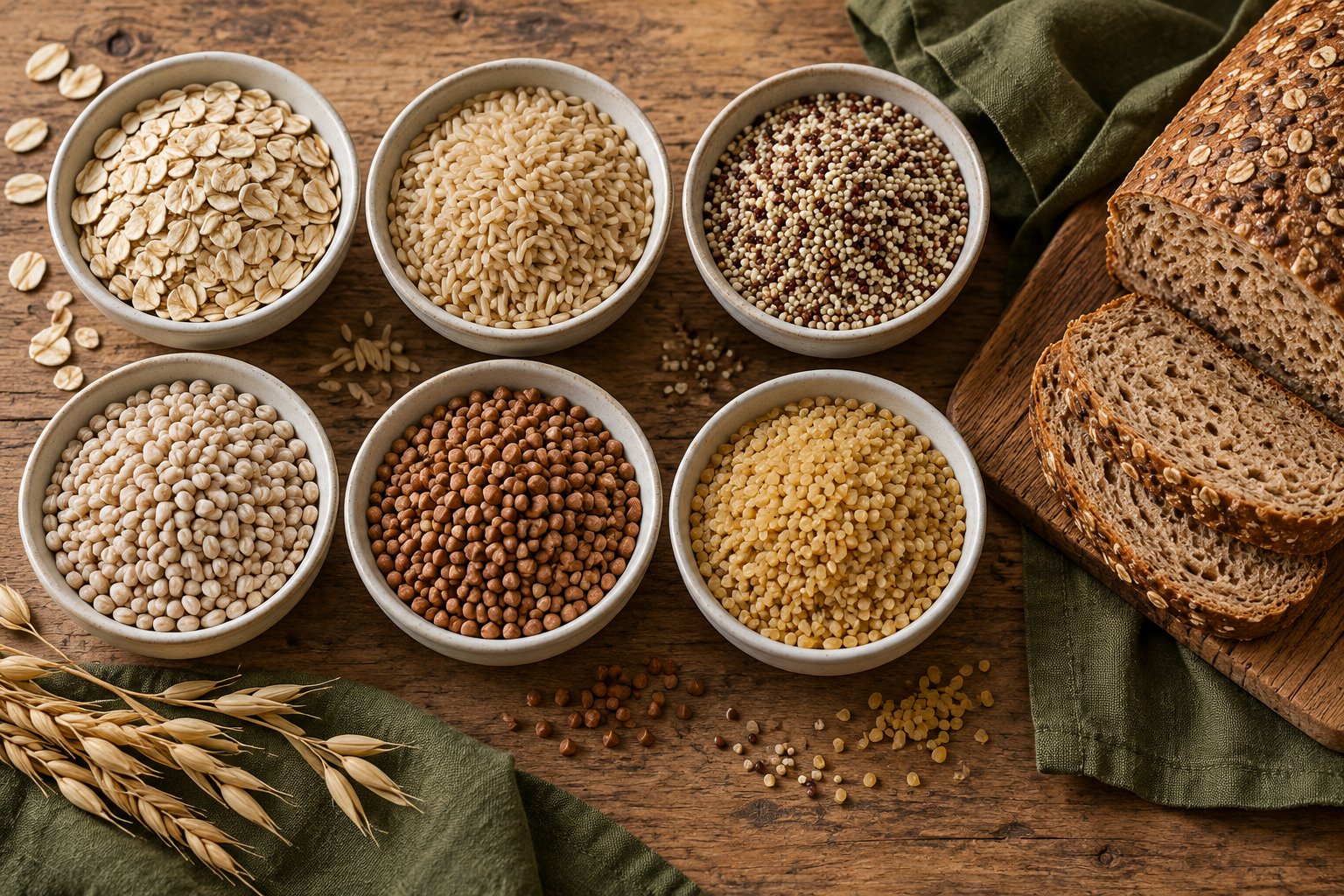
A whole grain is a grain that still has all three of its parts: the bran, the germ and the starchy endosperm. Refined grains, such as white flour and white rice, have had the bran and germ removed, and with them much of the fibre, vitamins and minerals. Oats, brown rice, wholemeal bread, wholewheat pasta, barley, bulgur, buckwheat and quinoa all count, and swapping one refined staple at a time is the easiest way to eat more.
The three parts of a grain
| Part | What it is | What it brings |
|---|---|---|
| Bran | The tough outer layer | Most of the fibre, plus B vitamins and minerals |
| Germ | The seed's embryo | Healthy fats, vitamin E, B vitamins, minerals |
| Endosperm | The starchy middle | Energy (carbohydrate) and some protein |
White flour is mostly endosperm. In some countries, including the UK and US, white flour is fortified with a few vitamins and minerals, but the fibre is not put back.
Why whole grains matter
Research suggests that people who eat more whole grains tend to have a lower risk of heart disease, type 2 diabetes and bowel cancer. Much of this is linked to the fibre, which also helps digestion and keeps you full for longer. The NHS recommends 30 g of fibre a day for adults, and most people eat well below that. Whole grains are one of the easiest ways to close the gap; our fibre guide covers the rest.
The USDA's Dietary Guidelines for Americans suggest making at least half of your grains whole grains. The NHS Eatwell Guide advises choosing higher-fibre or wholegrain versions of starchy foods where you can.
What counts as a whole grain
Common whole grains and how to use them:
| Grain | Flavour and texture | Cooking time (approx.) | Easy use |
|---|---|---|---|
| Oats | Soft, mild | 5 minutes as porridge | Porridge, overnight oats |
| Brown rice | Nutty, chewy | 25–35 minutes | Under curries and stir-fries |
| Wholewheat pasta | Firmer than white | 10–12 minutes | With tomato or bean sauces |
| Bulgur wheat | Light, slightly nutty | 10–15 minutes | Tabbouleh, pilafs |
| Buckwheat | Earthy, toasty | 10–15 minutes | Salads, Japanese soba noodles |
| Quinoa | Light, slightly crunchy | 15 minutes | Grain bowls, salads |
| Barley (pot or hulled) | Chewy, mild | 40–60 minutes | Soups and stews |
| Freekeh | Smoky, chewy | 20–25 minutes | Pilafs, salads |
| Popcorn | Crunchy | 3–5 minutes | Snack, lightly salted |
Quinoa and buckwheat are technically seeds, not cereal grains, but they are eaten and counted the same way. Pearl barley, the most common kind in shops, has had some of its bran polished off, so it is not strictly whole, though it still has more fibre than white rice.
How to spot real wholegrain products
Food labels can be confusing, and colour is not a reliable guide. Brown bread can be coloured with malt or caramel and still be made mostly from white flour.
Words that usually mean whole grain:
- Wholemeal or whole wheat
- Wholegrain (followed by the grain, such as wholegrain oats)
- Brown rice, wild rice
- Oats, oatmeal
- Whole rye, whole barley
Words that do not guarantee whole grain:
- Multigrain or "seeded": several grains, but possibly all refined
- Wheat flour or enriched flour: usually white flour
- "Made with whole grains": may contain only a small amount
- Bran or wheat germ: healthy additions, but only part of the grain
The simplest check is the ingredients list. Ingredients appear in order of weight, so a whole grain should be the first one listed. Our guide to reading nutrition labels explains the rest of the panel, including how to compare fibre per 100 g.
Easy swaps
You do not need to change everything at once. Swap one staple, get used to it, then try the next.
- White bread to wholemeal or rye. Start with a 50/50 loaf if you prefer a softer texture.
- Sugary cereal to porridge or plain wholegrain cereal. Add fruit for sweetness.
- White rice to brown rice, or half and half. Brown rice takes longer, so cook a big batch and keep it in the fridge.
- White pasta to wholewheat. Stronger sauces suit its firmer bite.
- Crackers to oatcakes or rye crispbreads.
- Add barley or bulgur to soups and salads. They bulk up a meal cheaply; see our guide to cooking on a budget.
Questions people ask
Are whole grains suitable for people with coeliac disease?
Wheat, barley and rye contain gluten, so they are not. Brown rice, quinoa, buckwheat, millet and certified gluten-free oats are naturally gluten free, but check labels for cross-contamination. Anyone with coeliac disease should follow advice from their doctor or dietitian.
Will whole grains upset my stomach?
If you are used to refined grains, a sudden switch can cause wind or bloating. Increase slowly over a few weeks and drink enough water, and most people adjust.
Is white rice unhealthy?
No. It is a perfectly good part of a balanced diet, especially with vegetables, beans or fish. Whole grains just bring more fibre and nutrients for the same amount of food.
Photograph: AI-generated image