Wellness Origin Hub
Fibre: why it matters, how much you need and how to eat more
A plain guide to fibre: what it does, how much fibre you need a day according to the NHS and EFSA, and simple ways to eat more without upsetting your stomach.
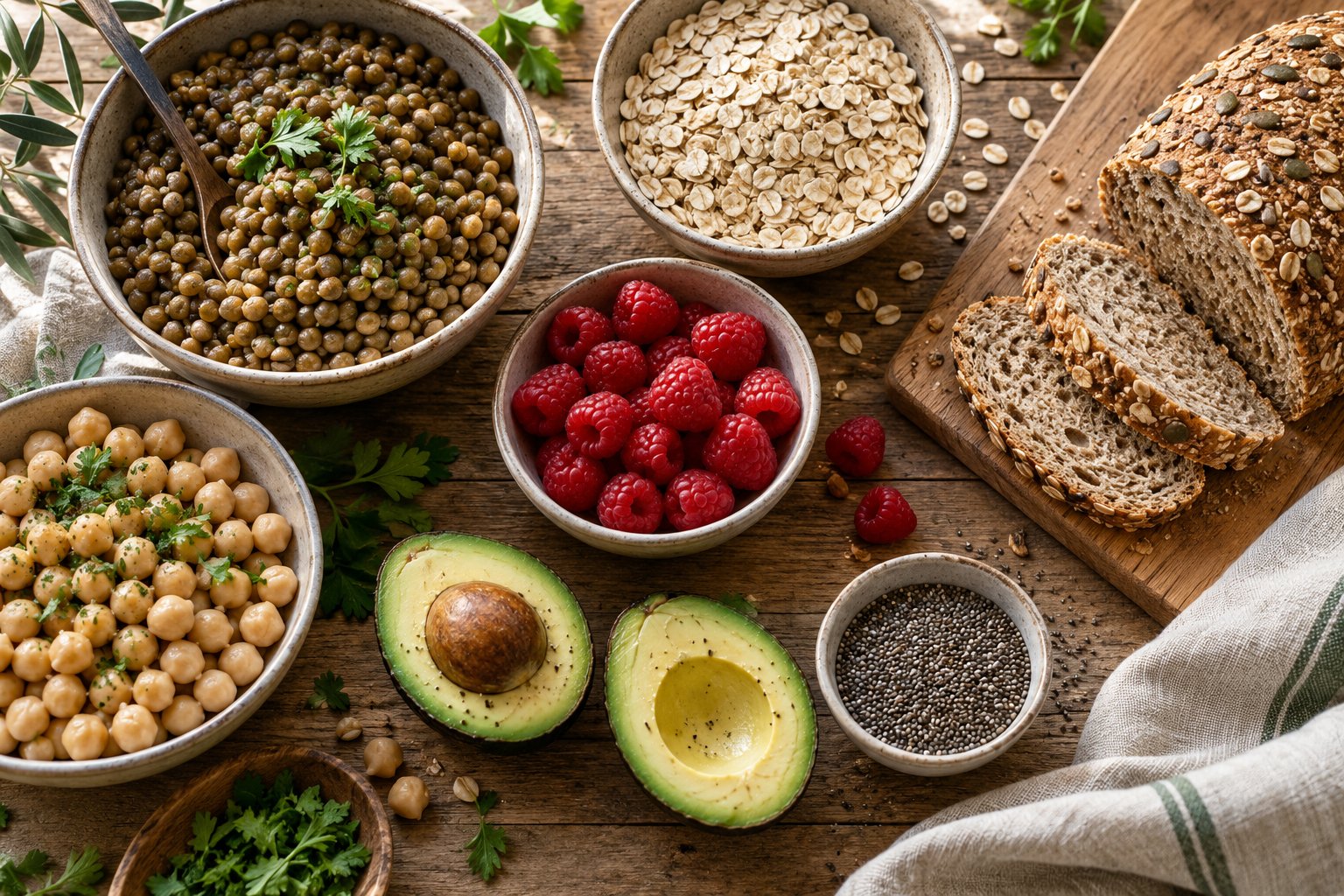
Most adults need more fibre than they eat. The NHS recommends 30 g of fibre a day for adults, and says most people in the UK manage only around 20 g. The gap is easier to close than it sounds: swap to wholegrains, add a handful of beans or lentils to meals you already cook, and keep the skins on fruit and vegetables.
This guide covers what fibre is, why it matters, how much different bodies recommend, and how to eat more without an uncomfortable first week.
What fibre is
Fibre is the part of plant foods that your small intestine cannot digest. It passes through to the large intestine, where some of it is fermented by gut bacteria and some of it simply adds bulk.
It is usually described in two broad types, though most plant foods contain both:
- Soluble fibre dissolves in water to form a gel. Oats, barley, beans, lentils, apples and citrus fruit are good sources.
- Insoluble fibre does not dissolve and helps move food through the gut. Wholemeal bread, wheat bran, nuts, seeds and the skins of fruit and vegetables are good sources.
Why it matters
Research links diets higher in fibre with a lower risk of heart disease, stroke, type 2 diabetes and bowel cancer. These are associations from large studies, and fibre-rich diets tend to be healthier in other ways too, but the pattern is consistent enough that health bodies around the world recommend eating more of it.
Day to day, fibre helps keep bowel movements regular and may help you feel full for longer after a meal. Soluble fibre from oats and barley may also help lower LDL cholesterol as part of a balanced diet.
How much fibre do you need?
Recommendations vary a little between countries, but they all point in the same direction.
| Who | Recommendation | Source |
|---|---|---|
| Adults | 30 g a day | NHS |
| Adults | 25 g a day (adequate intake) | EFSA |
| Children 2–5 | About 15 g a day | NHS |
| Children 5–11 | About 20 g a day | NHS |
| Children 11–16 | About 25 g a day | NHS |
| Adults (US) | 14 g per 1,000 calories eaten | USDA Dietary Guidelines |
You do not need to count grams every day. If your meals are built around wholegrains, vegetables, fruit and pulses, you will usually land somewhere near the target.
Easy ways to eat more fibre
Small swaps add up faster than a single "high-fibre" food.
- Start with breakfast. Porridge oats, a wholegrain cereal or wholemeal toast instead of white. Overnight oats or chia pudding are both made the night before.
- Add pulses to what you already cook. A tin of lentils or chickpeas stirs into soups, stews, curries and pasta sauces without changing the dish much.
- Choose wholegrain versions. Brown rice, wholewheat pasta, wholemeal bread and wholegrain wraps.
- Keep the skins on. Potatoes, apples and pears have a good share of their fibre in or just under the skin.
- Snack on fruit, nuts and seeds. A piece of fruit, a small handful of almonds or a spoon of seeds on yoghurt.
- Add a vegetable to every meal. Frozen vegetables count and keep for months.
Where the fibre is
| Food group | Good choices | Easy use |
|---|---|---|
| Wholegrains | Oats, barley, brown rice, wholemeal bread | Breakfast, side dishes |
| Pulses | Lentils, chickpeas, beans, peas | Soups, stews, salads |
| Fruit | Raspberries, pears, apples, oranges | Snacks, breakfast |
| Vegetables | Broccoli, carrots, sweetcorn, potatoes with skin | Every main meal |
| Nuts and seeds | Almonds, chia seeds, linseed | On yoghurt or porridge |
Food labels in the UK and EU list fibre per 100 g. As a rough guide, a food with 6 g or more per 100 g counts as "high fibre" under EU labelling rules, and 3 g or more as a "source of fibre".
Go slowly and drink enough
If you eat far more fibre overnight, you may get bloating, wind or cramps while your gut adjusts. Add one change a week rather than five at once.
Fibre also works best with enough fluid, since some types absorb water. You do not need to force down extra litres; just drink regularly through the day. Our guide to how much water you need covers the realistic amount.
Questions people ask
Do fibre supplements work as well as food?
Supplements such as psyllium can add fibre, but whole foods bring vitamins, minerals and other plant compounds as well. Most health bodies recommend getting fibre from food first. If you are considering a supplement, ask a doctor or pharmacist.
Does fruit juice count towards fibre?
Very little. Juicing removes most of the fibre, which is why whole fruit is the better choice. Smoothies keep more of it.
Is it possible to eat too much fibre?
For most people eating a normal diet, it is unlikely to be harmful, but a sudden large increase can cause discomfort. Some people with bowel conditions are advised to limit certain types of fibre, so follow any advice you have been given.
Photograph: AI-generated image