Wellness Origin Hub
Tepache, the Mexican fermented pineapple drink
How to make tepache, the Mexican fermented pineapple drink, from pineapple peel, piloncillo and cinnamon in a clean jar, with a short two to three day ferment.
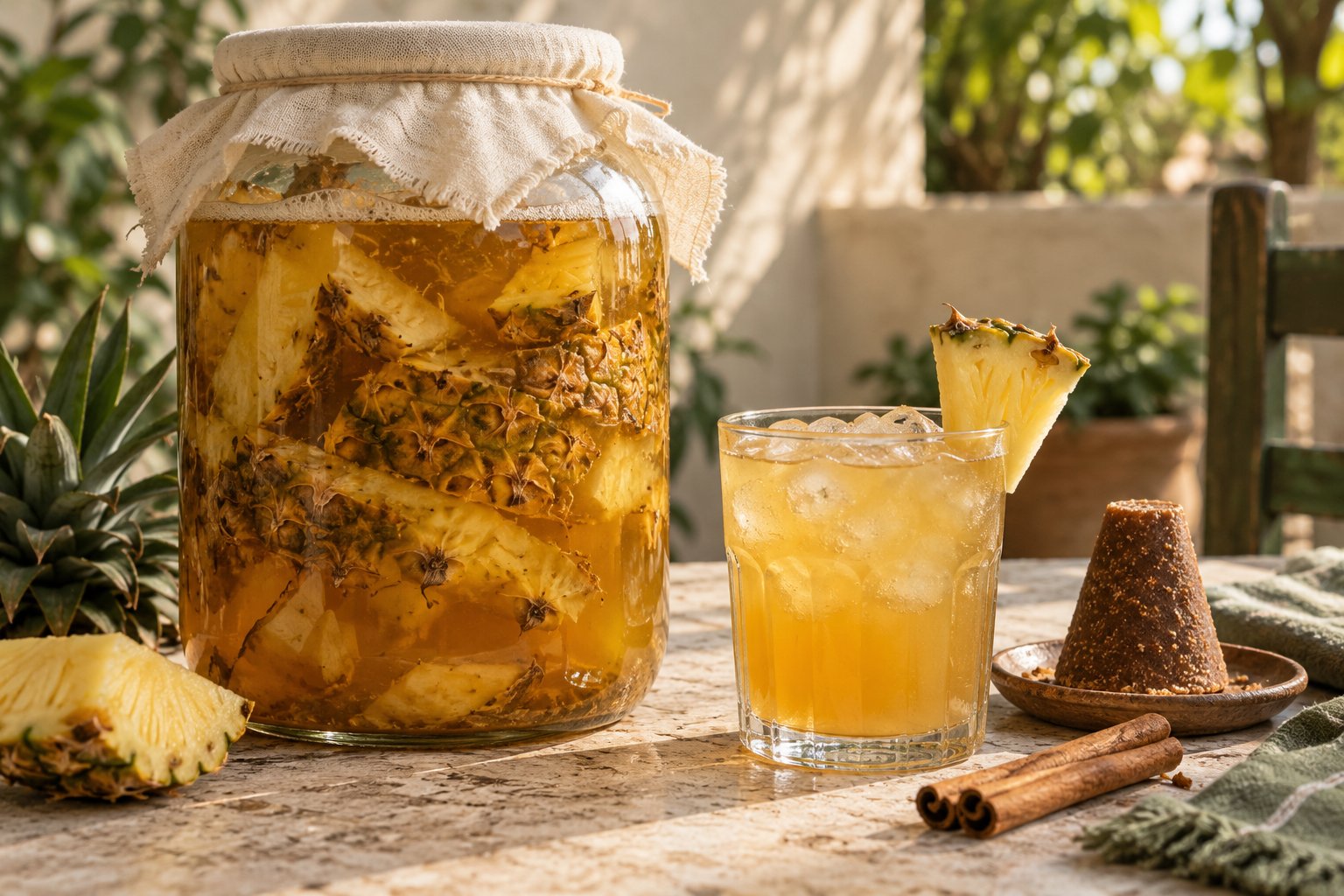
Tepache is a lightly fermented drink from Mexico made from pineapple peel, piloncillo sugar, cinnamon and water. Left in a clean jar at room temperature for two to three days, the natural yeasts on the peel turn it gently tangy and a little fizzy, with a taste somewhere between pineapple juice and a mild cider. It uses the parts of the pineapple most people throw away.
The name comes from the Nahuatl word tepiātl, and early versions were made from maize before pineapple took over. Today tepache is sold from street carts and markets across Mexico, ladled from big barrels or jars over ice, and sometimes mixed with a little beer. Recipes vary from family to family. This one is the simple, everyday kind, fermented only briefly so it stays sweet and low in alcohol.
How to make it
- Wash a large glass jar (2 litres or more), a wooden spoon and a lid or cloth in hot soapy water, rinse well and let them air-dry.
- Rinse the pineapple briefly under cold water to remove dust, without scrubbing off the natural yeasts. Cut off the leafy top, then cut away the peel and core and keep the flesh for eating.
- Dissolve the piloncillo in 500 ml of the water in a pan over a low heat, chopping or grating it first if it is a hard cone. Add the cinnamon and cloves, take off the heat, then add the remaining cold water so the syrup cools.
- Put the peel and core in the jar and pour over the cool syrup. It must be no more than lukewarm, as heat kills the yeasts.
- Weigh the peel down with a small clean plate or bag of water so it stays under the liquid, then cover the jar with a clean cloth secured with a rubber band.
- Leave in a shady spot at room temperature for 24 to 72 hours. Check it every day: skim off any white foam and taste with a clean spoon.
- When it is pleasantly tangy and slightly fizzy, strain it, discard the peel and spices, and pour into a clean jug or bottles in the fridge.
- Serve cold over ice, with a pineapple wedge if you like.
Safe home fermentation
Tepache is one of the easiest drinks to ferment at home, but it is still a ferment, and a few habits keep it safe:
- Start clean. Wash the jar, utensils and your hands well. Most problems come from a dirty container.
- Keep everything under the liquid. Peel that pokes above the surface is where mould grows. A weight solves this.
- Keep it short. One to three days is enough. The warmer the room, the faster it goes; in a hot kitchen, taste it after 24 hours.
- Know what is normal. A thin white foam or a few bubbles on the surface is normal and can be skimmed off. A fresh, sweet-sour, yeasty smell is normal.
- Know when to discard it. Throw the whole batch away if you see fuzzy mould of any colour (white, green, blue, black or pink), slimy strings, or if it smells rotten, like nail varnish or strongly of vinegar. Do not try to scoop off mould and save the rest.
- Chill it to stop it. Once it tastes right, the fridge slows the fermentation right down.
- Watch the pressure. If you bottle it, use bottles made for fizzy drinks, leave space at the top, keep them in the fridge and open them carefully once a day to release gas. Sealed bottles left warm can build up enough pressure to burst.
What fermentation does to it
| Fermenting time | What it tastes like |
|---|---|
| 1 day | Sweet, spiced pineapple, barely tangy |
| 2 days | Balanced sweet and sour, lightly fizzy (usually the best point) |
| 3 days | Tarter, fizzier, less sweet, a little more alcohol |
| 4 days or more | Increasingly sour and vinegary; not recommended for this recipe |
Tepache contains a trace of alcohol from the yeast. After a short ferment it is usually a small amount, well below beer, but it is not measured and it rises the longer it ferments. It is not suitable for anyone who needs to avoid alcohol completely.
Tips for the best flavour
- Use a ripe pineapple. A sweet, fragrant pineapple with golden skin gives the most flavour and the most active ferment.
- Choose organic if you can. You are using the peel, so it is worth picking a pineapple that has not been heavily treated.
- Piloncillo makes a difference. This unrefined Mexican cane sugar has a deep caramel taste. Dark brown sugar or panela is the closest swap.
- Taste daily. It changes fast. Stop when you like it, not when the clock says so.
Variations
- Ginger: add a few slices of fresh ginger to the jar.
- Chile: a dried chile or a slice of fresh one gives a slow warmth.
- Fizzier: after straining, bottle it with a teaspoon of sugar per bottle and leave in the fridge for a day, releasing the pressure daily.
- Sweeter and milder: stop after one day and serve it as a spiced pineapple drink.
Storage
Strained tepache keeps in a closed jug in the fridge for up to a week. It keeps slowly fermenting even when cold, so it becomes drier and tarter. Discard it if it turns strongly vinegary or shows any mould.
Questions people ask
Is tepache alcoholic?
Slightly. Like other home ferments, it contains a trace of alcohol, which goes up with time and temperature. A short ferment keeps it low, but there is no reliable way to measure it at home.
Is tepache good for your gut?
Fermented foods are a popular area of research and some may support a healthy gut, but the evidence for any particular drink is limited, and homemade tepache varies from batch to batch. Our fermented foods guide explains what is known.
Why is my tepache not fizzy?
The room may be too cold, the syrup too hot when it went on the peel, or the pineapple not ripe enough. Give it another day somewhere warmer before deciding.
For other traditional drinks that need no fermenting at all, try Mexican horchata or switchel.
Photograph: AI-generated image