Wellness Origin Hub
Fermented foods: what they are and how to add them to meals
A practical guide to fermented foods such as yoghurt, kefir, kimchi, sauerkraut and miso: what fermentation does, which jars still contain live cultures and easy ways to eat them.
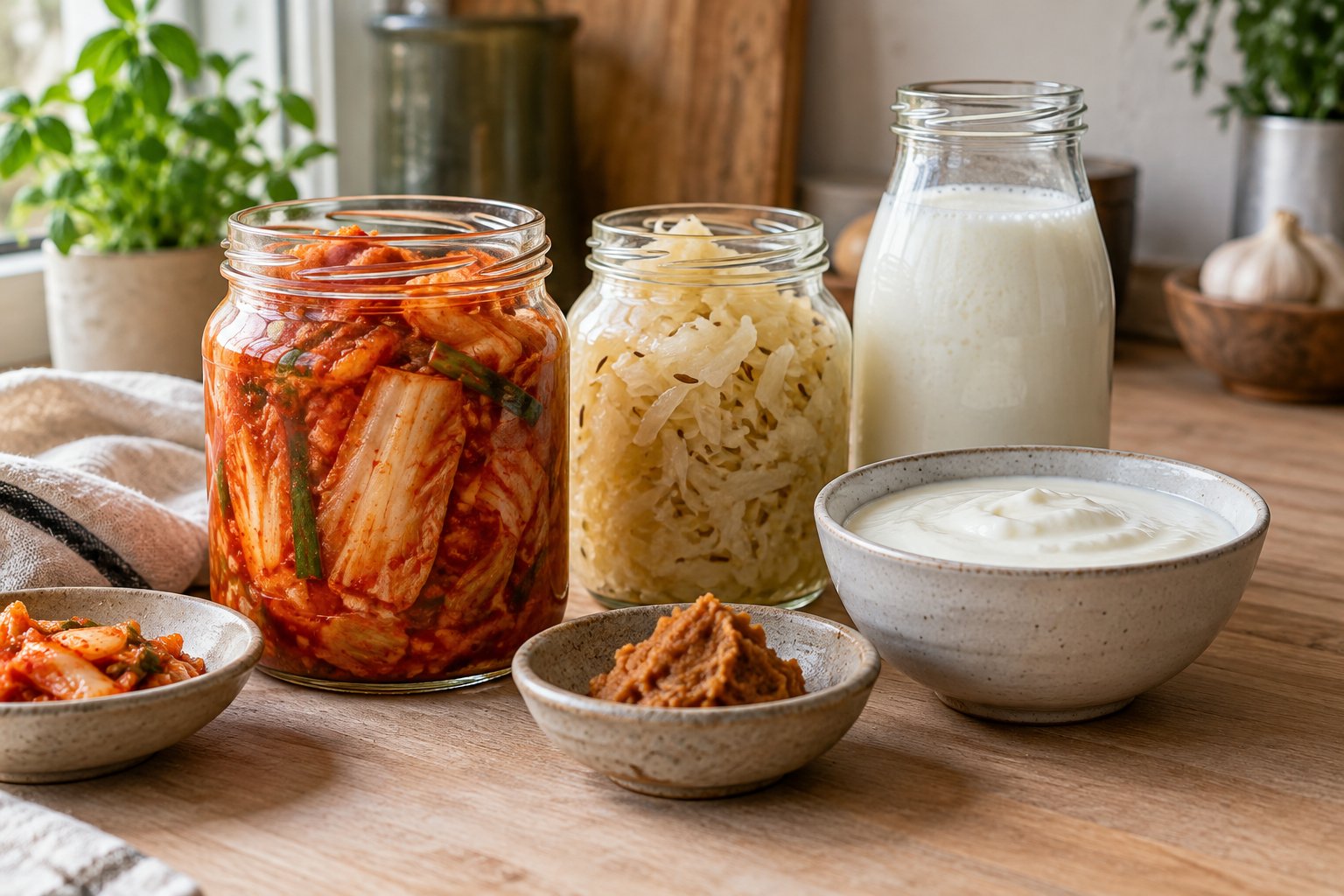
Fermented foods are foods changed by bacteria or yeasts: milk becomes yoghurt and kefir, cabbage becomes sauerkraut and kimchi, soybeans become miso. Many contain live microbes when you eat them, and research suggests they may support a varied gut microbiome, though the evidence is still early. The simplest way to try them is to add a small amount to meals you already eat, a spoon of kimchi with rice, a bowl of yoghurt at breakfast, rather than treating them as a supplement.
What fermentation does
Fermentation is one of the oldest ways of keeping food. Microbes feed on sugars in the food and produce acids, gases or alcohol. The acid in yoghurt and sauerkraut, for example, comes from lactic acid bacteria, and it is what keeps the food from spoiling and gives it a sour taste.
The process also changes texture and flavour. Milk thickens, cabbage softens and turns tangy, and soybeans develop the deep savoury taste of miso and soy sauce.
The common fermented foods
| Food | Made from | Taste | Usually live cultures? |
|---|---|---|---|
| Yoghurt | Milk | Mild, tangy | Yes, if labelled "live" |
| Kefir | Milk (or water and sugar) | Sour, slightly fizzy | Yes, usually |
| Sauerkraut | Cabbage and salt | Sour, crunchy | Only if unpasteurised and chilled |
| Kimchi | Cabbage, radish, chilli, garlic | Sour, spicy, garlicky | Usually, if chilled |
| Miso | Soybeans, salt, koji | Salty, savoury | Often, but heat reduces them |
| Tempeh | Soybeans | Nutty, firm | No, it is cooked before eating |
| Sourdough bread | Flour and water | Tangy | No, baking kills the microbes |
Live cultures and what "probiotic" means
Not every fermented food contains living microbes by the time you eat it. Baking, pasteurising or canning after fermentation kills them. Shelf-stable sauerkraut in a jar from the ambient aisle has usually been heat-treated; the versions with live cultures are kept in the fridge.
"Probiotic" is a narrower term. It describes specific strains shown to have a particular benefit in studies, at a known amount. Most fermented foods have not been tested in that way, so they are better thought of as foods that may contain live microbes rather than as probiotics. In the UK and EU, food labels are not allowed to make probiotic health claims unless a claim has been authorised, which is why most yoghurt pots simply say "live cultures".
What the research suggests
Studies on fermented foods are promising but still limited. Some research suggests that eating a variety of fermented foods may increase the diversity of microbes in the gut, which is generally seen as a good sign. Yoghurt is the most studied, and it is also a useful source of protein and calcium.
What the evidence does not show is that any single fermented food cures digestive problems or "detoxes" the body. Treat them as part of a varied diet with plenty of fibre, which feeds the gut bacteria you already have. Our fibre guide covers how to eat more of it.
How to add them to meals
Start small. A spoon or two a day is plenty to see whether you like them and how your stomach responds.
- Breakfast: plain yoghurt or kefir with fruit and oats, or kefir blended into a smoothie.
- Lunch: a forkful of sauerkraut or kimchi on the side of a sandwich, salad or rice bowl.
- Dinner: miso stirred into soup, a dressing or a glaze for vegetables.
- Drinks: a glass of ayran or a mango lassi, both yoghurt drinks with long traditions.
Salt, sugar and other things to watch
- Salt. Kimchi, sauerkraut and miso can be salty. The NHS advises adults to eat no more than 6 g of salt a day, and the WHO recommends less than 5 g. A small portion is fine for most people; check the label if you are watching your salt.
- Sugar. Flavoured yoghurts and kefirs, and many kombucha drinks, can contain a lot of added sugar. Plain versions with your own fruit are the simpler choice.
- Alcohol. Kombucha and water kefir can contain small amounts of alcohol from fermentation.
- Settling in. Some people notice wind or bloating at first. Smaller portions usually help.
Questions people ask
Is homemade fermented food safe?
It can be, if you follow a tested recipe, use clean equipment and keep vegetables under the brine. Throw away anything with fuzzy mould, an unpleasant smell or a slimy texture.
Does cooking kimchi or sauerkraut ruin it?
Cooking kills the live microbes, but the food is still tasty and nutritious. Kimchi fried rice and kimchi stew are classics. If live cultures matter to you, eat some raw as well.
Is kombucha a good choice?
It is a fermented tea with a pleasant sour fizz, but many shop versions contain added sugar, and the evidence for specific health benefits is limited. Read the label and treat it as an occasional drink.
Photograph: AI-generated image