Wellness Origin Hub
Salt and sodium: how much is too much and where it hides
Salt and sodium explained: how much salt is too much a day according to the NHS and WHO, how to convert sodium to salt on a label, and the everyday foods where most of it hides.
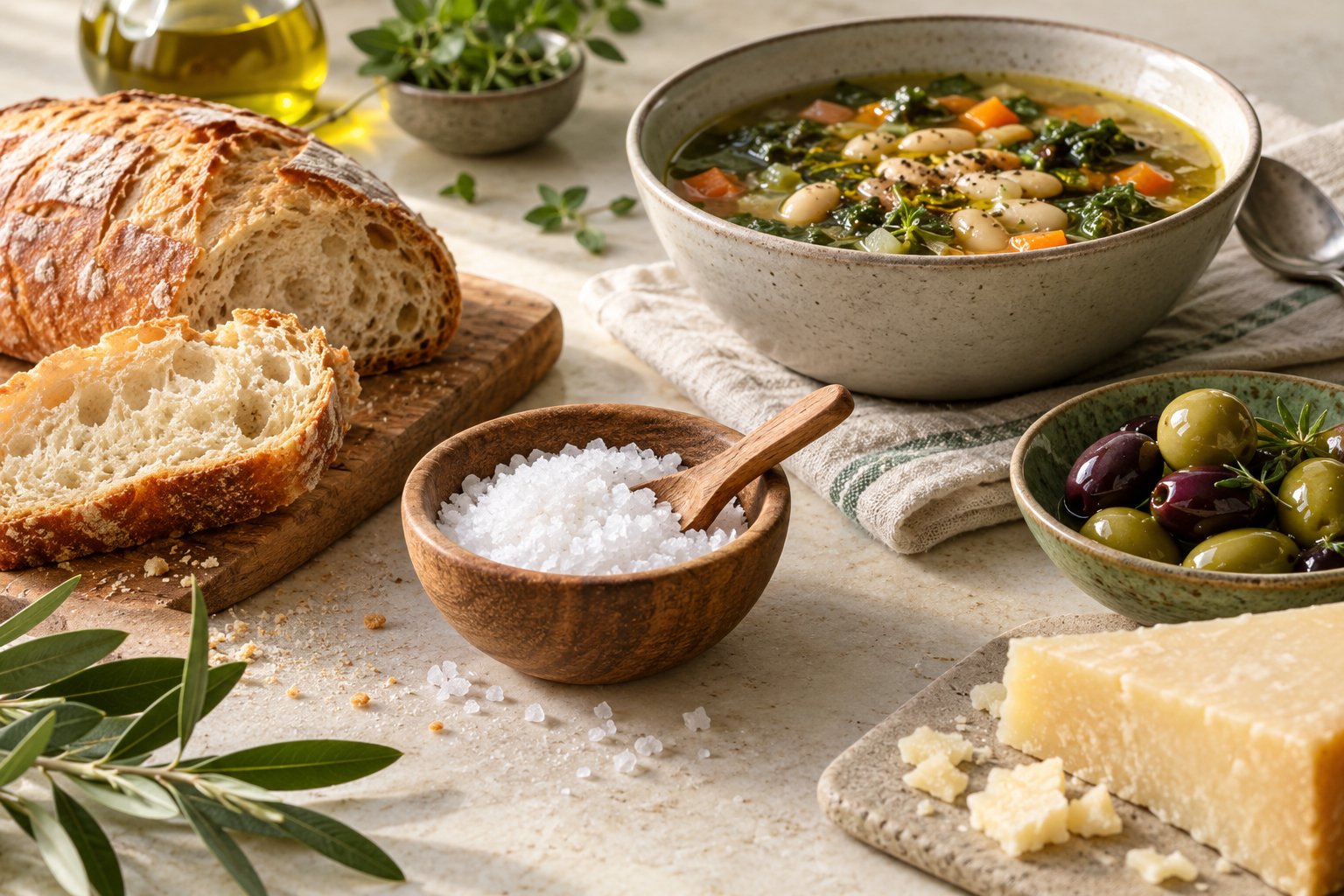
The NHS advises adults to eat no more than 6 g of salt a day, about one level teaspoon, and the WHO recommends less than 5 g. Most people eat more than that without noticing, because the bulk of it is already in food when we buy it: bread, cheese, processed meat, breakfast cereals, sauces, soups and ready meals. Cutting back is mostly about choosing lower-salt versions of everyday foods, not about the salt shaker.
Salt and sodium are not the same thing
Salt is sodium chloride. Sodium is the part that affects health, and it makes up about 40% of salt by weight. UK and EU labels list salt; US labels list sodium. To convert:
- Sodium to salt: multiply by 2.5. So 1 g of sodium is about 2.5 g of salt.
- Salt to sodium: divide by 2.5. So 6 g of salt is about 2.4 g of sodium.
Our guide to reading nutrition labels covers the rest of the panel.
How much is too much
| Body | Daily limit for adults |
|---|---|
| NHS (UK) | No more than 6 g of salt (about 2.4 g sodium) |
| WHO | Less than 5 g of salt (under 2 g sodium) |
| US Dietary Guidelines and FDA | Less than 2,300 mg sodium (about 5.75 g salt) |
The NHS sets lower limits for children: 2 g of salt a day for ages 1 to 3, 3 g for 4 to 6, 5 g for 7 to 10, and 6 g from age 11. Babies need very little, and salt should not be added to their food.
According to the WHO, the average adult worldwide eats around 10.8 g of salt a day, roughly double its recommendation.
Why it matters
Your body needs some sodium to keep fluid balance and nerves and muscles working, but diets rarely run short. Over time, eating too much salt is linked to raised blood pressure, and high blood pressure raises the risk of heart disease, stroke and kidney disease. It often has no symptoms, which is why it is worth a check even when you feel well.
Sodium is also one of the electrolytes. If you are wondering whether you need extra after exercise or in hot weather, our guide to electrolytes covers when it matters.
Where salt hides
The NHS estimates that about three-quarters of the salt we eat is already in the food we buy. These are the usual suspects:
| Food | Why it adds up |
|---|---|
| Bread and rolls | Not very salty per slice, but eaten so often that it is one of the largest sources |
| Breakfast cereals | Some contain surprising amounts, even sweet ones |
| Cheese | Hard and blue cheeses especially |
| Ham, bacon, sausages, salami | Salt is part of curing and preserving |
| Pizza and ready meals | Salt in the base, the sauce, the cheese and the toppings |
| Soups and stock cubes | A single cube or pot of stock can carry a lot |
| Sauces and condiments | Soy sauce, ketchup, pasta sauces, gravy, curry pastes |
| Crisps, salted nuts, olives, pickles | Salty by design |
| Restaurant and takeaway food | Usually saltier than the same dish cooked at home |
Soy sauce is a good example: a single tablespoon can contain around 2 g of salt or more, a third of the NHS daily limit. Reduced-salt versions are worth trying.
Easy ways to eat less salt
- Taste before you salt. Many people salt food out of habit, before they have tried it.
- Cook from scratch more often. You control the salt, and home-cooked meals tend to be far lower. Our budget cooking guide has simple meals to start with.
- Season with other things. Lemon or lime juice, vinegar, garlic, ginger, chilli, black pepper, fresh herbs and spices all add flavour without salt.
- Use less stock. Use half a stock cube, choose a reduced-salt version, or use the water from cooked beans or vegetables.
- Rinse tinned beans and vegetables. Choose those tinned in water rather than brine.
- Swap salty snacks. Unsalted nuts, fruit or plain popcorn with a little spice instead of crisps.
- Cut down slowly. Taste buds adjust. After a few weeks of eating less salt, salty food tends to taste too salty.
Are sea salt and pink salt healthier?
Not really. Sea salt, rock salt and Himalayan pink salt are all mainly sodium chloride. They may contain tiny traces of other minerals, but not enough to make a difference to health. Gram for gram they count the same as table salt. Larger crystals may taste stronger per pinch, which can help you use less, but it is the total that matters.
Questions people ask
Should I use a salt substitute?
Many salt substitutes replace some of the sodium with potassium. They may help some people reduce sodium, but they are not suitable for everyone. People with kidney disease, or who take certain medicines for blood pressure or the heart, should avoid them unless a doctor says otherwise, because too much potassium can be harmful.
Do I need more salt when I sweat a lot?
Most people get enough sodium from food to replace what is lost in normal sweating. Extra may help during very long or very sweaty exercise, as our electrolytes guide explains.
Can I eat too little salt?
For healthy people eating a normal diet, it is very unlikely. Low sodium levels in the blood are usually caused by illness, certain medicines, or drinking very large amounts of water in a short time, rather than by eating less salt.
Photograph: AI-generated image