Wellness Origin Hub
Electrolytes explained: when water is enough and when it is not
Electrolytes explained in plain English: what sodium and potassium do, how much you need, and when a sports drink or rehydration solution helps rather than plain water.
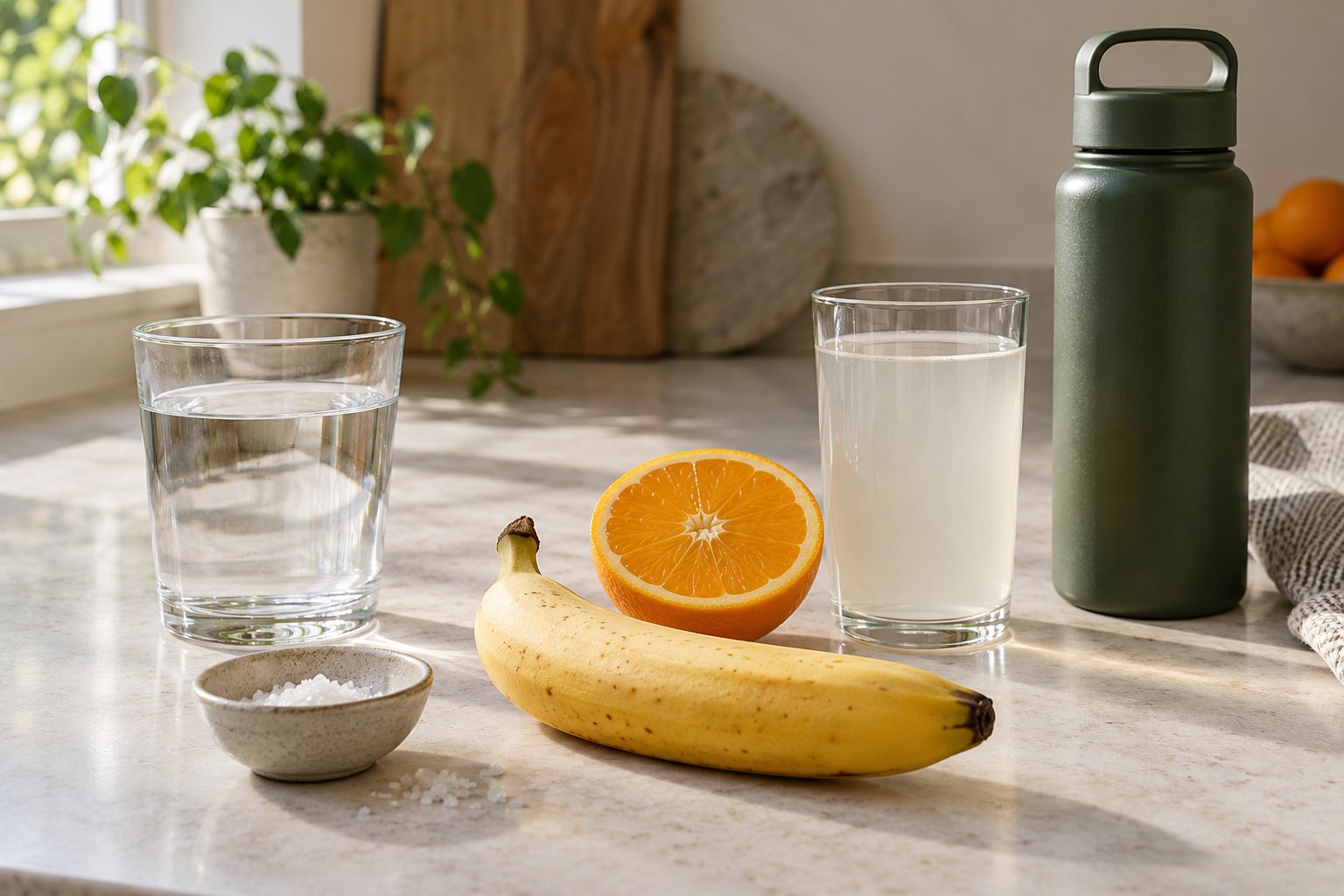
Electrolytes are minerals that carry an electric charge in your body fluids: mainly sodium, potassium, chloride, magnesium and calcium. They help control fluid balance, nerve signals and muscle contractions. For most people on most days, normal meals provide plenty of electrolytes and water is all you need to drink. Sports drinks and rehydration solutions earn their place in a few specific situations: long or very sweaty exercise, and illness with diarrhoea or vomiting.
What each electrolyte does
| Electrolyte | Main jobs | Common food sources |
|---|---|---|
| Sodium | Fluid balance, nerve and muscle function | Salt, bread, cheese, processed foods |
| Potassium | Heart rhythm, muscle function, blood pressure | Fruit, vegetables, beans, potatoes, milk |
| Chloride | Fluid balance, stomach acid | Salt |
| Magnesium | Muscle and nerve function, energy | Nuts, seeds, wholegrains, leafy greens |
| Calcium | Bones, muscle contraction | Dairy, fortified plant milks, tofu |
Sodium: most of us have more than enough
Sodium is essential, but most diets contain too much rather than too little. The WHO recommends adults eat less than 2 g of sodium a day, which equals less than 5 g of salt. The NHS advises no more than 6 g of salt a day. Much of it comes from bread, processed meat, cheese, sauces and ready meals rather than the salt shaker.
Too much sodium over time is linked to high blood pressure, which raises the risk of heart disease and stroke. This is why most people do not need extra electrolyte drinks with their everyday meals.
Potassium: many of us have too little
Potassium helps balance the effect of sodium on blood pressure. The WHO recommends adults get at least 3,510 mg of potassium a day from food, and EFSA sets an adequate intake of 3,500 mg. Many people fall short because they eat too few fruit and vegetables.
Good sources include bananas, oranges, potatoes, beans, lentils, spinach, tomatoes, yoghurt and milk. Eating more of these is a better route than any drink. Magnesium has its own guide: magnesium foods.
When water is enough
For most everyday situations, water is all you need:
- Normal daily life, including warm days
- Walking, gym sessions and runs of under about an hour
- Moderate exercise where you eat a normal meal afterwards
Food replaces the small amounts of electrolytes you lose in sweat. Our guide to how much water you need covers how to tell if you are drinking enough.
When electrolytes help
Long or very sweaty exercise
If you exercise for more than about an hour, especially in heat, you lose a lot of sodium in sweat. Some people are "salty sweaters" and see white marks on their clothes. In these cases a sports drink, an electrolyte tablet dissolved in water, or salty food with water helps replace what you lose. Many sports drinks also contain sugar for energy, which is useful during long events but unnecessary otherwise.
Diarrhoea and vomiting
This is where electrolytes matter most. The WHO's oral rehydration salts, a precise mix of salt, glucose and water, are one of the most important treatments for dehydration from diarrhoea worldwide. In the UK, pharmacies sell oral rehydration sachets, and the NHS suggests asking a pharmacist about them, especially for older people and those with other health conditions.
Sports drinks, juices and fizzy drinks are not good substitutes when you are ill: their sugar and salt levels are wrong for rehydration and can make diarrhoea worse. Ask a pharmacist for the right product.
Very hot weather and physical work
People who work outdoors in heat or sweat heavily for hours may need to replace salt as well as water. Regular meals and snacks usually cover it; an electrolyte drink can help on long shifts.
Coconut water, bananas and homemade drinks
- Coconut water is naturally high in potassium but low in sodium, so it is not a complete sports drink. It is a pleasant drink, not a necessary one.
- A banana and a glass of water after exercise replaces potassium and fluid for most people.
- Salty drinks such as salted lime soda are traditional in hot countries for a reason, but they are no replacement for a pharmacy rehydration solution when you are ill.
Questions people ask
Do I need electrolyte tablets every day?
Most people do not. A normal diet provides enough, and many already eat more sodium than recommended. Daily electrolyte drinks can add unnecessary salt and sugar.
Are sports drinks bad for you?
They are fine for their intended use: long or intense exercise. As an everyday drink they add sugar and calories, and their acidity can affect teeth.
What are the signs of low sodium or potassium?
Symptoms can include muscle cramps, weakness, tiredness, nausea, headache and confusion. These can have many causes and need a blood test to confirm, so see a doctor rather than guessing.
Photograph: AI-generated image