Wellness Origin Hub
Plant protein sources: beans, lentils, tofu, tempeh and seitan
A practical guide to plant protein sources, from beans, lentils and tofu to tempeh and seitan, how much protein each contains, how much you need, and why you do not have to combine them at every meal.
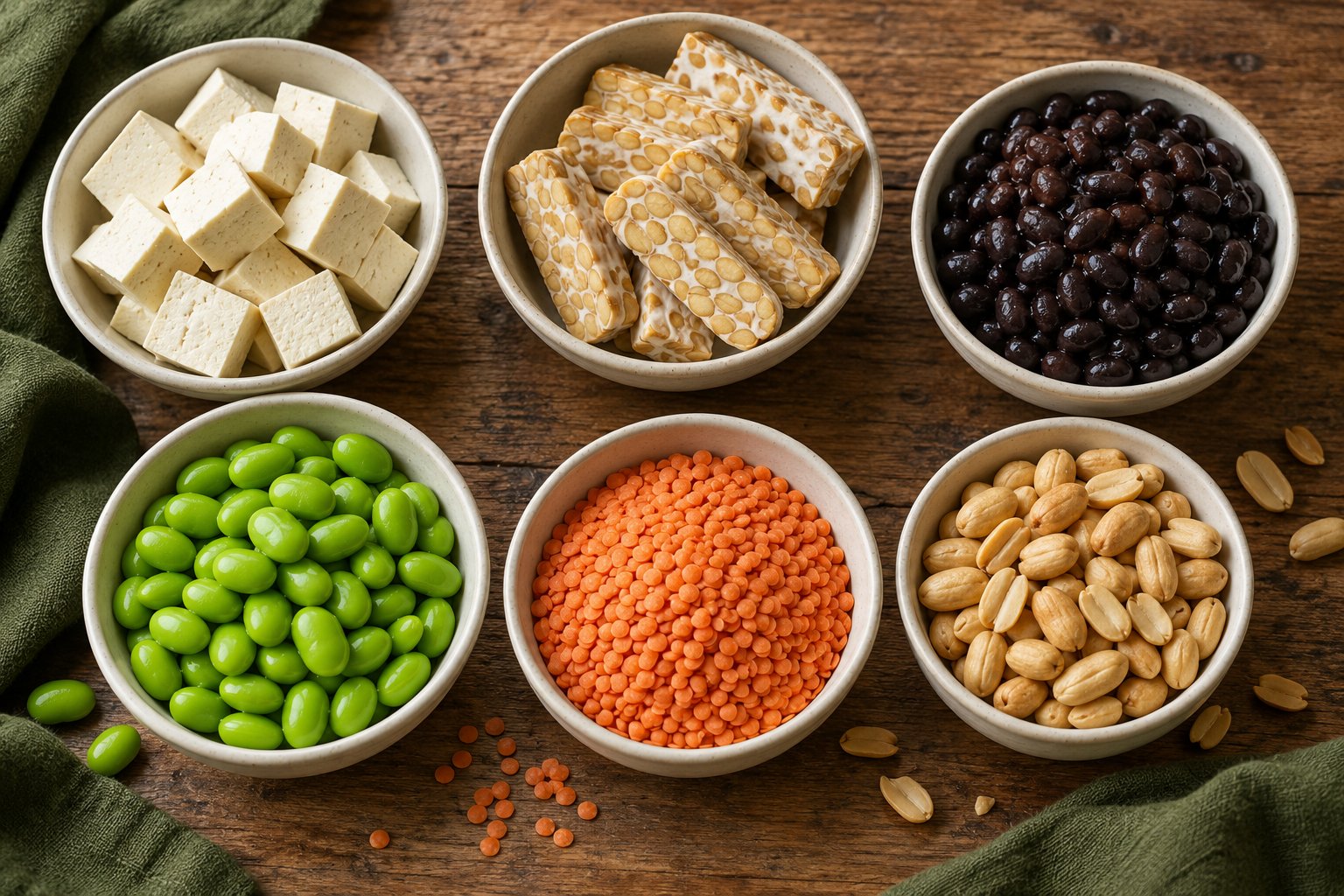
The richest plant protein sources are soya foods (tofu, tempeh, edamame and soya milk), seitan, beans, lentils, chickpeas and peas, followed by nuts, seeds and wholegrains. Most adults need roughly 0.75 g of protein per kilogram of body weight a day, and a varied plant-based diet can meet that comfortably. You do not need to combine specific foods at each meal; eating a mix across the day is enough.
How much protein you need
| Body | Adults |
|---|---|
| NHS (UK) | About 0.75 g per kg of body weight a day |
| EFSA (EU) | 0.83 g per kg of body weight a day |
| NIH and USDA (US) | 0.8 g per kg of body weight a day |
For someone who weighs 70 kg, that works out at about 53–58 g a day. Needs are higher in pregnancy and breastfeeding, and research suggests older adults and people who train hard may benefit from a little more. Most people in the UK and US already eat more protein than they need. Our post on high-protein breakfast ideas shows how quickly it adds up from the first meal.
Plant protein compared
These are approximate values for cooked or ready-to-eat foods, based on USDA food data. Brands vary, especially for tofu and seitan, so check the label.
| Food | Portion | Protein (approx.) |
|---|---|---|
| Seitan | 100 g | 20–25 g |
| Tempeh | 100 g | 19 g |
| Tofu, firm | 100 g | 12–17 g |
| Edamame, shelled | 100 g | 11 g |
| Lentils, boiled | 100 g | 9 g |
| Chickpeas, boiled | 100 g | 9 g |
| Black beans, boiled | 100 g | 9 g |
| Hemp seeds | 30 g | 9 g |
| Peanuts | 30 g | 7 g |
| Soya milk | 250 ml | 7–8 g |
| Quinoa, cooked | 100 g | 4 g |
| Wholemeal bread | 1 slice | 3–4 g |
The main sources
Beans, lentils and chickpeas
Cheap, filling and high in fibre as well as protein. Red lentils cook in about 15 minutes without soaking and melt into soups and dals. Tinned beans and chickpeas are just as nutritious as dried ones; rinse them to lower the salt. A portion of beans or pulses also counts towards your five a day in the UK.
Tofu
Made by curdling soya milk and pressing the curds, much as cheese is made. Firm tofu holds its shape for frying and baking; silken tofu blends into sauces and smoothies. Tofu set with calcium sulphate is also a good source of calcium, which our guide to calcium without dairy covers.
Tempeh
An Indonesian food made by fermenting whole soya beans into a firm cake. It has a nutty, slightly mushroomy flavour and more protein and fibre than tofu, because the whole bean is used. Slice it thinly and fry, or crumble into sauces. Steaming it for ten minutes first softens any bitterness.
Seitan
Made from wheat gluten, the protein in wheat flour, so it is very high in protein and has a chewy, meaty texture. It is not suitable for anyone with coeliac disease or a wheat allergy. Shop-bought seitan can be high in salt, so compare labels.
Edamame and soya milk
Edamame are young soya beans, sold frozen in or out of the pod. Soya milk is the plant milk with the most protein, close to cows' milk; see our plant milks comparison for how it stacks up.
Nuts, seeds and grains
They add smaller amounts, but they count. Peanuts (technically a legume), hemp seeds, pumpkin seeds and peanut butter are the most protein-dense. Oats, wholemeal bread and quinoa contribute too.
Do you need to combine proteins?
Protein is made of building blocks called amino acids, nine of which the body cannot make. Soya and quinoa contain all nine in good amounts. Most other plant foods are lower in one or two: grains tend to be low in lysine, and beans tend to be lower in methionine.
The old advice was to pair grains and beans at every meal. Current thinking is that this is not necessary. The body keeps a pool of amino acids, so eating a variety of plant proteins across the day covers your needs. Many traditional meals combine them anyway: dal with rice, hummus with pitta, beans on toast, rice and black beans.
Nutrients to watch on a plant-based diet
A diet with little or no animal food can meet protein needs easily, but a few other nutrients need attention:
- Vitamin B12: not found in plant foods unless fortified. The NHS advises vegans to get it from fortified foods or a supplement.
- Iron: plant iron is absorbed less well. See our guide to iron-rich foods.
- Calcium, iodine and omega-3: fortified plant milks, tofu and seeds help.
Questions people ask
Is plant protein as good as animal protein?
Gram for gram, most plant proteins are digested slightly less well and some are lower in certain amino acids. In a varied diet with enough total protein, research suggests this makes little practical difference for most adults.
Is soya safe to eat regularly?
For most people, yes. The NHS describes soya as a good source of protein, and moderate amounts of soya foods such as tofu, edamame and soya milk are part of many traditional diets. Anyone with a soya allergy should avoid it.
Do I need protein powder?
Most people do not. Food covers protein needs for almost everyone, and powders can be useful mainly for convenience.
Photograph: AI-generated image