Wellness Origin Hub
Calcium without dairy: the best non-dairy calcium foods
How to get calcium without dairy: the best non-dairy calcium foods, from calcium-set tofu and fortified plant milks to greens and tinned fish, and how much calcium adults need according to the NHS and NIH.
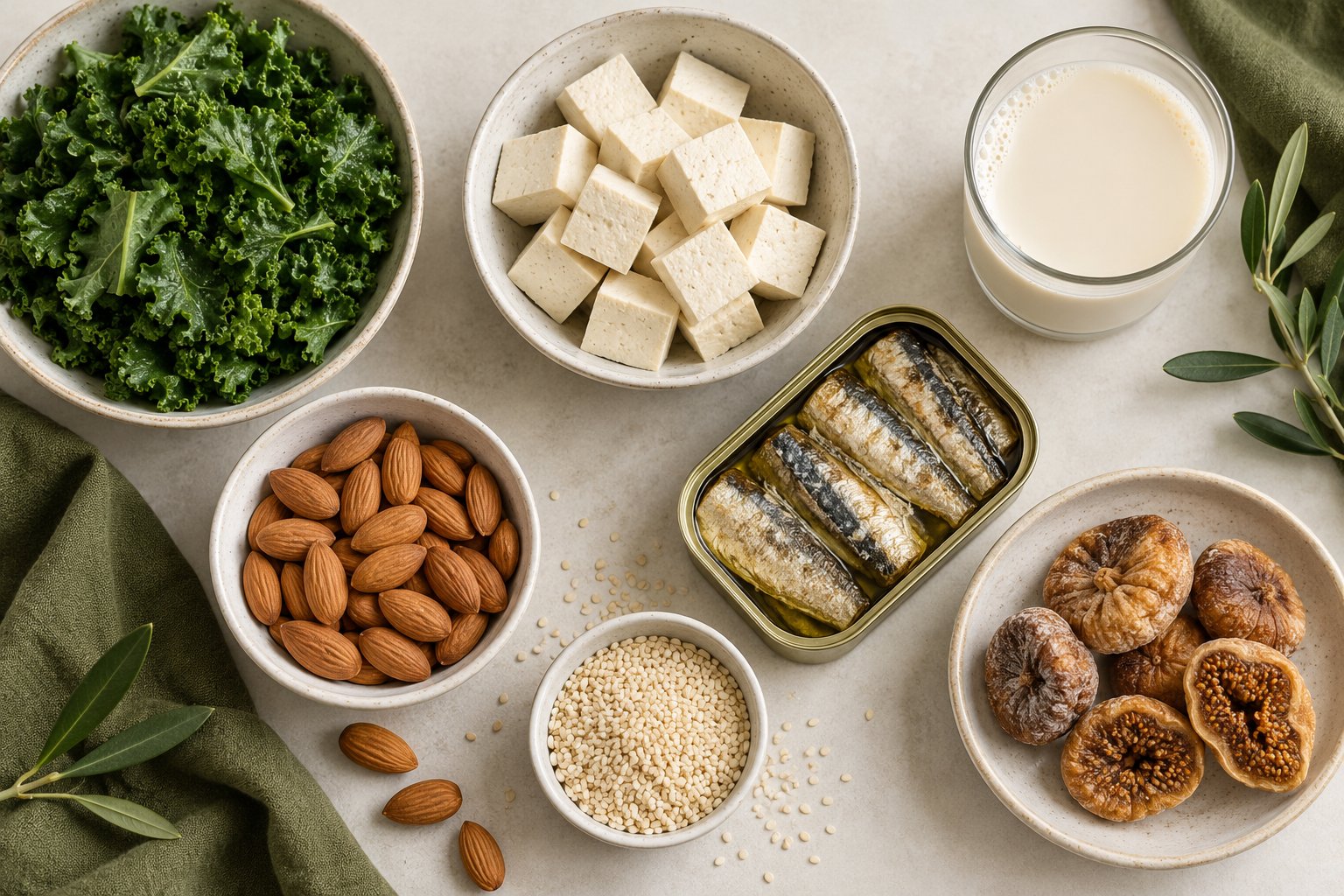
You can get enough calcium without dairy by eating calcium-set tofu, fortified plant milks and yoghurts, tinned fish with soft bones, green leafy vegetables such as kale and pak choi, and smaller amounts from almonds, sesame seeds, dried figs and fortified bread or cereals. Adults need about 700 mg a day according to the NHS. The two things that matter most are checking labels for fortification and spreading calcium across the day.
Why calcium matters
Calcium helps build and keep strong bones and teeth. It is also needed for muscles to contract, for nerves to send signals and for blood to clot normally. If you do not get enough over many years, the body takes calcium from the bones, which can contribute to weaker bones and osteoporosis later in life.
Vitamin D helps the body absorb calcium, so the two work together. Our guide to vitamin D in winter covers that side.
How much you need
| Who | NHS (UK) | EFSA (EU) | NIH Office of Dietary Supplements (US) |
|---|---|---|---|
| Adults | 700 mg a day | 950 mg a day (25 and over) | 1,000 mg a day (19 to 50) |
| Older adults | 700 mg a day | 950 mg a day | 1,200 mg a day (women 51+, men 71+) |
Needs are higher in teenagers, and the NHS advises extra calcium while breastfeeding. The figures differ because of different methods, but all of them can be met without dairy with a bit of planning.
The best non-dairy calcium foods
These approximate values come from the NIH Office of Dietary Supplements and USDA food data. Fortified foods vary a lot by brand, so the label is the final word.
| Food | Portion | Calcium (approx.) |
|---|---|---|
| Sardines, tinned in oil, with bones | 85 g | 325 mg |
| Fortified soya milk | 1 cup (240 ml) | 300 mg |
| Tofu, firm, set with calcium sulphate | Half a cup (about 125 g) | 250 mg |
| Salmon, tinned, with bones | 85 g | 180 mg |
| Kale, cooked | 1 cup | 175 mg |
| Dried figs | 100 g | 160 mg |
| Almonds | 30 g | 75 mg |
| Chia seeds | 1 tablespoon | 75 mg |
| Pak choi (bok choy), raw | 1 cup shredded | 75 mg |
| Broccoli, cooked | Half a cup | 30 mg |
Tofu: check how it was set
Tofu is made by curdling soya milk. When the coagulant is calcium sulphate or calcium chloride, the tofu becomes one of the richest plant sources of calcium. Tofu set with nigari (magnesium chloride) contains less. Look for calcium sulphate, or E516, in the ingredients.
Fortified plant milks and yoghurts
Many soya, oat, almond and pea milks are fortified to a similar level as cows' milk, around 120 mg per 100 ml. But not all are: organic plant milks are usually not fortified under organic rules in the UK and EU. Shake the carton, as the added calcium can settle at the bottom. Our plant milks comparison goes through which ones are fortified with what.
Green vegetables
Kale, pak choi, spring greens, broccoli, watercress and okra provide calcium that is absorbed well. Spinach is the exception: it does contain calcium, but it also contains oxalates that bind most of it, so much less is absorbed than the label figure suggests.
Tinned fish with bones
The soft, edible bones in tinned sardines, pilchards and salmon are a very good source. Mash them in with the fish on toast and you will not notice them.
Nuts, seeds and dried fruit
Almonds, sesame seeds, tahini, chia seeds and dried figs all add smaller amounts. Useful as part of the mix, but you would need large portions to rely on them alone.
Fortified bread and cereals
In the UK, white and brown flour is fortified with calcium by law, so most white and brown bread contains some. Many breakfast cereals are fortified too.
Helping your body absorb it
- Spread it out. The body absorbs calcium better in smaller amounts, so a little at each meal works better than one large dose.
- Get enough vitamin D. It is needed to absorb calcium.
- Go easy on very large amounts of salt and caffeine, which may increase how much calcium is lost in urine. Our guide to caffeine covers sensible limits.
Questions people ask
Do I need a calcium supplement if I do not eat dairy?
Not necessarily. Most people can meet their needs with fortified foods and the sources above. If you are unsure, ask a doctor, pharmacist or dietitian. The NHS says that taking 1,500 mg or less of calcium a day from supplements is unlikely to cause harm, but more than that can cause stomach pain and diarrhoea.
Is calcium from plants as good as calcium from milk?
It depends on the plant. Calcium from kale, pak choi and broccoli is absorbed at least as well as from milk; calcium from spinach is absorbed poorly. Calcium-set tofu and fortified milks are absorbed well.
Can I eat too much calcium from food?
It is very unlikely from food alone. Too much tends to come from high-dose supplements, often combined with fortified foods.
Photograph: AI-generated image