Wellness Origin Hub
Homemade oat milk that is not slimy
Cold water, a 30-second blend and a double strain are what keep homemade oat milk smooth instead of slimy. Here is the method, the ratio and how to use it.
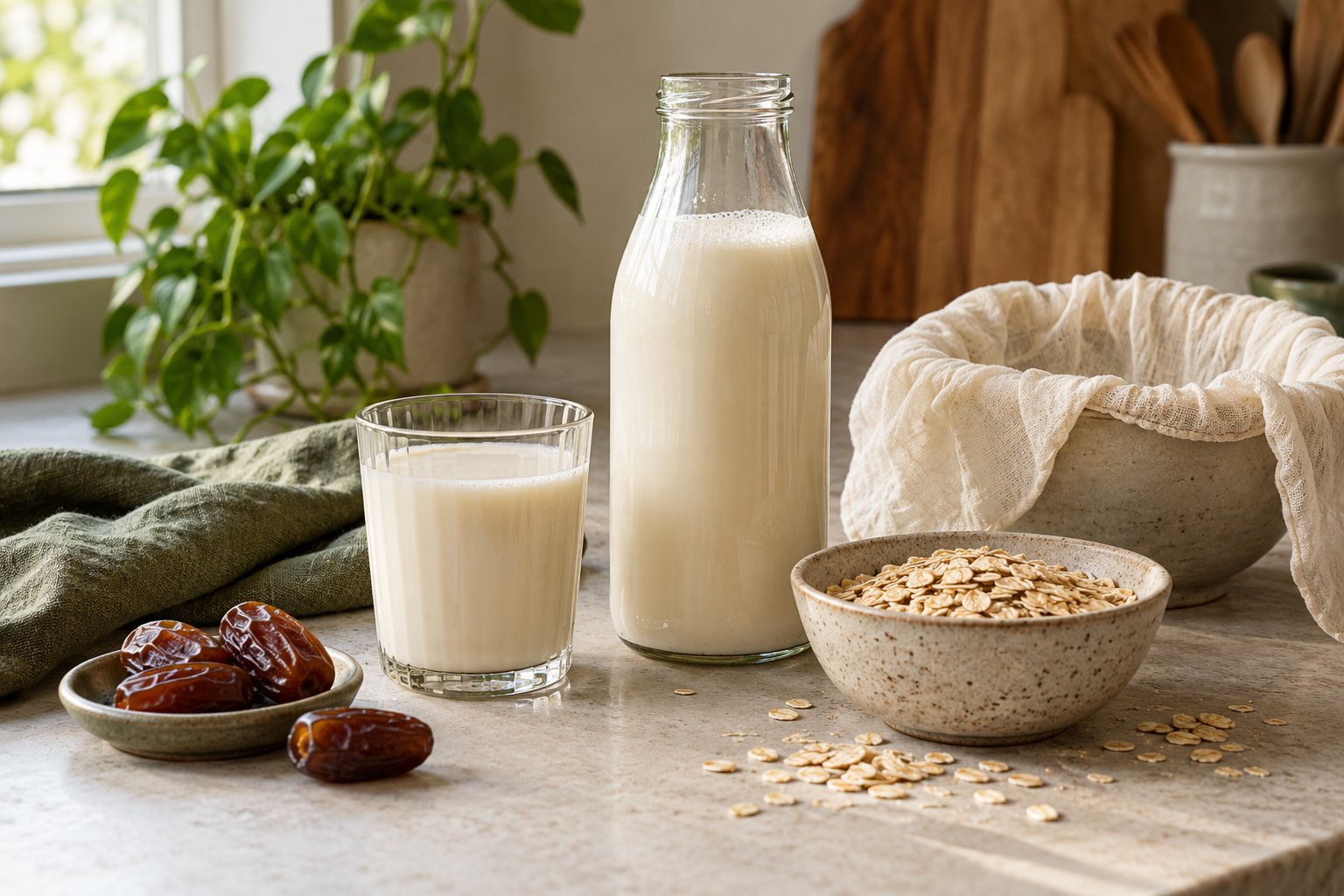
Homemade oat milk is rolled oats blended briefly with very cold water and strained twice. The three things that stop it turning slimy are cold water, a short blend of about 30 seconds, and straining without squeezing. Done this way it is smooth, lightly sweet and ready in five minutes, for a fraction of the price of a carton.
Oat drinks in their modern, shop-bought form were developed in Sweden in the 1990s, but cooks across northern Europe have soaked and strained grains for much longer. The homemade version is simpler than the cartons: no added oil, no enzymes and no added vitamins, which matters if you drink a lot of it (more on that below).
How to make it
- Put the oats in a sieve and rinse them under cold running water for a few seconds to wash off loose starch.
- Put the rinsed oats, cold water, salt, and the date and vanilla if using, into a blender.
- Blend on high for 30 seconds, no longer.
- Pour through a fine sieve into a bowl. Do not press the pulp.
- Strain a second time through a nut milk bag, a clean thin tea towel or a double layer of muslin. Let it drip, lifting and shaking the bag gently, but do not wring it.
- Pour into a clean bottle, close and chill. Shake before using.
Why oat milk turns slimy
Oats are rich in starch and in beta-glucan, a soluble fibre that turns thick and gluey when it is worked hard or heated. Each step of the method above keeps that in check.
| Cause | What happens | Fix |
|---|---|---|
| Warm or room-temperature water | Starch starts to swell | Use water straight from the fridge, or add a few ice cubes |
| Blending for a minute or more | Oats break down too far and release more starch | Blend for 30 seconds |
| Squeezing the bag | Pushes the gluey part through | Let it drip; shake gently |
| Heating it in a pan | Thickens like porridge | Warm it gently, or use it cold |
| Instant or quick oats | More broken surfaces, more starch | Use rolled oats |
Tips for the best result
- Rinse first. A quick rinse removes some surface starch and makes a cleaner-tasting milk.
- Ice-cold everything. If your water is not very cold, replace a quarter of it with ice.
- A pinch of salt. It makes the milk taste rounder and less like raw oats.
- Do not overthink the blender. Any jug blender is fine for 30 seconds. If you are shopping for one anyway, our guide to blenders for smoothies explains what matters.
- Use the pulp. The leftover oat pulp can go into porridge, pancakes, muffins or overnight oats.
Ratios for different uses
| Use | Oats | Water | Result |
|---|---|---|---|
| Light, for cereal and drinking | 1 part | 5 parts | Thin, clean |
| Everyday (this recipe) | 1 part | about 4 parts | Like semi-skimmed milk |
| Creamy, for tea and coffee | 1 part | 3 parts | Thicker, richer |
The creamier ratio works well in tea or a masala chai added at the end, though it will not foam like a barista carton, which usually contains added oil.
Variations
- Chocolate: blend in a tablespoon of cocoa and an extra date.
- Cinnamon: add a pinch of ground cinnamon with the vanilla.
- Creamier: add a tablespoon of neutral oil or a handful of soaked cashews before blending. It froths a little better in hot drinks.
- Unsweetened: leave out the date and syrup entirely for cooking and savoury use.
Make ahead and storage
Keep homemade oat milk in a closed bottle in the fridge for up to four days. It separates as it sits, which is normal, so shake it before pouring. If it smells sour or turns thick, throw it away. Do not freeze it, as the texture becomes grainy once thawed.
Questions people ask
Can I heat homemade oat milk?
Yes, gently. Warm it in a pan over a low heat, stirring, and take it off as soon as it steams. If it boils it thickens. For hot chocolate or chai, add it near the end rather than simmering it.
Is homemade oat milk as nutritious as cow's milk?
Not on its own. Most of the oats stay behind in the pulp, so the milk is low in protein, and unlike many cartons it is not fortified with calcium, vitamin B12, iodine or vitamin D. If oat milk replaces dairy in your diet, a fortified shop-bought version may be the better everyday choice. Our comparison of oat, almond, soy, coconut and pea milk sets out the differences.
Is it gluten-free?
Only if you use oats labelled gluten-free. Ordinary oats are often processed alongside wheat, barley and rye.
Photograph: AI-generated image