Wellness Origin Hub
How decaf coffee is made and how much caffeine is left
How decaf coffee is made, from the Swiss Water process to CO2 and solvent methods, how much caffeine is left in a cup of decaf, and whether it is safe to drink.
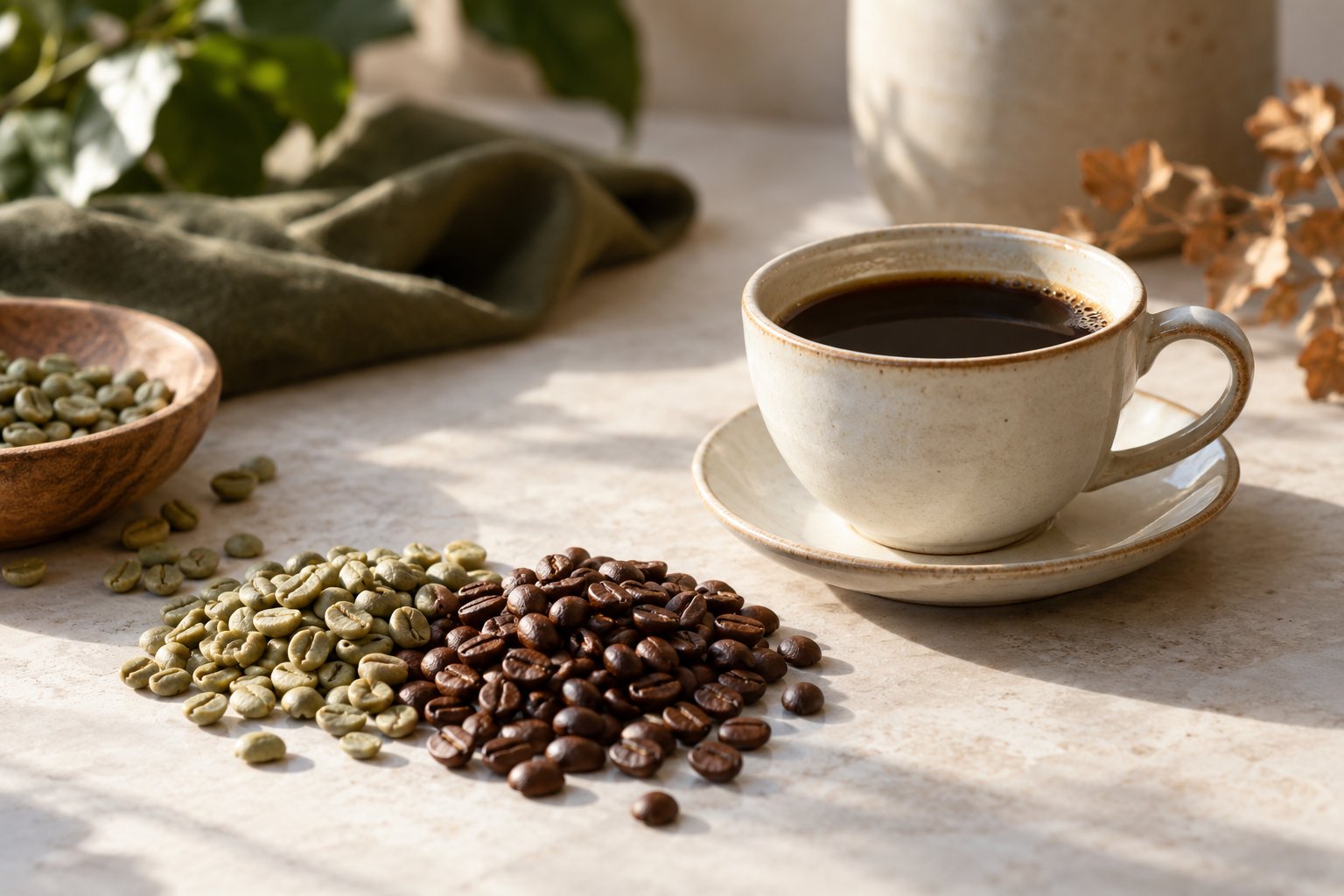
Decaf coffee is made by removing most of the caffeine from green, unroasted coffee beans before they are roasted. It is not caffeine-free: the US FDA says an 8-ounce (240 ml) cup of decaf usually contains about 2–15 mg of caffeine, compared with roughly 80–100 mg in a regular cup. The four main methods use water, carbon dioxide or a solvent, and all of them leave a coffee that tastes like coffee, if a little softer.
How caffeine is removed
Every method starts with green beans, because roasted beans are too fragile and the flavour would be lost. The beans are soaked or steamed to open them up, the caffeine is drawn out, and the beans are dried and then roasted as normal.
| Method | What removes the caffeine | Often labelled |
|---|---|---|
| Swiss Water process | Water and activated carbon filters | "Swiss Water", "chemical-free" |
| CO2 process | Pressurised carbon dioxide | "CO2 decaf" |
| Ethyl acetate | A solvent found naturally in fruit, often made from sugar cane | "Sugar cane decaf", "naturally decaffeinated" |
| Methylene chloride | A solvent, removed during drying and roasting | Often just "decaf" |
Swiss Water process
Green beans are soaked in hot water, which pulls out caffeine and flavour compounds. The water is passed through activated carbon filters that trap the caffeine. The resulting "flavour-charged" water, saturated with everything except caffeine, is used to soak new beans, so the caffeine moves out but most of the flavour stays. It uses no added chemicals, which is its main appeal.
CO2 process
Moistened beans are placed in a sealed chamber with carbon dioxide under very high pressure, where it behaves partly like a liquid. It selectively bonds with caffeine and leaves most flavour compounds behind. The method is costly to set up, so it is mostly used for large batches.
Ethyl acetate ("sugar cane") process
Beans are steamed and rinsed with ethyl acetate, a compound that occurs naturally in ripe fruit. For coffee it is often made from fermented sugar cane, which gives the "sugar cane decaf" name. It is common in Colombia and tends to leave a slightly sweet, fruity note.
Methylene chloride process
The beans are soaked in a solution of methylene chloride, directly or indirectly, which dissolves the caffeine. The solvent evaporates at a low temperature and is driven off during drying and roasting, which happens at around 200°C. The FDA allows its use in decaffeinating coffee but limits residues to no more than 10 parts per million, and in practice levels in roasted coffee are generally far lower. Some buyers still prefer to avoid it, which is why the Swiss Water and CO2 labels are used as a selling point.
How much caffeine is left?
There is no single standard worldwide, but decaf must have most of its caffeine removed. In the EU, decaffeinated roasted coffee may contain no more than 0.1% caffeine by weight. In the US, the industry benchmark is that at least 97% of the original caffeine is removed.
| Drink | Caffeine (roughly) |
|---|---|
| Regular brewed coffee, 240 ml | 80–100 mg |
| Espresso, single shot | 60–65 mg |
| Decaf brewed coffee, 240 ml | 2–15 mg |
| Decaf espresso, single shot | Small, varies by bean and shot |
Several cups of decaf can add up to the caffeine of a weak regular coffee, but for most people that is still small. For context, EFSA and the FDA say up to 400 mg of caffeine a day is generally safe for healthy adults, and the NHS advises staying under 200 mg a day during pregnancy. Our matcha vs coffee guide compares caffeine in other drinks.
Does decaf taste different?
A little. Decaffeination removes some flavour compounds along with the caffeine, and caffeine itself adds some bitterness. Decaf often tastes softer and rounder. Freshness matters more than the method: decaf beans are sometimes older or less carefully roasted because they sell more slowly. Buying from a roaster who sells plenty of decaf helps.
Questions people ask
Is decaf coffee bad for you?
There is no good evidence that decaf is harmful for healthy people, and it contains many of the same plant compounds as regular coffee. Research on coffee and health is mostly observational, so it suggests associations rather than proving benefits.
Will decaf keep me awake?
Unlikely for most people, given the small amount of caffeine. People who are very sensitive may still notice it in the evening. If you are protecting your sleep, a caffeine-free herbal tea fits an evening wind-down routine better.
Can I make decaf Vietnamese iced coffee?
Yes. Use a dark-roast decaf with your phin filter. The condensed milk and strong brew still give you the classic Vietnamese iced coffee flavour.
Photograph: AI-generated image