Wellness Origin Hub
The best kettlebells for home workouts
The best kettlebells for home workouts, with what separates cast iron, competition and adjustable bells, which weight to start with, and three we would choose.
We may earn a commission if you buy through links in this article. How we make money.
Our picks at a glance
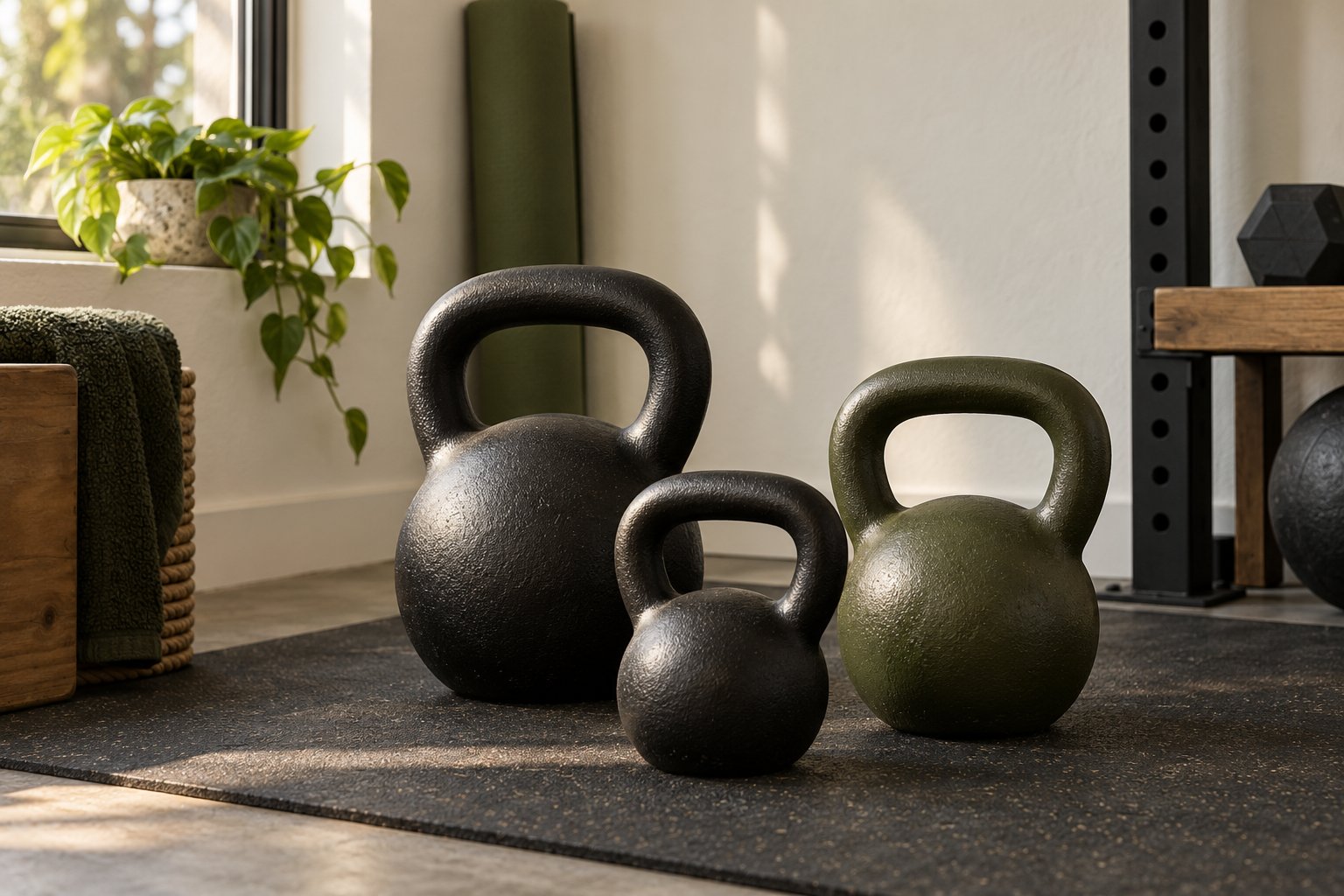
A single kettlebell is one of the most useful pieces of kit for a small home gym. It covers squats, swings, rows, presses and carries, it fits under a bed, and it lasts for decades. For most beginners, a plain cast iron bell in a moderate weight is the right first buy. Competition bells suit people who train often and want every weight to feel the same in the hand; adjustable bells suit people short of space.
Cast iron, competition or adjustable?
| Type | What it is | Good for | Drawbacks |
|---|---|---|---|
| Cast iron | One solid piece; bigger as it gets heavier | Most people, first bell | Size changes with weight, so technique feels slightly different between bells |
| Competition | Steel shell, same size at every weight, colour-coded | Frequent training, high-rep swings and snatches | More expensive; handle can feel narrow for two-handed swings |
| Adjustable | Plates or a dial change the weight inside one shell | Small spaces, people who want several weights | Bulkier shape; not built for being dropped; costly |
What to look for
- A smooth handle. Rough seams from casting can tear skin on swings. Run a thumb round the handle before you start.
- A flat base. It should stand without rocking, so you can pick it up safely for goblet squats.
- Handle width. A handle wide enough for both hands matters for two-handed swings.
- Weight markings. Clear kilo or pound markings stop mix-ups once you own more than one.
- Coating. Powder coat and plain painted finishes grip better than glossy paint when hands get sweaty.
Which weight should I start with?
As a rough guide used by many coaches, a lot of women start with 8–12 kg and a lot of men with 12–16 kg. The right weight is the one you can goblet squat for ten tidy reps. Swings use the hips rather than the arms, so most people can swing a little heavier than they can press.
The picks
Best value: Amazon Basics Cast Iron Kettlebell
Around $35
A plain cast iron bell that does the basics well. It is the obvious choice for a first kettlebell, especially if you are not yet sure how much you will use it. Check the handle for rough edges when it arrives.
What we like
- Inexpensive
- Wide range of weights
- Flat base
- Simple and solid
Keep in mind
- Weights in pounds rather than round kilos
- Finish can be less smooth than premium bells
Best for regular training: Kettlebell Kings Competition Kettlebell
Around $100
If kettlebells become your main training, competition bells make moving between weights easy, because the shape and handle never change. They are a buy for the second or third bell, once you know you will keep at it.
What we like
- Same size at every weight
- Colour-coded by weight
- Smooth steel handle
Keep in mind
- Expensive per kilo
- Handle is narrower for two-handed swings
Best adjustable: Bowflex SelectTech 840 Kettlebell
Around $170
Useful if you want light weights for presses and heavier ones for swings and squats but have room for only one bell. The shape is chunkier than a solid kettlebell, so it suits slow strength work better than fast, high-rep moves.
What we like
- Several weights in one bell
- Saves floor space
- Quick dial to change weight
Keep in mind
- Bulky shape on swings
- Should not be dropped
- Costs more than one fixed bell
At a glance
| Kettlebell | Type | Best for | Price |
|---|---|---|---|
| Amazon Basics | Cast iron | A first bell on a budget | Low |
| Kettlebell Kings Competition | Competition steel | Frequent, high-rep training | Medium to high |
| Bowflex SelectTech 840 | Adjustable | Small spaces | High |
Three moves to start with
- Goblet squat: 3 × 8–10. Hold the bell by the horns against your chest, sit down between your heels and stand up. Easier: no weight, to a chair. Harder: pause at the bottom.
- Two-handed swing: 3 × 10–15. Hinge at the hips, hike the bell back between your legs, then snap the hips forward so it floats to chest height. The arms only guide it. Easier: practise the hinge with a deadlift from the floor first. Harder: one-handed swings.
- Suitcase carry: 3 × 30 seconds each side. Walk tall holding the bell at your side without leaning. Easier: shorter walk. Harder: a heavier bell.
Learn the swing slowly; a video of yourself from the side is the quickest way to check the back stays flat. These moves slot into our strength training plan for beginners, and if you prefer dumbbells, see our adjustable dumbbell picks.
Questions people ask
Kettlebell or dumbbells?
Dumbbells are easier for presses and rows. Kettlebells are better for swings and carries. For a first purchase, a kettlebell covers more in less space.
Do I need more than one?
Not at first. Most people add a second, heavier bell after a few months, when swings and squats feel easy with the first.
Photograph: AI-generated image