Wellness Origin Hub
The best foam rollers for recovery: density, size and texture
The best foam rollers for recovery, from a soft smooth roller to a firm textured one, and how to choose the right density, size and surface for you.
We may earn a commission if you buy through links in this article. How we make money.
Our picks at a glance
A foam roller is a simple way to ease the feeling of tight, stiff muscles after exercise or a long day at a desk. If you are new to it, start with a medium-firm smooth roller: it is comfortable, versatile and cheap. Firmer and textured rollers press harder and suit people who already roll regularly.
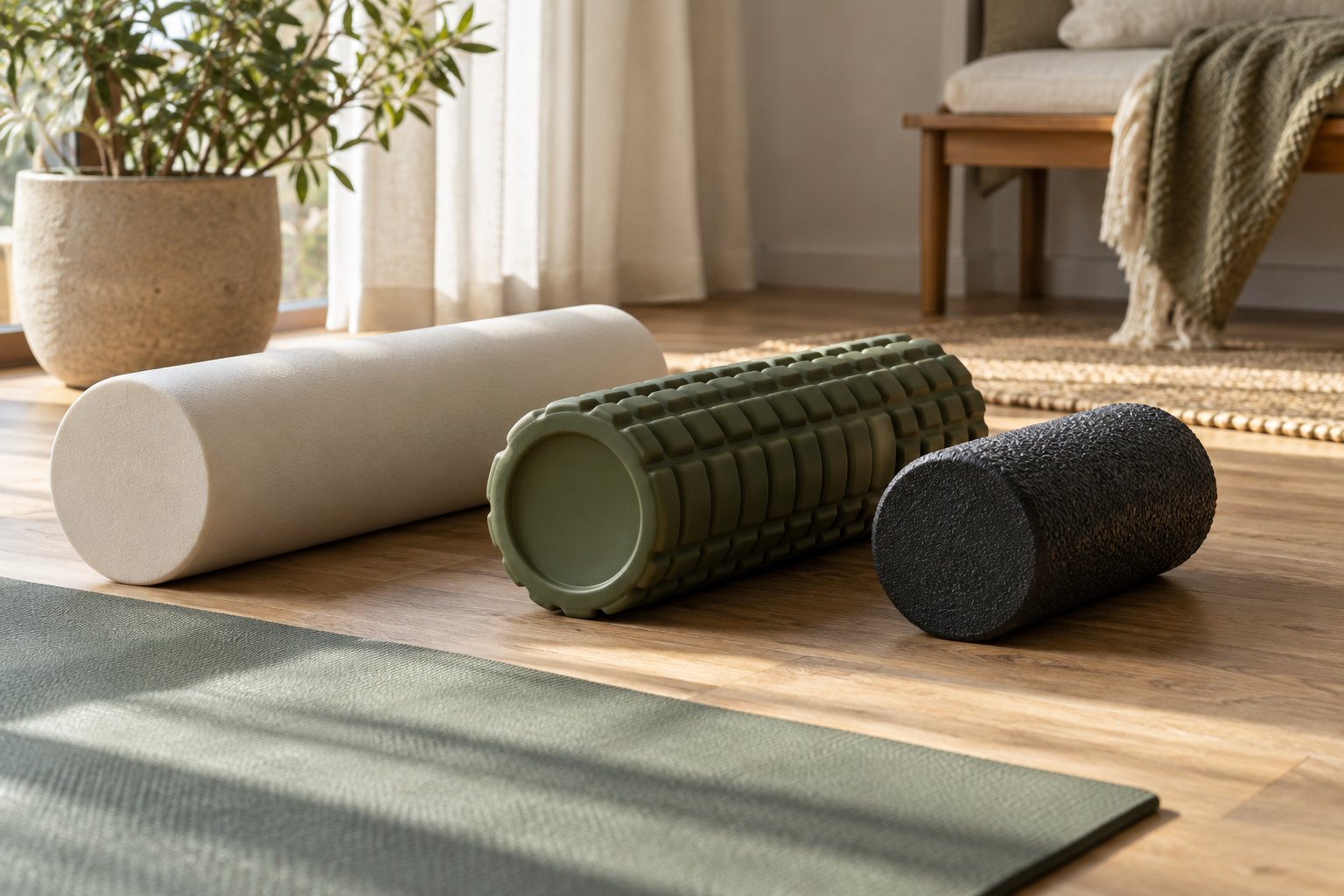
Below are three rollers worth considering and the differences that matter.
Does foam rolling work?
Research suggests foam rolling can briefly improve how far a joint moves and may reduce the feeling of muscle soreness after exercise. The effects seem to be short-lived and modest, and it does not "break up" knots or flush out toxins. Think of it as a pleasant warm-up or cool-down tool, not a treatment.
What to look for
We looked at firmness, surface texture, length and how well each roller keeps its shape. Prices change often, so check before you buy.
| Feature | Options | Who it suits |
|---|---|---|
| Density | Soft, medium, firm | Beginners: soft to medium. Regular users: medium to firm |
| Surface | Smooth, grid, knobbly | Smooth: gentle, even. Textured: more focused pressure |
| Length | Short (around 12–13 in), long (around 36 in) | Short: travel, legs. Long: back, stability, two legs at once |
| Core | Solid foam, hollow core | Hollow-core rollers tend to keep their shape longer |
- Firmer is not better. If you have to tense up or hold your breath, the roller is too hard.
- Long rollers are easier for the back. You can lie along one for chest openers, and it is more stable to balance on.
- Short rollers travel well and are fine for legs and hips.
Best overall: TriggerPoint GRID Foam Roller
Around $35
A popular all-round roller with a rigid core and a moulded surface. The pattern gives a little more focus than smooth foam without being harsh. A good choice once you know you will use a roller regularly.
What we like
- Hollow core keeps its shape
- Grid surface gives a mix of flat and firmer areas
- Short enough to travel
Keep in mind
- Firmer than a soft beginner roller
- Too short to lie along your spine
- Costs more than plain foam
Best value: Amazon Basics High-Density Round Foam Roller
Around $20
A simple smooth roller that is a sensible first purchase. The long version doubles as a support for chest stretches lying lengthways and for gentle balance exercises.
What we like
- Smooth, even pressure
- Long size available for back and balance work
- Low price
Keep in mind
- Solid foam can soften with heavy use
- Plain surface feels mild to experienced users
- Long version takes storage space
Best firm textured roller: RumbleRoller
Around $60
For people who find ordinary rollers too gentle. The raised bumps press more deeply into the thighs and buttocks. Start with the standard firmness and use it lightly.
What we like
- Knobbly surface digs into larger muscles
- Available in standard and extra-firm versions
- Holds its shape well
Keep in mind
- Too intense for most beginners
- Uncomfortable on bony areas
- Pricier than plain rollers
At a glance
| Roller | Firmness | Surface | Best for |
|---|---|---|---|
| TriggerPoint GRID | Medium-firm | Moulded grid | Regular all-round use |
| Amazon Basics High-Density | Medium | Smooth | Beginners, back and balance |
| RumbleRoller | Firm | Knobbly | Experienced rollers, big muscles |
A five-minute foam rolling routine
Roll slowly, about one centimetre per second, and spend 30–60 seconds on each area. Breathe normally.
- Calves: sit with the roller under your calves, hands behind you, lift your hips and roll from ankle to just below the knee.
- Hamstrings: move the roller under the backs of your thighs and roll from knee to just below the buttocks.
- Quads: lie face down on your forearms with the roller under the fronts of your thighs, roll from hip to just above the knee.
- Outer hip and buttock: sit on the roller, cross one ankle over the other knee and lean towards that side.
- Upper back: lie with the roller across your upper back, hands supporting your head, lift your hips and roll between the bottoms of the shoulder blades and the tops of the shoulders.
Easier option: take more weight on your hands and feet, or roll on a bed or thick mat. Harder option: stack one leg on top of the other for calves and hamstrings, or pause for a few breaths on a tender spot.
Pair rolling with a few stretches or our hip mobility routine after a run, and keep the roller by your yoga mat so it actually gets used. It also fits neatly after desk stretches at the end of a long day.
Questions people ask
Should foam rolling hurt?
It can feel uncomfortable, but it should not be painful. If you wince or tense up, ease off.
Before or after exercise?
Either. A minute or two before can be part of a warm-up; a few minutes after can feel good as you cool down.
Photograph: AI-generated image