Wellness Origin Hub
The best cast iron skillets for everyday cooking
The best cast iron skillets for everyday cooking, from a cheap pre-seasoned classic to a lighter, smoother pan, plus how to season and look after one.
We may earn a commission if you buy through links in this article. How we make money.
Our picks at a glance
For most kitchens, the best cast iron skillet is a plain, pre-seasoned 10- or 12-inch pan from Lodge: cheap, nearly indestructible and good at searing, roasting and baking. If the weight puts you off, a lighter, smooth-machined pan costs several times more but is easier to lift and toss. Either will outlast every non-stick pan you own if you dry it and oil it after washing.
Why cook with cast iron
Cast iron heats slowly but holds heat very well, so food that hits the pan does not cool it down. That is what gives you a deep brown crust on potatoes, tofu, fish and steak. It goes from hob to oven, works on gas, electric and induction, and has no coating to scratch or wear off.
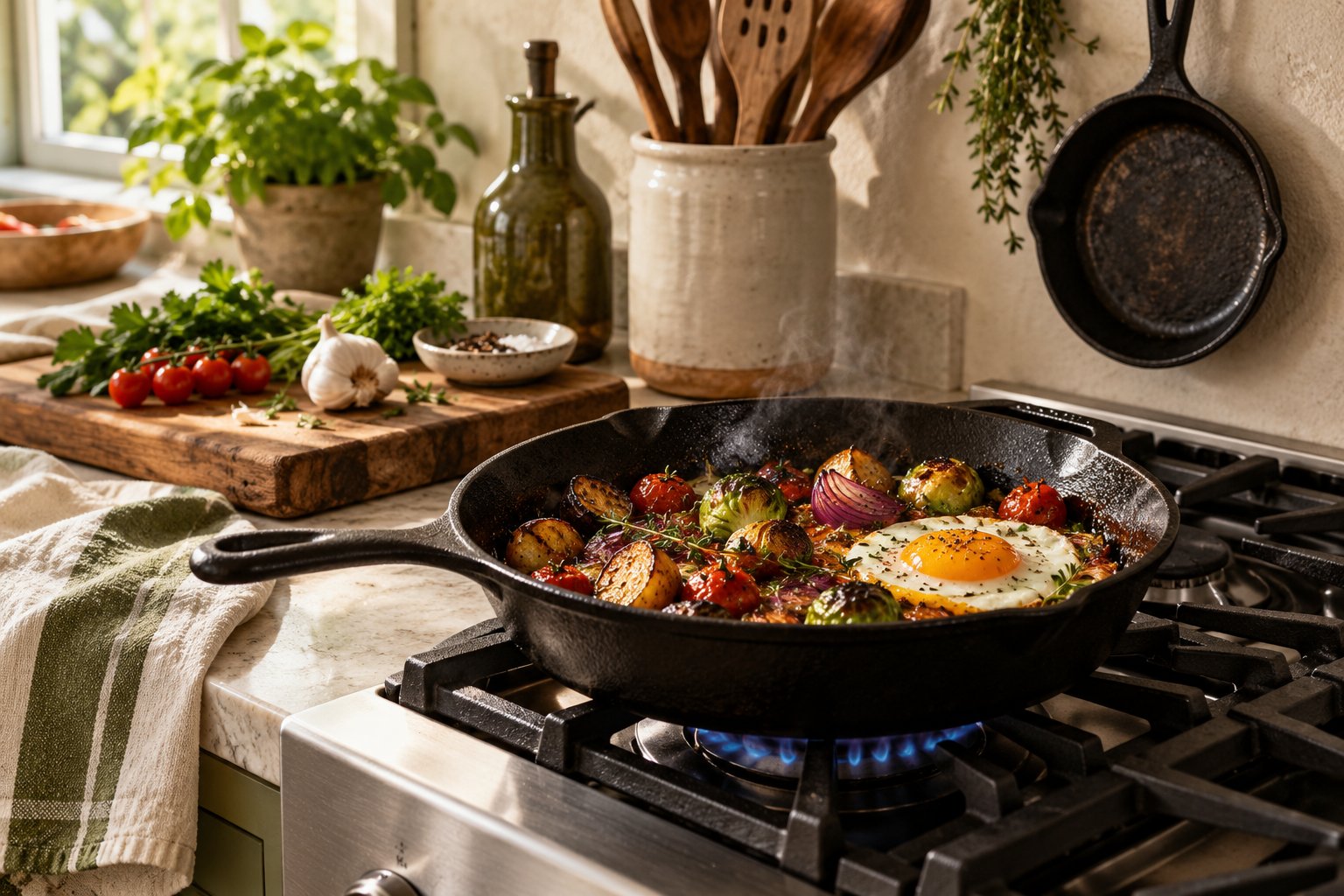
It also suits the kind of cooking that keeps a weeknight simple: a tray of vegetables roasted in the oven in the same pan you fried an egg in, or a cheap pan of beans and greens from our healthy cooking on a budget list.
The trade-offs are weight, a handle that gets hot, and a little care. Acidic sauces such as tomato or wine are fine for a short simmer in a well-seasoned pan but can strip seasoning over a long cook.
What to look for
- Size. A 10-inch pan suits one or two people and fits a small oven. A 12-inch pan fits a family meal or a whole tray of vegetables but is noticeably heavier.
- Weight. Traditional sand-cast pans are heavy. Lighter pans are thinner and usually more expensive.
- Surface. Most budget pans have a slightly pebbly finish. Machined pans are smooth from the start; rough pans become smoother as the seasoning builds up.
- Handles. A helper handle on the opposite side makes a heavy pan much easier to move into and out of the oven.
- Pre-seasoning. Almost every pan now comes pre-seasoned. It is a starting layer, not a finished one; a few weeks of cooking with oil makes it properly non-stick.
How we chose
We looked at price, weight, finish, handle design, how widely each pan is sold and the reputation each has built over years of use. We have not run our own cooking tests. Prices change often, so check before you buy.
Best overall: Lodge 10.25-inch Cast Iron Skillet
Around $25
The pan most people should start with. It sears, roasts and bakes as well as pans that cost five times as much; the only real differences are weight and finish. Use it daily for a few weeks and the surface smooths out and food stops sticking.
What we like
- Very cheap
- Made in the USA and sold everywhere
- Pre-seasoned and ready to use
- Pour spouts on both sides
Keep in mind
- Heavy for its size
- Pebbly surface takes time to become slick
- Short handle gets hot
Best lightweight: Field Company No. 8 Cast Iron Skillet
Around $165
Made for people who like cast iron cooking but not the lifting. The smooth surface releases eggs early on and the lighter pan is easier to tip and pour. You pay a lot for those two things, so it suits people who cook in cast iron every day.
What we like
- Noticeably lighter than traditional cast iron
- Smooth machined cooking surface
- Seasoned with plant oil
Keep in mind
- Expensive
- Thinner pan holds a little less heat
- Fewer size and shape options in shops
Best large pan on a budget: Victoria 12-inch Cast Iron Skillet
Around $40
A good choice when you cook for a family or roast a lot of vegetables. The longer handle and helper handle make a heavy pan easier to lift than most at this price.
What we like
- Big cooking surface for a low price
- Long, curved handle and helper handle
- Seasoned with flaxseed oil
Keep in mind
- Heavy, as any 12-inch cast iron pan is
- Surface is not as smooth as a machined pan
At a glance
| Skillet | Best for | Weight | Surface |
|---|---|---|---|
| Lodge 10.25-inch | Most kitchens, value | Heavy | Pebbly, smooths with use |
| Field Company No. 8 | Daily use, easier lifting | Light for cast iron | Smooth, machined |
| Victoria 12-inch | Family meals, roasting | Heavy | Lightly textured |
How to look after cast iron
- Wash with hot water and a brush. A little washing-up liquid is fine on a seasoned pan.
- Dry it straight away, then warm it on the hob for a minute to drive off the last moisture.
- Rub in a few drops of neutral oil with kitchen paper and wipe off the excess so it looks dry, not shiny.
- Store it dry, with kitchen paper between stacked pans.
- If rust appears, scrub it off, dry, oil thinly and bake upside down in a hot oven for an hour.
Questions people ask
Is cast iron better than non-stick?
They do different jobs. Cast iron browns better, handles high heat and goes in the oven, and it lasts for decades. Non-stick is lighter and easier for delicate eggs and pancakes at low heat. Many cooks keep one of each.
Does cooking in cast iron add iron to food?
A small amount of iron can move into food, especially with acidic, moist dishes cooked for a long time in a newer pan. It is not a reliable way to treat low iron. Our guide to iron-rich foods covers better sources and how to absorb more.
Can I use cast iron on an induction hob?
Yes. Cast iron is magnetic, so it works on induction. Lift it rather than sliding it, since a rough base can scratch a glass top, and heat it gradually.
Photograph: AI-generated image