Wellness Origin Hub
The best jump ropes for fitness, from beginner to speed
The best jump ropes for fitness: a weighted set for beginners, a light speed rope and a counting smart rope, plus how to size a rope and a first workout.
We may earn a commission if you buy through links in this article. How we make money.
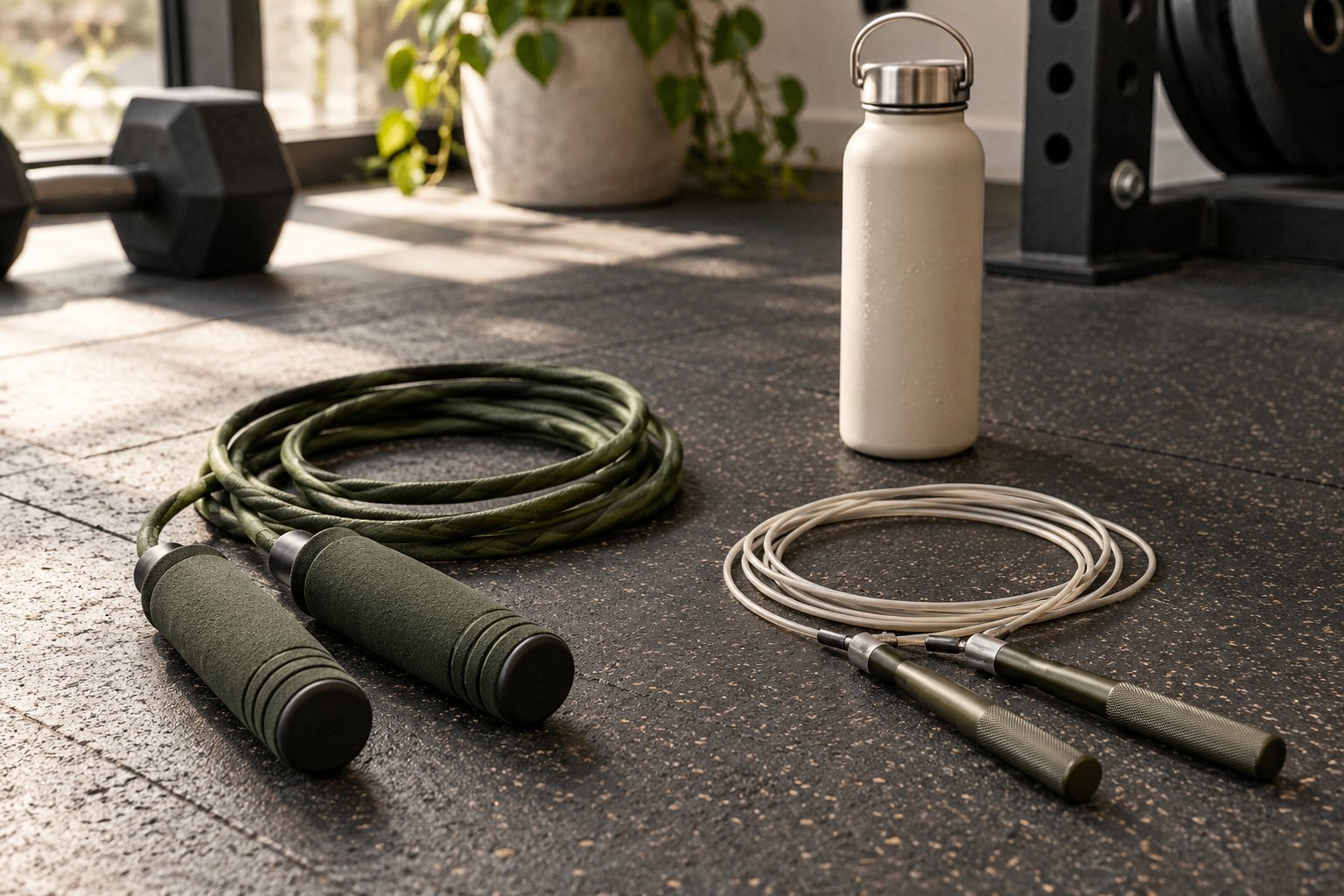
Our picks at a glance
A jump rope is one of the smallest and cheapest pieces of fitness kit, and a few minutes of skipping gets your heart rate up quickly. For beginners, a slightly heavier rope is easier to learn with because you can feel where it is. Lighter speed ropes suit people who can already skip and want to go faster or learn double-unders.
Here are three ropes worth considering, one for each kind of skipper.
What to look for
We looked at rope weight, how easily the length adjusts, handle comfort and what surfaces each rope suits. Prices change often, so check before you buy.
- Weight. Heavier ropes turn more slowly and give feedback through the handles, which helps beginners find a rhythm. Light, thin speed ropes spin fast but are harder to feel.
- Adjustable length. A rope that is too long or too short is the most common reason beginners trip. Make sure you can shorten it easily.
- Handles. Foam or grippy handles are comfortable for longer sessions. Slim metal or plastic handles suit fast spinning.
- Bearings. Handles with bearings let the rope turn smoothly without twisting.
- Surface. Coated cable ropes wear quickly on rough concrete. A rubber mat or smooth floor makes any rope last longer.
How to size a rope
Stand on the middle of the rope with one foot and pull the handles up. For beginners, the tops of the handles should reach roughly to your armpits. As you improve, many people shorten the rope so the handles reach mid-chest.
Best for beginners: Crossrope Get Lean Jump Rope Set
Around $100
A set of weighted ropes that clip onto one pair of handles. The extra weight slows the rope down so you can feel each turn, which makes learning much less frustrating. Pricey, but a good choice if skipping will be a regular part of your training.
What we like
- Weighted ropes are easier to time
- Ropes swap on and off the same handles
- Comfortable, solid handles
Keep in mind
- Expensive for a jump rope
- Slower ropes are not for speed work
- Clip system is extra kit to keep track of
Best speed rope: WOD Nation Speed Jump Rope
Around $20
A light, inexpensive speed rope for people who can already skip steadily. It spins fast enough for double-unders and quick footwork drills. Not the one to learn on.
What we like
- Light, fast cable
- Length is easy to adjust
- Low price
Keep in mind
- Thin cable is hard to feel for beginners
- Stings if it hits your legs
- Wears quickly on rough concrete
Best for tracking: RENPHO Smart Jump Rope
Around $25
Useful if numbers keep you going: the handle counts jumps and the app keeps a record. The cordless attachments let you practise the motion where a full rope would hit the ceiling.
What we like
- Counts jumps on the handle display
- Connects to a phone app for history
- Often comes with a cordless option for small spaces
Keep in mind
- Counting can be off if you trip a lot
- Needs charging or batteries
- More than you need if you just want to skip
At a glance
| Rope | Best for | Feel | Price band |
|---|---|---|---|
| Crossrope Get Lean | Learning, steady cardio | Weighted, slower | Higher |
| WOD Nation Speed Rope | Speed, double-unders | Light, fast | Low |
| RENPHO Smart Jump Rope | Counting and tracking | Medium | Low |
A first jump rope workout
- Warm up for 3 minutes: march on the spot, then do small bounces on the balls of your feet without the rope.
- Practise the timing: hold both handles in one hand and swing the rope by your side, jumping each time it hits the floor. Do 3 rounds of 20 seconds.
- Main set: skip for 20 seconds, rest for 40 seconds. Repeat 8 times.
- Cool down: walk for 2 minutes and stretch your calves against a wall, 30 seconds each side.
Keep jumps low, just enough to clear the rope, and land softly on the balls of your feet. Turn the rope with your wrists, not your whole arms, and keep elbows close to your sides.
Easier option: skip for 10–15 seconds with 45 seconds' rest, or swing the rope by your side and jump without it passing under you. Harder option: skip for 40 seconds with 20 seconds' rest, or try alternating feet as if jogging on the spot.
If you want a longer cardio base first, our beginner walking plan or run-walk plan are gentler on the legs. Skip on a mat or rubber tile rather than hard concrete where you can.
Questions people ask
Is skipping bad for your knees?
Done with low, soft jumps on a forgiving surface, many people find it fine. Build up gradually, and skip a session if your shins, calves or knees are sore.
How long should a beginner skip for?
Five to ten minutes of total skipping, broken into short bursts, is plenty at first.
Why do I keep tripping?
Usually the rope is the wrong length, the jumps are too high, or the arms are swinging too wide. Check the length first.
Photograph: AI-generated image