Wellness Origin Hub
Omega-3 foods: oily fish, walnuts, flax and chia compared
A plain guide to omega-3 foods, from salmon and sardines to walnuts, flaxseed and chia, how much omega-3 you need according to the NHS and EFSA, and options if you do not eat fish.
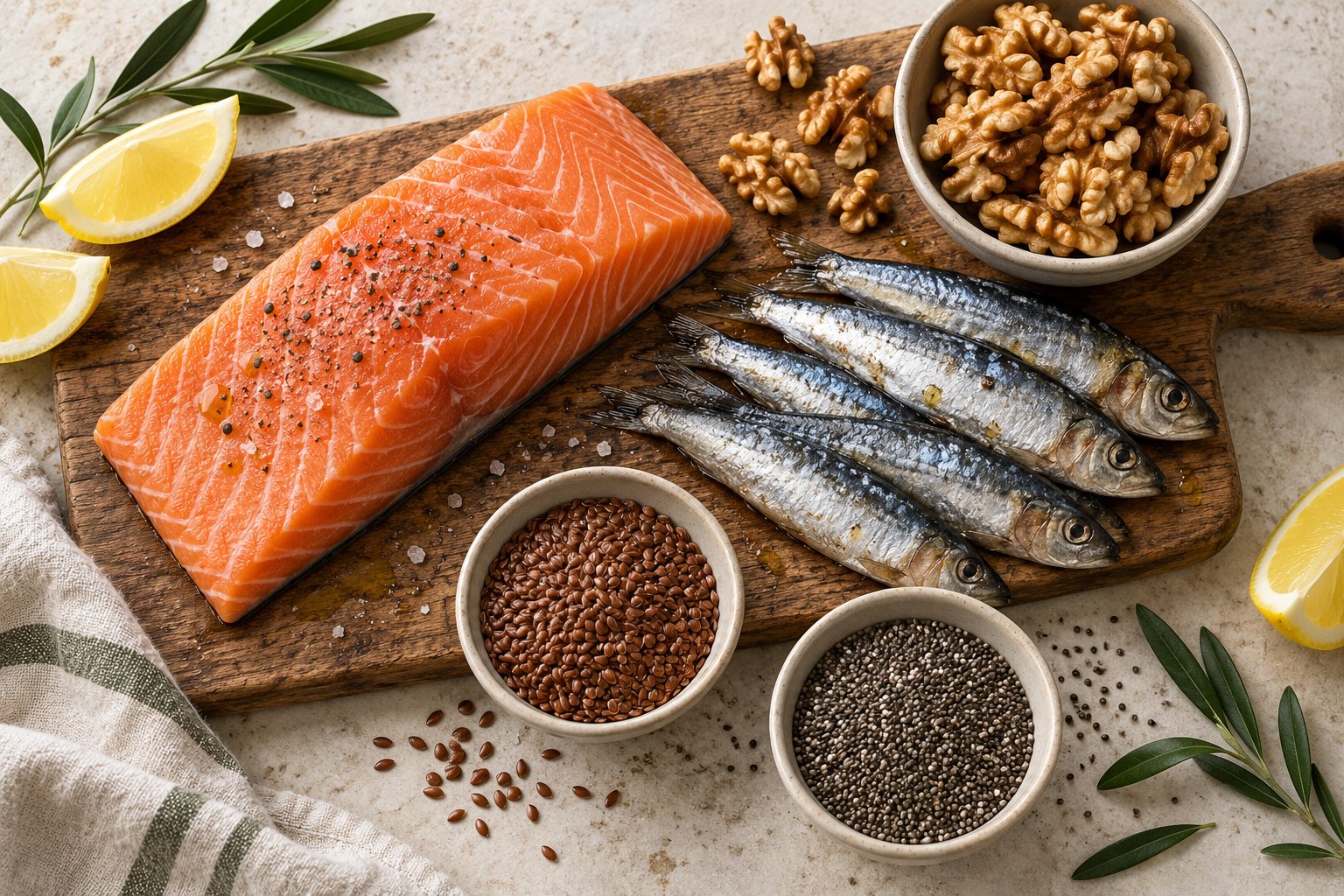
The best omega-3 foods are oily fish such as salmon, mackerel, sardines, herring and trout, which contain the long-chain omega-3 fats EPA and DHA. Walnuts, flaxseed, chia seeds, hemp seeds and rapeseed oil contain a different omega-3 called ALA, which the body converts into EPA and DHA only in small amounts. The NHS suggests eating at least two portions of fish a week, one of them oily.
The three main omega-3 fats
| Type | Full name | Main sources |
|---|---|---|
| EPA | Eicosapentaenoic acid | Oily fish, seafood, algae |
| DHA | Docosahexaenoic acid | Oily fish, seafood, algae |
| ALA | Alpha-linolenic acid | Flaxseed, chia, walnuts, hemp, rapeseed and soya oil |
ALA is an essential fat, meaning the body cannot make it and needs it from food. EPA and DHA are the forms most studied for heart health and are found in the brain and the retina of the eye. The body can turn some ALA into EPA and less still into DHA, but the conversion is limited, so plant foods are not a straight swap for fish.
Why omega-3 matters
Research suggests that eating oily fish regularly as part of a balanced diet is linked with a lower risk of heart disease. DHA is important for the development of the brain and eyes in babies, which is one reason fish advice for pregnancy is so specific.
The evidence for omega-3 supplements is less clear-cut than the evidence for eating fish. Large studies of fish oil capsules in people without heart disease have had mixed results, so food is the better place to start.
How much you need
- The NHS recommends at least two portions of fish a week, one of which should be oily. A portion is about 140 g cooked.
- EFSA sets an adequate intake of 250 mg of EPA and DHA combined a day for adults, roughly what one or two portions of oily fish a week provides.
- The NIH Office of Dietary Supplements sets an adequate intake for ALA of 1.6 g a day for men and 1.1 g a day for women. It has not set a figure for EPA and DHA.
The foods with the most omega-3
These approximate values come from the NIH Office of Dietary Supplements, based on USDA food data. An 85 g portion is the 3 ounce serving used in US tables, smaller than the NHS portion.
| Food | Portion | Omega-3 (approx.) |
|---|---|---|
| Salmon, farmed Atlantic, cooked | 85 g | 1.8 g EPA and DHA |
| Herring, cooked | 85 g | 1.7 g EPA and DHA |
| Sardines, tinned in tomato sauce | 85 g | 1.2 g EPA and DHA |
| Mackerel, cooked | 85 g | 1.0 g EPA and DHA |
| Tuna, tinned light | 85 g | 0.2 g EPA and DHA |
| Flaxseed oil | 1 tablespoon | 7.3 g ALA |
| Chia seeds | 28 g | 5.1 g ALA |
| Walnuts | 28 g | 2.6 g ALA |
| Flaxseed, whole | 1 tablespoon | 2.4 g ALA |
Amounts vary with species, season and whether the fish is wild or farmed. Tinned tuna is a useful protein, but the canning process and the type of tuna mean it does not count as an oily fish in UK advice. Fresh tuna is lower in omega-3 than salmon or mackerel too.
How much fish is safe?
Oily fish can contain low levels of pollutants that build up in the body, so the NHS sets upper limits:
- Most adults: up to four portions of oily fish a week.
- Pregnant women and those who may become pregnant: no more than two portions of oily fish a week.
- Shark, swordfish and marlin can contain more mercury. The NHS advises adults to have no more than one portion a week, and pregnant women and children to avoid them.
If you do not eat fish
Plant sources still contribute ALA, and they bring fibre and other nutrients with them.
- Grind your flaxseed. Whole flaxseeds often pass through the gut undigested. Ground flaxseed stirred into porridge or yoghurt is easier to absorb. Keep it in the fridge, as it spoils quickly.
- Use chia seeds. They need no grinding and soak up liquid well. Chia pudding and overnight oats are easy ways in.
- Snack on walnuts. A small handful a day is a simple habit.
- Cook with rapeseed oil. Standard rapeseed (canola) oil contains some ALA and is a sensible everyday cooking oil.
- Ask about algae oil. Fish get their EPA and DHA from algae, and algae-based supplements are the main vegan source of these fats. Ask a pharmacist whether one suits you.
Questions people ask
Is fish oil as good as eating fish?
Not necessarily. Studies of fish oil supplements have been more mixed than studies of people who eat fish, possibly because fish also replaces less healthy foods and brings protein, vitamin D and other nutrients. Cod liver oil also contains vitamin A, which is not advised in pregnancy. If you are thinking about a supplement, ask a doctor or pharmacist first.
Do omega-3 eggs or fortified foods count?
They add small amounts. Eggs from hens fed omega-3-rich feed contain more than standard eggs, but far less than a portion of oily fish.
Does cooking destroy omega-3?
Baking, grilling and steaming keep most of it. Deep-frying adds other fats and is best kept occasional. Tinned fish keeps its omega-3, apart from tuna, which loses much of it in processing.
Photograph: AI-generated image